
POLITICS
Yes, Biden’s Marijuana Pardons Are a BFD, but They’re Also Smart Politics
The administration’s step toward federal cannabis legalization could help Democrats hang onto Congress
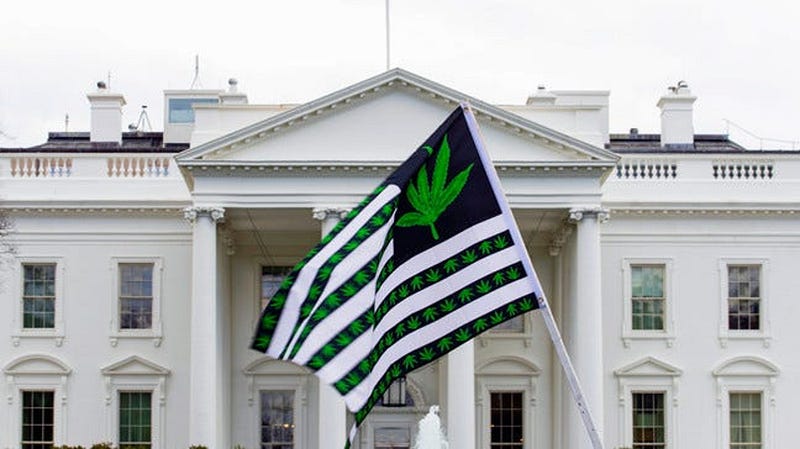
Last week, President Joe Biden fulfilled another campaign promise, pardoning thousands of Americans convicted of “simple possession” of marijuana under federal law. The move also covers thousands convicted of marijuana possession in the District of Columbia. In addition, he’s calling on governors to consider similar action since most marijuana possession convictions occur on the state level.
Biden also directed the secretary of Health and Human Services and the attorney general to revisit marijuana scheduling under federal law. Currently, cannabis has a Schedule I drug classification — the same level as heroin, fentanyl, methamphetamines, and LSD. So a reclassification of the drug would reduce or possibly eliminate criminal penalties for simple possession.
Biden’s executive order is a first step towards bringing federal law closer to state governments that have either reduced or eliminated criminal punishments for marijuana possession. It’s also another step in his atonement for helping to pass the 1994 crime bill.
A marijuana conviction can destroy an individual’s life, impacting employment prospects, the ability to find housing, and even college financial aid eligibility. This dynamic is especially true for African Americans due to a persistent trend of racial bias in the enforcement of marijuana laws.
According to a recent ACLU analysis, between 2001 and 2010, more than half of all U.S. drug arrests involved marijuana. Almost 90% of the 8.2 million marijuana arrests during that period were for simple possession.
But although marijuana usage rates for African Americans are about the same as those of whites, in every state, even those where marijuana is legal, they are nearly four times more likely to be arrested than whites.
As noted in a 2018 article in The Guardian, even the usage of the word marijuana to describe the cannabis plant, which is Mexican in origin, is rooted in racism:
[T]he most familiar name for the dried buds of the cannabis plant, and one of the few older terms still in use today, is “marijuana.”
For the prohibitionists of nearly a century ago, the exotic-sounding word emphasized the drug’s foreignness to white Americans and appealed to the xenophobia of the time. As with other racist memes, a common refrain was that marijuana would lead to miscegenation.
Harry Anslinger, the bureaucrat who led the prohibition effort, is credited as saying back then: “There are 100,000 total marijuana smokers in the US, and most are Negroes, Hispanics, Filipinos, and entertainers. Their Satanic music, jazz, and swing result from marijuana use. This marijuana causes white women to seek sexual relations with Negroes, entertainers, and any others.”
Given how Republicans typically react to what Biden does, I expected to see a slew of apoplectic tweets from the usual suspects.
Surprisingly, the criticism I anticipated didn’t occur. Aside from comments from Senator Tom Cotton, who thinks the U.S. has an under-incarceration problem, and Fox News host Laura Ingraham who has yet to smile a day in her life, the right has had almost nothing to say about Biden’s pardons.
(Side note: Biden isn’t granting “blanket pardons.” Biden’s executive order only impacts about 6500 citizens, and since no one is serving federal time for marijuana possession, it’s not like Biden is throwing the prison doors open.)
So why aren’t Republicans screaming from the rooftops about Biden’s pardons?
For starters, that would open the door to discussing The Former Guy’s history of pardoning his felonious friends, a subject they’d rather not discuss. But there are other reasons.
Republicans can read the room. They know marijuana legalization is very popular — even in red states. Over 90% of American adults believe cannabis should be legal in some fashion.
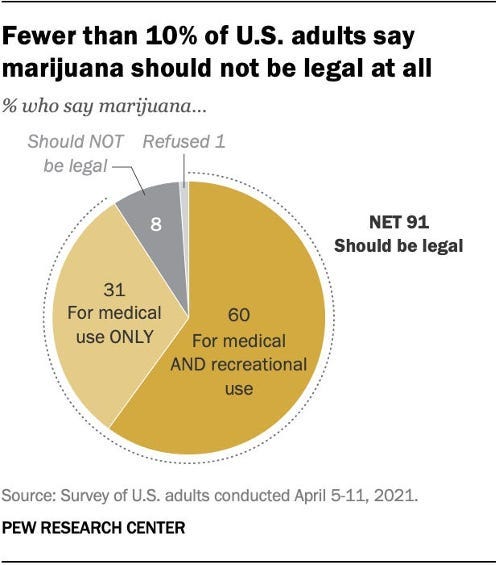
Cannabis is already legal for medical use in 37 states and the District of Columbia, qualifying as a treatment for illnesses ranging from Glaucoma and chronic pain to Alzheimer’s disease. The drug is already legal for recreational use in 19 states. Next month, Arkansas, Missouri, North and South Dakota, plus Oklahoma — all red states — will vote on marijuana legalization measures.
Numbers like that are a sign most Republicans probably support Biden’s decision.
His approval ratings may be less than stellar, but Biden is still a deft politician. He knows the skillfully-timed pardons, combined with his order granting student loan forgiveness and the backlash against the Supreme Court’s Dobbs decision, could get Democrats across the finish line in November.
Republicans know it, too. So the last thing they want is to elevate the issue in the public consciousness. They’ve made the political calculation that they should keep their mouths shut about the subject of marijuana.
At least for now.

If you enjoy and would like to support my writing, please consider signing up for my weekly-ish newsletter on Substack. You’ll receive early access to my posts, subscriber-only podcast, and occasional Zoom events.


