
WWDC: Apple’s got MacBooks wrong, again
This week, Apple held its WWDC and unveiled what the future has in store.
In addition to welcome and impressive software updates to iOS, MacOS, and WatchOS, we saw updates to the physical computers. And this was what I had been excitedly waiting for.
In 2020 I finally upgraded my MacBook Pro, from the 2012 to 2020 model. The 2012 was the definition of a Pro model, with MagSafe, USB ports and an SD card reader. While my newer 2020 model is very good, the lack of ports has always felt like it’s a compromise. Having seen Apple restore MagSafe, SD card readers and HDMI to its computers, I was excited to upgrade.
Alas, the new 13" MacBook Pro is even more of a compromise than the previous ones. I’d argue it’s not even a Pro at all, instead it’s more of a bridge between an Air and a Pro — but, bizarrely, it’s not cut-and-dry to say it’s better than the Air. If anything, it’s harder to justify buying the 13" Pro instead of the Air.

The MagSafe drama
MagSafe was one of Apple’s finest innovations, saving countless laptops from being smashed on the ground when someone tripped over the power cable. If you’re unfamiliar, the charger connected by a magnet rather than being inserted deep into the computer. It provided a strong connection but a tug would disconnect the cable without moving the laptop.
Inexplicably, it was removed in recent years, and then thankfully restored.
But it’s only been restored on some models: The MacBook Air and the 14" and 16" MacBook Pros all have it.
The 13" MacBook Pro doesn’t have MagSafe.
This means that if I want MagSafe, I have to buy a computer I neither want nor need: either I buy one that isn’t quite as capable as what I need (the Air), or I buy one that’s far more than I need, and costs far more than I want to spend (14" MacBook Pro).
Where have the ports gone?
My current Pro has four USB-C ports (two on each side) and a headphone socket. It’s still limited in that I need a dongle to connect almost anything, but at least the ports are on both sides so I can choose where to connect the charger.
Not with the 2022 model!
Here’s where things get confusing — and, much like the strange decisions around its chargers, very un-Apple.
The MacBook Air has MagSafe, two Thunderbolt ports, and a headphone socket.
The MacBook Pro 14" and 16" models have three Thunderbolt ports, MagSafe, SDXC card slot and HDMI, plus the headphone socket.
But the MacBook Pro 13" has two Thunderbolt ports, both on the same side of the computer, and a headphone socket. There’s no MagSafe.
This puts the 13" Pro closer to the Air, but without MagSafe — so it’s less useful than the Air.
But wait, there’s more!
The 13" MacBook Pro has a Touchbar. The Touchbar wasn’t to everyone’s tastes but I’m a big fan: it puts useful information at your fingertips in any application, and is especially useful for auto-filling forms.
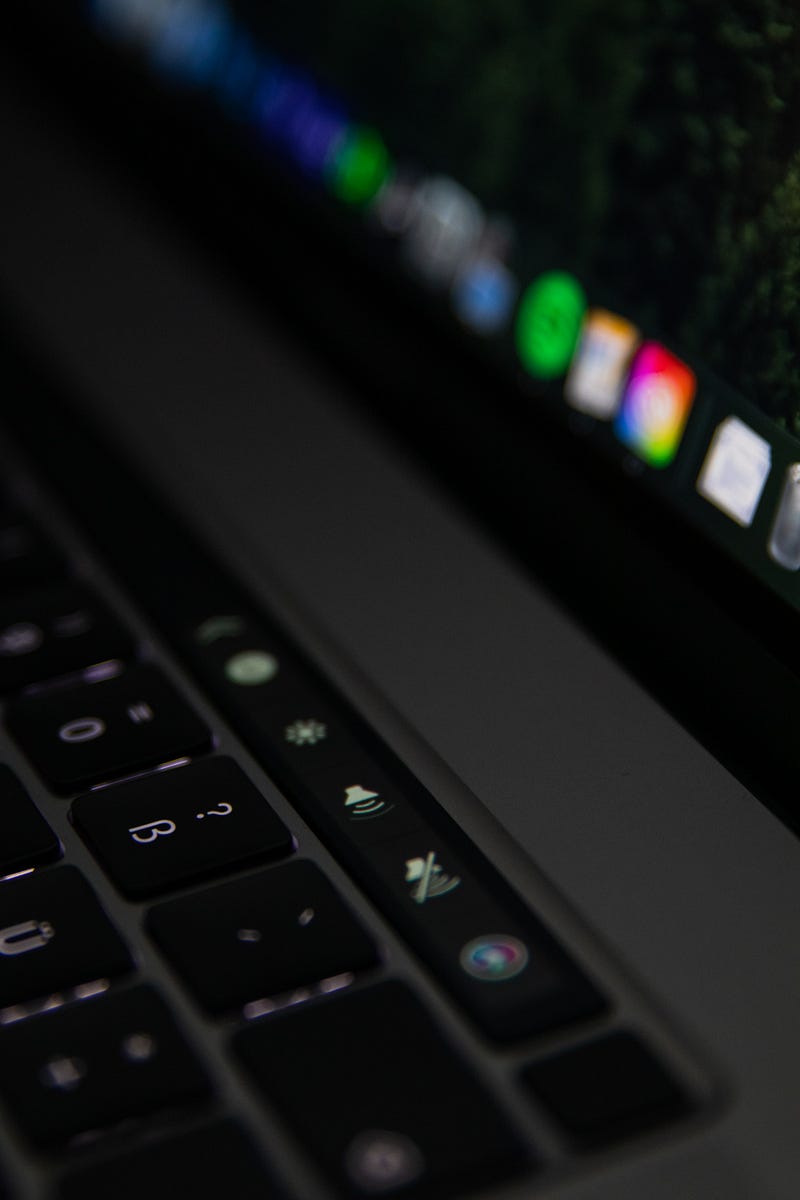
Yet, the 14" and 16" models don’t have the Touchbar. So, if I want to upgrade my MacBook Pro to the newest 13", I would lose half of my connection ports and the Touchbar — sounds like a step backwards to me.
So I need a 14" or 16"?
We’re deep in the realm of Apple making inexplicable decisions, so it’s not surprising that there’s another one to be revealed.
Put yourself in my shoes for a second: you’re looking at the range of MacBooks and know you want a Pro. The 13" doesn’t tick all the boxes, but it has the Touchbar and the new M2 chip, both of which are important. The lack of ports is an issue though, so you have a cursory look at the bigger models. There’s no Touchbar but it’s not the end of the world.
Then we discover neither model is available with the M2 chip!
So to recap quickly:
- The Air has MagSafe, an M2 chip, and 2 ports
- The 13" Pro has the M2 chip, Touchbar, but 2 ports
- The 14" and 16" Pros have more ports, but no Touchbar and no M2 chip
Let’s not forget that MacBooks are expensive, with a £500 difference in starting price between the 13" Pro and 14" Pro — so it’s going to cost you a lot of money to choose which compromise you’re most prepared to live with.
Can the real MacBook Pro please stand up?
Not all MacBook Pros are equal.
Personally, I expected them to all be the same in what they offer, with the differences coming down to size and power. This isn’t the case, though.
The 14" and 16" MacBook Pros are not just bigger, they’re objectively much higher spec than the smaller sibling. There’s a six-speaker sound system, with four “force-cancelling woofers”, and three studio-quality mics built in. Oh, there’s spatial audio too.
Clearly, these larger models deserve the name “Pro”.
The 13" model? That’s less deserving. It’s more powerful than the MacBook Air, but it’s not really in the same league as the larger Pros.
I suggested to Apple’s support team that it feels like it’s somewhere between the two and, to my surprise, they agreed, replying:
“yes you can definitely look at that way it is indeed a more powerful MacBook Air and you can consider it as a bridge between that and the 14” MacBook Pro.”
Which ultimately means one disappointing thing:
Apple doesn’t currently have a laptop for users like me.
Like its inability to offer a standard charging solution, the MacBook range is a head-scratching mess. The most-powerful models don’t have the M2 chip or a time-saving Touchbar, but support various inputs and has MagSafe, while the entry-level MacBook Air has the M2 chip and MagSafe. The entry-level Pro has the Touchbar and M2 chip but neither MagSafe nor a respectable number of ports — still relying on dongles to connect more things (and cross your fingers you never forget one at a meeting when you’ve got a presentation to deliver).
Apple is doing wonderful things with its software, and I can only hope some sanity returns to its hardware division too. In the meantime, I invite you all to join me in leaving product feedback.


