
WWDC 2020: What’s New in iOS 14, iPadOS, and Apple Silicon Macs
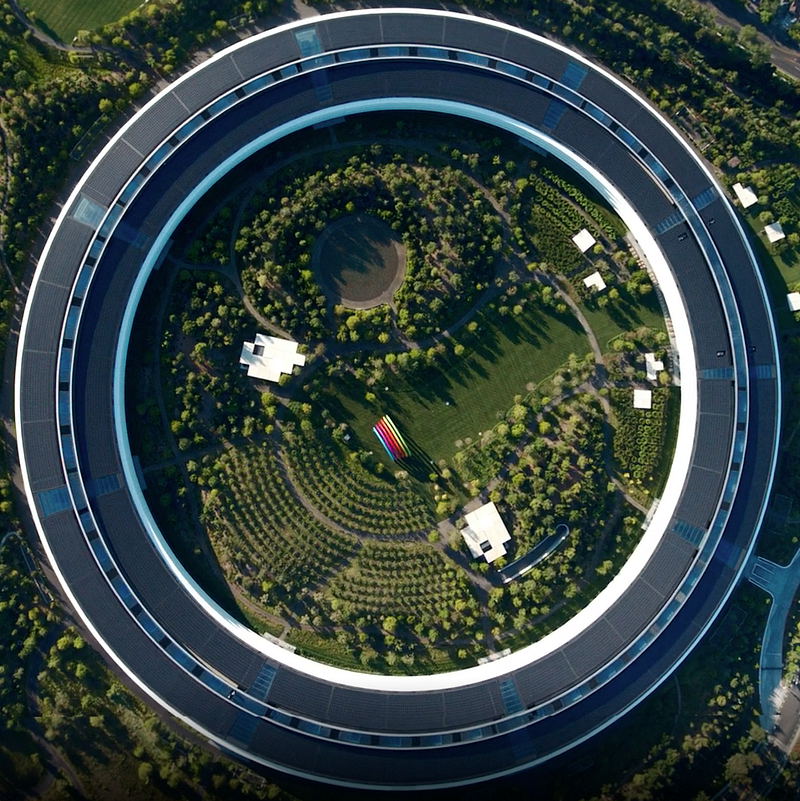
WWDCs usually cost $1,599. At that price, tickets used to get sold out within an hour. Added with travel + hotel costs in Cupertino could easily make a dev shell out $5000 for an almost week-span event.
23 million Apple Certified developers will benefit from WWDC 2020 livestream.
This year’s WWDC was destined to be different. Due to COVID, it was planned to be livestreamed across the planet.
WWDC keynotes are great. Since Steve Jobs’ introduction of iPhone in 2007, they have been the bible of how novel products must be introduced to a curious, tech-savvy audience.
According to Tim Cook’s keynote that I just watched, around 23 million Apple Certified developers are expected to benefit from free streams.
Let’s go through the meat now.
iOS 14:
iOS 14 has been touted as mega release and it has its fair share of features that completely transform iPhone experience — as iPhone continues to be Apple’s flagship product.
Revamped SpringBoard:
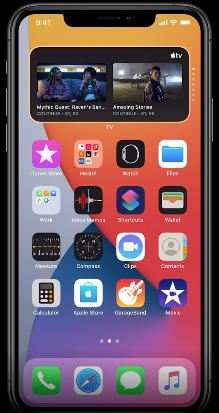
SpringBoard got a facelift with customizable widgets. To get an idea, just look at how organized this screen looks.
Widgets are smart, in the sense that you could control when News appears vs the Weather widget.
Springboard is also capable of Picture-in-picture, which means that video-watching can continue while watching a news headline in a widget.
Siri Translate:
This is the most undermentioned feature of iOS 14. And I feel it’s groundbreaking. I have been using Google Translate for years, and I felt that it seriously needed some competition. UX wasn’t great. Being online was a requirement.
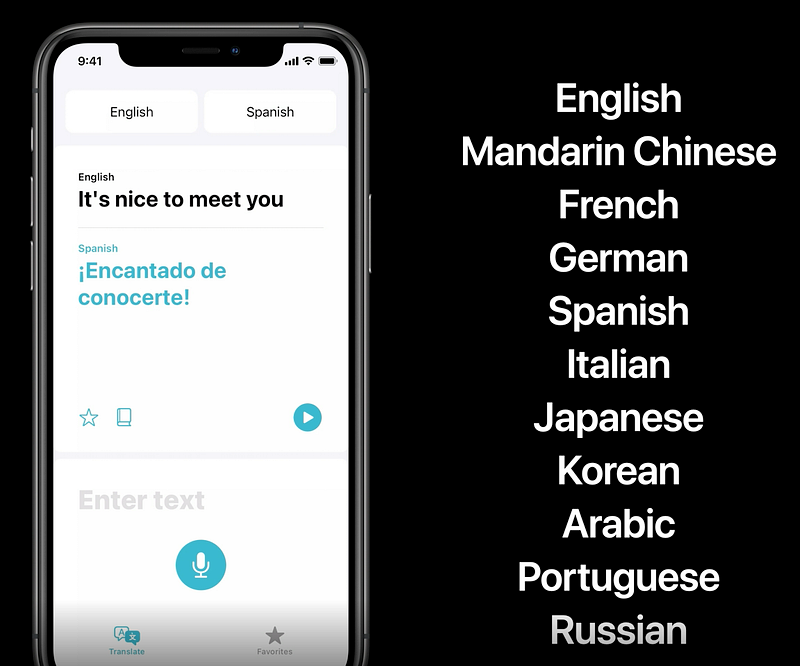
iOS Translate is completely offline, taking privacy out of the competition equation. It is powerful enough to detect the spoken word and language, based on Apple’s massive Siri AI data.
Given its UX and side by side view, possibility of its integration with phone / messaging app cannot be denied, at which point, it will be unconquerable.
Maps:
Google’s Map monetization estimations seems to have triggered Apple’s ambition with maps. After its bumpy debut, Apple Maps received some sincere rebounding, with privacy as its edge.
In WWDC 2020, it’s claimed to be much more accurate, and with meaningful data about places of interests such as restaurants and attractions. It has added support for UK, Ireland and Canada.
Directions feature has become much more useful for bike rides and walks, with accurate elevation data to estimate transit efforts. Some more feathers for Apple’s environment friendly profile: The EV routing provide live EV charging stations en-Route based on user’s vehicle type.
Connected Car:
iOS 14 can unlock your car, and BMW will be the first car company to roll out the first supporting model (a month after today, as claimed in keynote). Apple has introduced digital version of the car key — a car key you can share with people.
Yes — you read it right. It also comes with some cool profile-based sharing options to balance out security and flexibility aspect (aimed at underage drivers).
Messaging:
With more memojis to demonstrate its support for age/gender/race diversity, iOS messaging is quickly coming in line with modern messenger apps. You also got grouped conversations and @ mentions that you have been using so far in Teams and Slack.
App Clips:
Apple Devs have been historically dying for discoverability.
App store has Billion+ apps long ago. But users can’t find what they need. And developers can’t find early takers, despite paying Apple a small fortune compared to other options available.
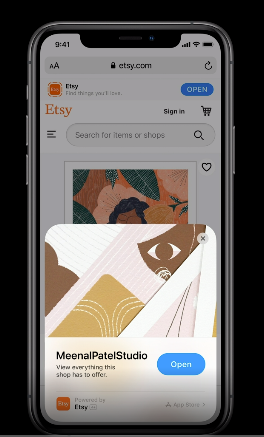
App clips are part of Apple’s big design which is based on widget based, multi-tasking Springboard.
Aimed at solving the discoverability problem. Yes, the conversion part, without iAd or search money.
The concept goes like this: Your iPhone could suggest you relevant apps when you are looking at a restaurant in Map app (Yelp), opening a message with cake photo (recipe app), scan a bike code (Your favorite bike riding app), or looking for directions on Apple Maps (Uber/Lyft). When responded to, App clips can fulfill the objective of conversion (i.e. ordering the item in the picture) — all supported by Apple Pay, without user having to open your app.
Discoverability on App store is the holy grail of iOS development success. If App clips succeed, App market could rediscover itself.
iPadOS:
Scribble can detect regular shapes drawn by Apple Pencil.
iPadOS got many new updates this year. But the most notable one was for Scribble with Apple Pencil feature — Apple’s free form writing arsenal.
Integrated into basic Apple apps such as Notes, Scribble not only converts handwritten text into digital text — it can also format it the way you want — pick colors, fonts, sizes, whatever you like.
With its own machine learning model, it is capable of detecting regular shapes, words, sentences, phone numbers, emails and physical addresses. It can also detect different languages in scribbled mode.
A Few Minor iPadOS changes:
- iPad search is now available across all apps — more like Mac OS X Spotlight.
- Incoming call notification is no longer intrusive — it occupies a very small screen area.
- iPad photos app supports drag and drop and several other features to make album management easier.
Apple Silicon:
Apple Silicon is Apple’s foray into non-intel chip world for Macs.
True driver for Apple Silicon is common hardware platform for all apps under Apple’s roof — the beginning of Apple’s answer to cross platform development.
The stated objective for this move is to build next generation desktops with more performance and less power consumption-perfectly suitable for demanding jobs such as gaming, machine learning and security.
However, the true driver for Apple Silicon is common hardware platform for all apps under Apple’s roof: iOS and MacOS all running on same ARM based chipset. It is one of the many steps in Apple’s answer to cross platform development, leveraging large number of iOS Dev’s work to recreate the app store magic on mac platform.
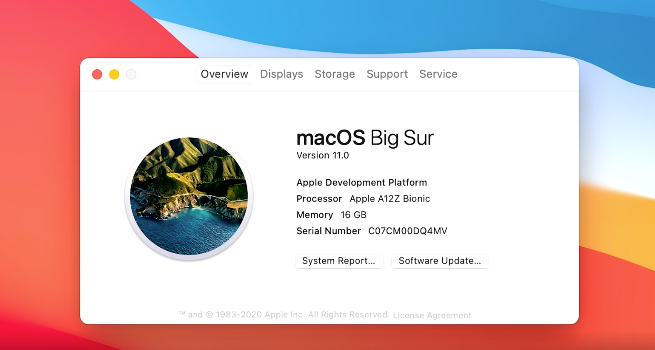
The first Apple Silicon Mac will run on A12Z Bionic, the same chip that powered iPad Pro. The OS it will be run on will be known as MacOS Big Sur.
Microsoft has already ported Office for Mac to Apple Silicon. Adobe’s Lightroom is ported too. Not to mention, Apple’s own Final Cut Pro.
The result, as Apple claims, have been more than satisfactory.
While more details are still on the horizon, here is what’s immediately exciting for developers:
- iOS developers can choose to make their apps available on Apple Silicon Mac Minis (possibly without enrolling into separate Mac distribution program).
- Since this is the processor family that runs all iContent since 2007, all iOS apps are fully compatible to run on them from Day 1.
- Before production starts for Apple Silicon Macs, existing mac developers get a chance to port their intel-targeted binaries to Apple Silicon universal ones.
- To enable smooth transition, Apple is offering enrollment into its Universal App Quick Start Program.
- Application to the program must be done using Apple Developer portal.
- Membership to Universal App Quick Start Program is decided at the discretion of Apple.
- Membership costs $500, which is non-refundable.
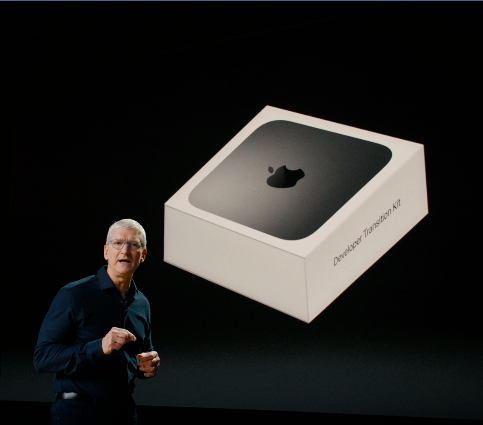
- As part of the membership, qualified Mac developers receive Developer Transition Kit (DTK) for a term of roughly 1 year. After 1 year, it must be returned to Apple.
- DTK includes Apple Silicon powered new Mac mini (16 GB, 512 GB SSD) that will help app devs developer, port and test their Mac apps on newer machines.
- Existing Mac App Developer Program Members are given preference to enter Universal App Quick Start Program.
- In a nutshell, devs get to try Apple’s brand new beta hardware for $500 / one year.
WatchOS:
Apart from the above, WatchOS 7 also received some cool features
- Novel watchfaces (personalized widget compositions).
- Developers can compose them, now also with SwiftUI.
- Apple Maps for WatchOS received similar updates as iOS 14.
- Activity app is now Fitness. It supports sleep patterns and new Dance workout.
tvOS:
- Apple TV+ is coming up with its original movie productions in 2021.
- Apple TV app will soon be available on Sony and Vizio TVs.
- TV screen can host apps from other Apple enabled devices.
Conclusion:
By far, this has been most significant iOS release in last couple of years. At one point, it outpaces the competition by doubling down on focus on privacy. At other point, it aims for more complete iExperience by introducing multi-tasking interfaces, iPhone supported driving and leveraging integration between Apple TV and the rest of iDevices.
That’s it for WWDC 2020 updates. More details may emerge as the event progresses.
Stay tuned on Apple channels. Get great at development!


