
WTS? — The ‘Wilmore Funeral Home’ Viral Marketing Stunt
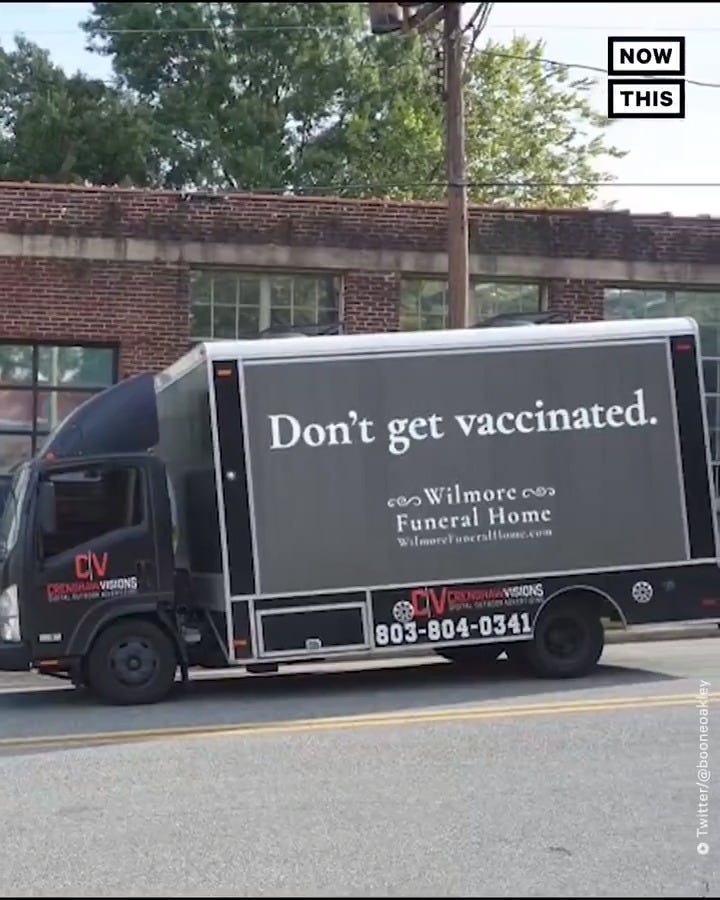
I am usually against gimmicky ad-agency stunts, but god damn, this was absolutely brilliant.
It seems as the Tweet below was what really kicked off the virality:
To set the scene — the truck in the photo above was thought to belong to a funeral home in Charlotte, North Carolina. It turned out to actually be a stunt by an advertising agency for their client StarMED, who offers the vaccine locally, as a creative way to try and boost local vaccine rates.
The meta-ness of an ad agency pretending to do edgy guerilla marketing for a funeral home to achieve the above-mentioned objective is a big reason why it was amplified by so many accounts and publications within the marketing and advertising niches.
The stunt perfectly blended the real world experience with the digital experience. There was a website on the truck, which was flooded with traffic, and it was a landing page that simply said “get vaccinated or end up here”. It was a brilliant bridge built by the agency to funnel that attention to their client and achieve the ultimate goal of the campaign — increase the local vaccination rate.
Ironically, the key element of virality here is an actual virus. There simply cannot be an event that penetrates the zeitgeist of an era more than a global pandemic, so a photo of this truck was bound to go viral.
One of the creatives behind this ad seems to be the woman who authored the Tweet below:
This team has a superb grasp of meme-ability. They knew the absurdity of the ad, plus the popularity of the vax/anti-vax debate in the cultural discourse, would make it perfect for a screenshot to post to Twitter. People would then use the image to comment their thoughts on vaccination, either directly or indirectly, thus making it go viral.
This ad is a perfect example of how the raw material for memes comes from real-world events. While it may seem our lives have become increasingly digital, the real world is still the oxygen the Internet ecosystem of viral content needs to stay alive.
The cherry-on-top awesomeness of this trending ad is that the person behind it is a woman who recently had a baby, disproving the patriarchal myth that being a mom somehow means you are less committed/ less competent at your job.
Lastly, the earned media from traditional publications and news outlets shows how traditional media outlets have pivoted into having an active relationship with digital virality.
The owner of the agency was on CNN and both Washington Post and People magazine, amongst others, covered the story for the digital arm of their operations.
Why That Slapped: Key Insights
- The global pandemic and anything related to the vax/anti-vax debate is the ultimate trending topic, and therefore the ultimate potential for trendjacking.
- Trendjacking the pandemic with tact seems impossible but this ad agency had the perfect client to pull it off with. Timing + context + method of delivery are HUGE.
- The myth of the working new mom being less competent/committed is, slowly but surely, being erased from the zeitgeist, and this Tweet gave that effort a nudge.
- Real world events are the necessary raw material for creating memes.
- Traditional media has leaned into their relationship with digital virality
This article belongs to an ongoing content series called ‘Why’d That Slap?’ — examining Twitter virality Tweet by Tweet. Newsletter starts October 6th! It’s free!


