
Written A Book? How to Generate More Reviews!
Useful tactics to get your book noticed
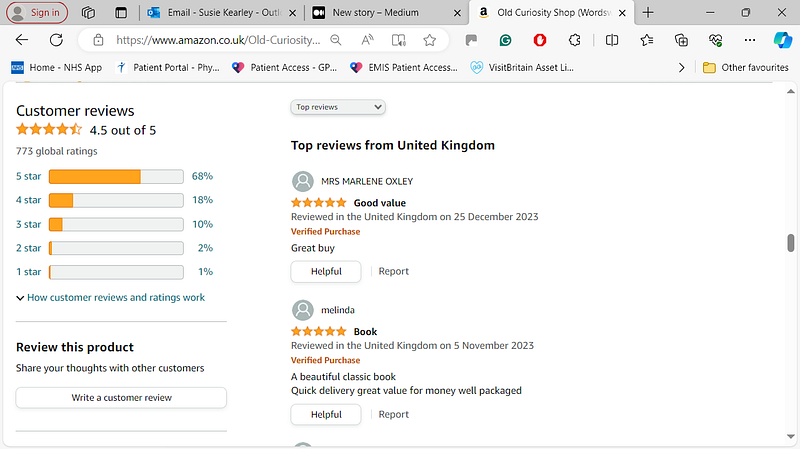
In 2014, Amazon started legal action against over 1,000 unidentified people who allegedly wrote fake reviews on www.amazon.com in return for a fee. Many such reviewers were advertising their services through a website called ‘Fiver’, offering reviews in return for $5. (Source: The Guardian)
The Sunday Times UK investigated the practice, with journalists paying reviewers £56 to give their new ebook, ‘Everything Bonsai!’, a five-star rating. This book, which was riddled with errors and written over a weekend, made it to the top of Amazon UK’s Kindle category for gardening and horticulture.
The Competition and Markets Authority in the UK reported that 54% of UK adults read online reviews, and use them to make purchasing decisions. However, fake reviews can undermine consumer confidence.
So where does this leave authors seeking genuine reviews of their works?
Standing out from the crowd, differentiating yourself, and persuading readers to give your book a chance, is every new author’s challenge. But don’t be lured into buying five star reviews.
Genuine feedback is infinitely more beneficial to both the author and their readers, who incidentally, are becoming more savvy. Short and shallow reviews, offering no insight into the content of the book, will be unlikely to make much difference to sales figures.
Genuine book reviews, however, can help generate sales and build an author’s brand. They give readers an independent perspective on your work, and may help you, as a writer, develop your writing skills.
Positive feedback
Fortunately for writers, most people only review books they’ve enjoyed, so there’s usually a favourable balance. Positive feedback can build confidence that you’re getting it right, and a mixture of feedback shows your reviews are real — because nobody’s work will appeal to everyone.
To generate more reviews, many authors end their books with the message, “If you enjoyed this book, please consider leaving a review”. According to some self-publishing gurus, such as David Gaughran, it works, and some authors put out similar requests on social media too.
Social Media
Most authors would agree that a presence on social media can help build your profile and promote your books. But social media can be used as more than a promotional platform. It gives authors the opportunity to engage with reviewers, bloggers, and readers directly. A good social media strategy will have you building a network of contacts, fans, and loyal supporters.
It’s not unusual for readers to contact authors on social media to say how much they’ve enjoyed one of their books. It’s happened to me many times. If that happens, there’s no shame in asking that person if they’d mind putting that compliment into an Amazon review!
Book reviewers
Many book reviewers are active on social media, and post regular links to their blogs. Tracy Shephard is a keen book reviewer, mostly covering fiction.
She says, “I’m an avid reader and can read about four books a week. I’m partially disabled so I can’t do very much, which means I sit and read a lot. I usually read a book in one sitting. If it doesn’t grab me then I read it in about two days.”
If Tracy likes a book, she’ll post a review on Amazon, on Goodreads and Pinterest. But what if she reads a book and it doesn’t appeal?
“I have given up on books occasionally — mainly ones I read for the book club I attend. They’re books that I wouldn’t normally read,” she says. “I like to be honest in my reviews and I don’t think my negativity is helpful, so I don’t review them. I’m sure the books would appeal to other people. They’re just not my cup of tea.”
Finding reviewers
You can find book reviewers on X (Twitter) by searching on the term #bookreview. Alternatively, Google the term.
Different reviewers cover different genres. For example, you can find reviews of fantasy books at www.fantasybookreview.co.uk. ‘Women on Writing’ sometimes reviews books by female writers on www.wow-womenonwriting.com. They reviewed my first book here!
So find a reviewer sympathetic to your genre and offer them a free review copy.
Some authors put a message out on social media, saying their book is available for review, and offer a complimentary copy to any potential reviewers. Amazon rules state full disclosure on free reads: “If you received a free product in exchange for your review, please clearly and conspicuously disclose that you received the product free of charge.”
Some reviewers always post their reviews onto Amazon. Others, like ‘Women on Writing’, don’t, but they do have a dedicated following of female writers and it’s good exposure. Either way, it’s good to have reviews of your work appearing in different locations across the web.
Goodreads
Goodreads.com has a reviews system which, although prone to misuse like Amazon, is generally used in a positive and constructive manner. Resources on their website include Goodreads Groups, which are lively communities that authors can use to raise awareness of their work and generate reviews.
One of the groups that authors should know about is called, ‘Goodreads Authors/Readers’. It’s a designated place for authors to connect with readers. You can announce new titles on this forum, request reviews, and post blogs.
There are discussion topics dedicated to specific genres, and you can engage with book cover artists and illustrators, editors, publishers, ebook formatters and website designers.
Other groups on Goodreads include ‘Classic Horror Lovers’, ‘Supernatural Fiction Readers’, ‘Addicted to YA’, and ‘Paranormal Romance & Urban Fantasy’. The choice of groups is vast, so it pays to be selective.
The discussions within groups are wide ranging, but new releases, favourite authors, recommendations, and reading challenges are all covered.
The groups can be quite lively, encourage interaction, and generate interest in your work. Some are like joining an online book club, and they provide good opportunities for authors to interact with other people interested in their genre.
Popular groups: www.goodreads.com/group/popular
Arrange a book blog tour
A book blog tour is similar to a traditional book tour, but the stops are virtual. Instead of going from bookstore to bookstore, the author goes from blog to blog.
There are many specialist bloggers out there, always interested in new content. Identify blogs that are relevant to your book topic, and see if you can arrange to include them in your blog tour.
Motorsport blogs would be perfect if your book is on Formula 1. But if your book is on healthy eating, then health, nutrition, or allergy blogs would be more appropriate. The bloggers you approach don’t have to be book reviewers — some might just be interested in an author interview on a relevant topic.
I’ve taken up many opportunities to be interviewed and it’s all good publicity.
I hope this has given you some useful ideas!
© Susie Kearley 2024. All Rights Reserved.
More from me…