
Writing women’s history
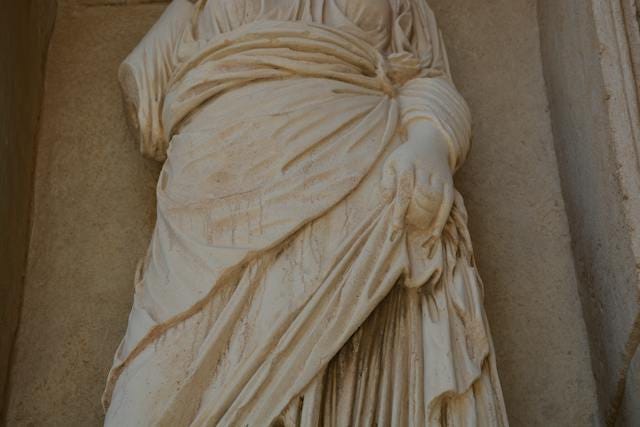
There comes a point when you read history that you start to wonder where all the women are. Yes, of course Henry VIII had six wives, and both Elizabeths made outstanding queens, and of course everyone knows about Maggie, but in the overarching scheme of things women are still lacking from the historical narrative. When you go digging they are visible, vibrant, present, but you have to actually want to go digging to see them there. None of this is new, the first feminists were acutely aware of this issue, and you can see echoes of it in the treatment of Hypatia, Sapho, and Mary Magdelene, erased from history to the point that their memory is fragments of text. When it comes to writing women’s history those of us who want to read it, reclaim it, own it, have always struggled to find good narratives.
My first degree was social and cultural history, one of those early 2000s degrees that not many people applied to do, and even fewer took. I was the only person in my year doing the course. Yet, for all the eclectic nature of the course, the one thing that stuck with me was that searching for women in history like mining gold, hard work but worth it in the end. What has been exhilarating for me over the last six months of 2023 is the explosion of women in history books being published by reputable mainstream publishers. The sort of texts usually reserved for headline men, chunky, beefy, coffee table weights that make you want to sit down to a coffee and get lost in. History, with meaning and intent.
Yes, I am being slightly hyperbolic here, but dear reader believe me when I tell you that I have been starved of good history books that do not always end in a beheading. Or a rape. Or a murder. Or, well, you know, the damned and the insane. Women in history have only been interesting because of how bad, weird, or unusual they were, not for the fact that they were people in their own right. Jane Grey, Mary Queen of Scots, Anne Bolyn: all met the executioner in the end, and all are remembered because of their deaths. Anne of Cleeves, Queen Ann, and Princess Ann barely dent our imaginations. In the telling of their lives there is nothing bad to grasp onto, just an imperceptible tragedy lurking somewhere that might sell a few hundred copies.
When wring women’s history the narratives we choose to tell those tales matters as much as the history itself. Indeed, any good historian is as much a spinner of narrative as they are a diver into archives. A good history book must be a good book to begin with, and the history follows after. Not that the writer should lie, but they need to keep you engaged. 1848 does an excellent job of keeping you engaged while also pointing out the inherent flaws in the working lives of the women during the period. I enjoy history much more than fiction precisely because a good history writer has the whole world to work with and not just their imagination.
And this is the point of history as a subject and profession. Historians are not simply collectors of facts, they are explainers of cultures, norms, peoples, identities, indeed the whole of the society they study. There is not one what to be a historian, nor is there any requirement that you must study a certain thing. If you cannot explain a complex idea to a ley person you are simply creating complexity for the sake of it, and a good historian is able to cut through that complexity to show you the people, place, and time they are studying. Which is why writing about women is so vital. Without women in the picture you are left with this huge gap in knowledge and experience, filled with personal assumptions that we all have about the past.
There is also the wider issue that without effective writing about women’s lives they will always remain in the shadows. Yes, it is important that women are placed in their context, but you look at any history and without women you had shadows lurking at every corner. Industrial and working class history is cluttered with masculinity in the narrative, yet much of the menial work was done by poor women for poor pay living in poor conditions. It is not sexy work, but it is a compelling narrative when you care to look. It is also much more grounded in our own lived experiences than dukes, princes, kings, and magnates. I love reading about Carnegie, Standard Oil and the guilted age as much as the next person, but without Ida Tarbel something would be very lacking.
I care about this because if you want to show women in the round you need to show women in the history. Intersectional values mean that you cannot exclude experiences you would rather forget, leave out uncomfortable narratives, and not shine a light in the shadows. Yes, I would much rather that Thatcher, May, and Truss had not been women, but the reality is that three of the most divisive modern British politicians were women. That takes ownership, takes acceptance, and requires critical thinking to engage beyond the tropes of iron ladies, pussy bows, and walking through corn fields. Give me Angela Raynor, Anastasia, Elenor Roosevelt, Alice Roosevelt, Eisenhower’s lesbian secretaries, and all the other colourful women not yet made into weighty tomes. Now would that not make for a jaunt through the ages. History indeed.