
Writing
Writing What You Want To Read
It’s Not Always A Value Add
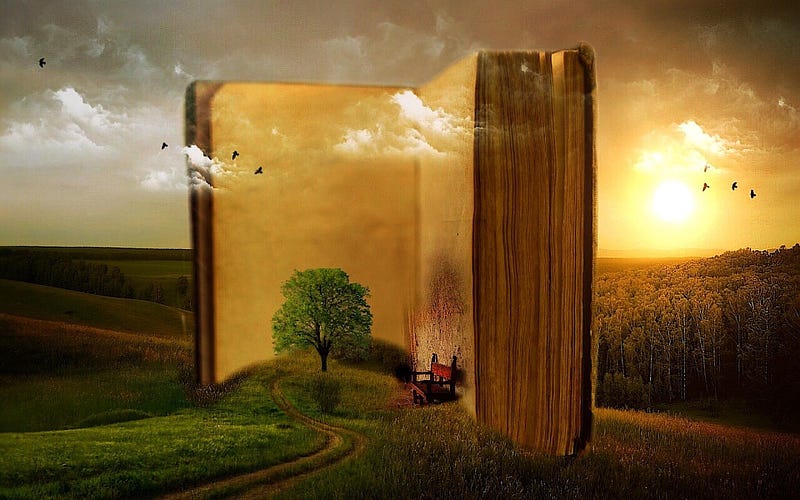
Writing what you want to read comes with some nifty perks, doesn’t it? If you want to read westerns and you can’t find one written in the style you like, then you as a writer can simply write one. Assuming you’re capable of writing a western. Some of us are and then some of us? Well, not so much. But then, the fact some of us have never written a western shouldn’t stop us from trying.
I believe Toni Morrison said it best:
“If there’s a book that you want to read, but it hasn’t been written yet, then you must write it.”
― Toni Morrison
But writing what you want to read doesn’t always add a tremendous amount of value. There are a few drawbacks we need to think about before we set off on the road to self appeasement.
Keep in mind, not everybody likes or reads westerns. That in and of itself may be just fine with you, though. You like westerns, you read ’em, and so you may want to write ‘em.
No harm in that, but let’s take a contrarian perspective for a moment. If you are continually writing what you want to read, you might just be limiting the scope of your reader base. Perhaps I should take a stronger stance on this observation.
You will be limiting the scope of your reader base.
Some refer to this type of writing as niche writing. And don’t get me wrong here folks, a lot of very successful writers have made some pretty hefty coin by “staying in their lane” and cranking out one particular genre.
But writing to the particular tastes of a narrow audience of readers, especially if you’re one of those readers, isn’t always writing what you want to read. In fact, you may discover after pouring out the same kind of stories for a while you’re not doing it for you anymore. You’re cranking stories out for your audience.
You wrote that one piece you really didn’t care for, but the reading public loved it. What happens next is almost imperceptible, and a lot of us do it without even realizing it. We shift course and start trying to replicate what our readers dictated they wanted to read.
And suddenly we discover we’re writing romance.
With a western flair.
Once upon a time, I was all over the board with my writing. I was a journeying writer, a jack of all trades, and a master of none. On the other side of the coin, my reading tastes were laser-focused on suspense and the supernatural. After years of reading and then not finding anything new I wanted to read, I decided to write a story myself.
The result of this decision, one that I made almost fifteen years ago, was four books that only about 100 or so people and I wanted to read. Fifteen years of writing what I wanted to read which amounted to little more than a sum zero game.
Purely from my own experience, I’ve deduced writing what I want to read isn’t always a value add. I find it much more appealing to write for those people who enjoy reading my type of writing.
Yes, I write because I love to write, but nowadays, I’m fulfilling two passions — my love of writing and writing for those who love to read my stories.
There are so many writers who each have their own ideas, perspectives, and thoughts on so many different topics. So it follows that each of you probably have your own take on what you write and the reasons.
And that is totally cool.
A lot of writers may even now be exclusively writing what they want to read and are just fine with it. Conversely, there’s probably an equal amount of writers out there who are catering to their audiences by writing what they kind of like and what the readers love.
The wondrous thing is that we’re all writing something. That’s the most important thing we as writers can do.
So for now, I’m going to saddle up and head on down the trail toward the slowly setting sun. And as I knock the dust off my chaps with my battered Tom Mix hat and take a slug of sasparilla from my canteen, I’ll bid all you little doggies a fond farewell.
I bet all of you are glad I don’t write westerns, huh?
Thanks So Much For Reading
Let’s keep in touch: [email protected]
© P.G. Barnett, 2020. All Rights Reserved.


