Writing Our Bodies: Breaking Beyond Body Hatred to Better Our Craft
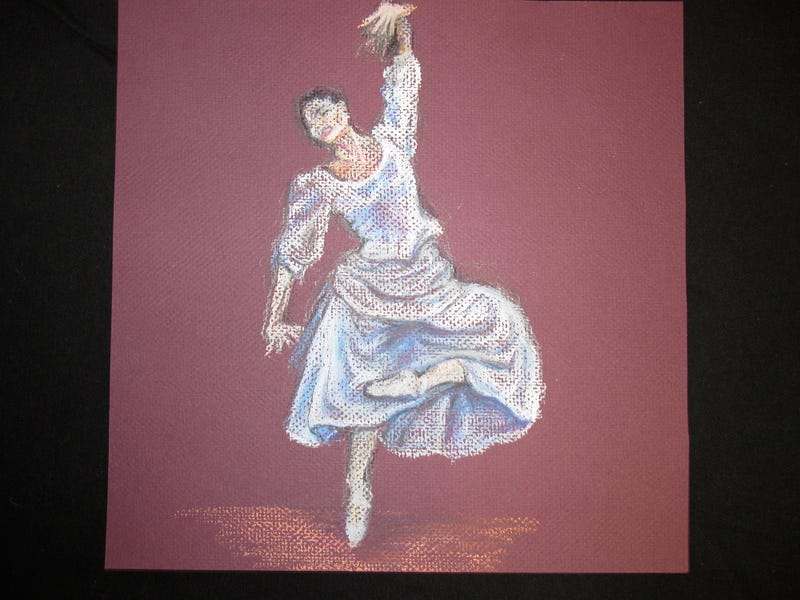
Just as our physical body can fall prey to self-destructive behaviors — obsession, paralysis-by-analysis, denial — so too can our poems, short stories and Medium articles. We contort our forms into oblivion. We fixate on a single limb, a fragment, forgetting the magnificent body to which it belongs.
Both our writing and our bodies are subject to similar habits of the mind. How we treat one is, often, how we treat the other.
But, the inverse is also true. With a bit of self-awareness and self- work, we can learn to support our writing bodies. We can celebrate the different forms we take on the page and in the world. We can grow to love our writing and our bodies both, for the ever-changing, dynamic creatures they are. Both our writing and our bodies are subject to similar habits of the mind. How we treat one is, often, how we treat the other.
This year I’ve begun exploring the following questions: What do bodies and words have to say to each other? What does crafting sentences have to do with cultivating a healthy self-image? In my writing and in my teaching, I’m slowly happening upon their answers. They’re more than the product of a philosophical exercise. I’m being faced with them — in the form of real bodies, real needs, and a real desire to connect two parts of my life.
Last November, a parent approached me in the parking lot.
As she waited for me to look up, she leaned against the red hip of my Subaru.
“Did she tell you?”
I placed the essay I’d been scribbling on across the car console. Say less, let me guess, a margin whispered in blue.
Searching for the right answer, I scanned my mind over the day’s events. I remembered her daughter’s “free” write at the beginning of class: a tense jaw moved behind pursed lips, as if she were grinding her thoughts onto paper with her teeth. When she was done, it was impossible to tell where the typed font of the prompt ended and where her own handwriting began.
“No, she didn’t. What’s going on?”
“She’s lost more than ten pounds in two weeks.”
I rolled the window farther down, as if to reveal the part of me her comment came into contact with: the survivor of anorexia, the anxious perfectionist beneath an impression of calm.
“Wow, I’m so sorry.” While my word’s noted the shock of surprise, I had the strange sense of having been waiting for this moment. While my mind tangled itself in a distant vocabulary of trauma, my gut was already gathering its reins, ready to race off in the direction of the crisis. The result was an inner sense of whip lash, a sense of being pulled apart.
The mother looked past me at a thin-limbed tree, a charcoal-gray eye scarred into its trunk. One of the hands that had been crossed tensely across her chest — in defense against the cold or against me — now raised itself in a fist to support her chin, a posture of contemplation.
“What triggered it, do you think?” I scrambled ahead, into the past; into the truth.
“It began with a few harmless jokes at home. You know . . .” She said this quickly, as a parent might fast-forward through the inappropriate part of a movie.
A gust of wind blew the stack of papers off the console onto my car’s dirty mat. I leaned over to prevent something, recover something. But the papers drifted out of reach, a blue and black fan settling at the foot of the empty seat.
For days after this conversation, I questioned my career-choice. The lesson-plans I’d been crafting felt beside-the-point, a chattering next-door to life’s headquarters, an immense effort misplaced.
On the other hand, I knew intimately what this student was going through. She likely felt alone in her struggle, and surely things would get worse before they got better. But my ability to enter this empathy into the structured space of teaching felt endlessly complex, intimidating, formless — unlikely.
I soon realized that the breach I perceived between my teaching life and the world of body image was a projection, shaped by the gap I’d let grow between my present and my past. If it was going to close it, if I was going to find a way to integrate my writing life with a life of self-activism, I’d need to revisit.
When I was twelve, I began starving myself by degrees. First it was just “no sour cream on my burrito.” Soon it was sneaking in nonfat yogurt to Thai dinners while my family enjoyed their Pad See Yu. I remember a waiter coming up to our table one night — “You’re so skinny! eat more!” and feeling flattered.
My critical voice was like the imperial subject of a war, colonizing all regions of my life.
I also developed a compulsive relationship to exercise. In the middle of family meals, birthday parties, movies, I’d sneak away to bathrooms, laundry rooms — any room — to perform ritual squats and lunges. I’d take one thing into the house at a time to increase my steps. I’d get resentful of those who exercised more than I did.
My critical voice was like the imperial subject of a war, colonizing all regions of my life.
In the bathroom of the Thai restaurant, my bony haunches almost, but didn’t quite, graze the white porcelain toilet.
Down, up — one.
Down, up — two.
Down, up — three.
I still remember, on the opposite wall, a black and gold mandala poster. The outermost circle of fiery gold guarded a more serene, dark, square interior. As I moved to the silent sound of my counting, my eye traced the fire for an opening, a gap, a break in the pattern, through which it might slip, escape into a black shard of stillness. But beyond each iris of flames was only another, and another.
Down, up — nineteen
Down, up — twenty.
When I physically recovered from my eating disorder, writing became a refuge from the physical world. But it also introduced a new territory for my critical voice to rule, a new limb for fear and self-doubt to contort.
Writing was a wild and free thing one moment, a frothy-mouthed attempt to escape from my critical voice the next
When I was in a flow-state, writing was like the horse-back riding I adored; language was a mare that I could nudge in one direction or another, but who also wandered on her own instinct. Yet, seated on this wild writing thing inside me was also a jockey, surveying the animal and her progress, ready to bring down the whip if a line wasn’t “just so.”
Writing was a wild and free thing one moment, a frothy-mouthed attempt to escape from my critical voice the next.
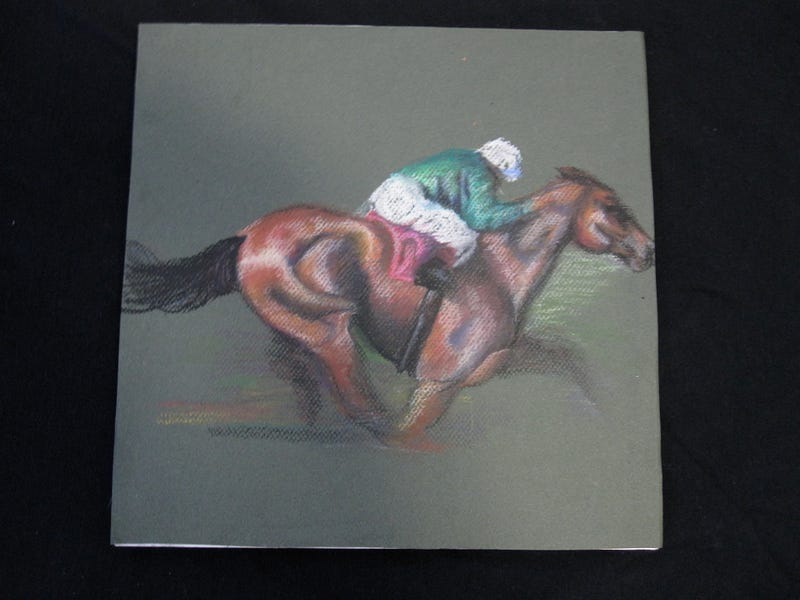
While I may recount these phases in the preterite, the battles between a domineering critical voice, and a wiser self-knowledge, is not a thing of the past.
I still struggle to release my writing body from the self-denial and delusional discipline that wrought my body when I was younger. In the midst of drafting, I sometimes open my laptop and begin editing the paragraph in the window of view. For half an hour, I’m torturing this one tiny piece, without even pausing to appreciate the body to which it belongs.
In times of stress, I still catch myself focusing on style over content. I perfect a paragraph’s opening line and make its eyelashes bat with alliteration. Meanwhile, if you ask me: What are you saying here? Why does it matter so much and where are you going? I’d go blank, just as I did when my sister asked me fifteen years ago, Why aren’t you eating, Mar?
None of our demons go away, entirely. But they can be led into the light, and managed by a stronger and more conscious part of ourselves.
After writing an article about balancing control with the creative unknown, I ironically struggled to let go and unfasten my sense of self from the essay’s success or failure.
None of our demons go away, entirely. But they can be led into the light, and managed by a stronger and more conscious part of ourselves. James Hollis, in his book Creating a Life: Finding Your Individual Path, says, “Consciousness is the gift and that is the best it gets” In this case, he’s right. Our demons are not the danger. Staying asleep to them, while they run the daily show, is.
As I commit to this endless self-awakening, I’m developing strategies to help my students and fellow writers wake up to the intersections between their own writing and bodies. The goal is to transform writing from a playground for their inner-bully, into a sustainable, whole-body practice in self-compassion, positive mind-body connection, and courage — the only kind that works.
I hope you’re already practicing some of them, and that they inspire your own extended list of routines that can enforce a supportive, realistic relationship between you and your body (of writing).
- Meditate: Before you dive into the cerebral world of your document, get in touch with your body. Ultimately, you’ll find that your connection with the latter, directly strengthens your connection with the former. Meditation is a practice in observation. As you observe each passing sensation without reacting or adjusting, you exercise your ability to observe also the details of your memory and imagination. Trace a breathe like you’d trace a thought in a detailed description. This ability to find stillness and focus in our bodies and minds, before we write, can serve us in the drafting process when we need to zoom in and focus on the details of our writing. But it also strengthens the ability to let go. Meditation trains the mind to acknowledge, detach and move on; this will help us when we’ve done our best with a sentence, a section, a whole article, and need to move forward to the next project. Lastly, meditating helps annex our body back into our sense of self. Pursuing a highly cerebral, intellectual career like writing, the body can feel beside the point; my experience has proven that how I treat my body is inextricable from how I perform at the computer.
- Free-write. “Listen to how the mind moves. It’s not about being good; Grab first thoughts; Listen deeply,” says Natalie Goldberg in her book, Writing Down the Bones. Free-writing is meditating on paper. Write down the first thing that comes to your mind, quickly, messily, without self-correcting. Then move on to the next thought — no stopping, no second guessing. When you let the movements of your imagination move your hand, your critical voice will have a lot harder of a time tripping you up. Most importantly, free-writing helps us redefine success. It continually proves to my perfectionism that the value of writing is sometimes simply in the act of writing (not in being perfectly said, or publicly applauded)!
- Put your negativity on the page. Rather than keeping negative thoughts inside, stage directing your movements from behind the curtain of your frowning face, write them down for your better self to see; embarrass them in the white light of your journal page. See how ridiculous their broken record barking can be? Getting our inner demons out on paper, and seeing how fearful they truly are is one way to quit fearing them yourself, and disarm their power over you. When you’re done, place them and this journal entry to the side. Fear is a natural bystander, but it doesn’t need to hold the pen.
- Move your body: When I’m being hard on myself during a writing session, I’ll stop drinking water, hold my pee, skip lunch, sit in the same position for three hours. We think we’re being disciplined and focused; but really, we are shutting out our body, and denying its place in the process of creativity. But the more “stuck” our body gets, the less free our mind is to move around in the realm of ideas. Get up and go on a walk, do five minutes of yoga. If you have a dog, let their instinct to move guide you back to your own body.
- Don’t overstay your welcome during a writing session. You know when you’ve pushed beyond the boundary of productivity, just like you know when you’ve over-stressed your body. There comes a point when effort becomes injurious. Make writing, like exercise, a positive experience by respecting your daily limits. Also, accept the fact that these limits are a moving target. “Every day is different. What body do you have today?” — Says your local yoga instructor. Same goes for writing; some days you’ll be able to sit for three hours as if on a cloud. Others, you’ll need to lead yourself from the start and end of a single hour with a leash and a bag of high-value treats. Whatever the case today, acknowledge it, and respect it.
If you’ve read this far, you’re probably a writer. And, if you’re a writer, you probably have a body. So write responsibly and handle your body with a poet’s touch. Speaking of which, I have one last recommendation:
6. Read Poetry. Incorporating poetry back into my writing life has helped balance an analytical, critical approach to writing — easy prey for my critical voice — with a sacred, sensual stillness. In poetry, each idea is embodied by a sound, shape, a form. The five senses guide the arch of my “sense-making.” In this way, poetry re-roots language-making in our own physical beings. It can remind us to treat both our words and our flesh as sacred points of contact with the world.
“Human bodies are words, myriads of words;
In the best poems re-appears the body, man’s or woman,
well-shaped, natural, gay,
Every part able, active, receptive, without shame or
the need of shame.”
~ Walt Whitman, To the Sayer of Words