
Writing — old school style
What writing by hand taught me about myself and my craft
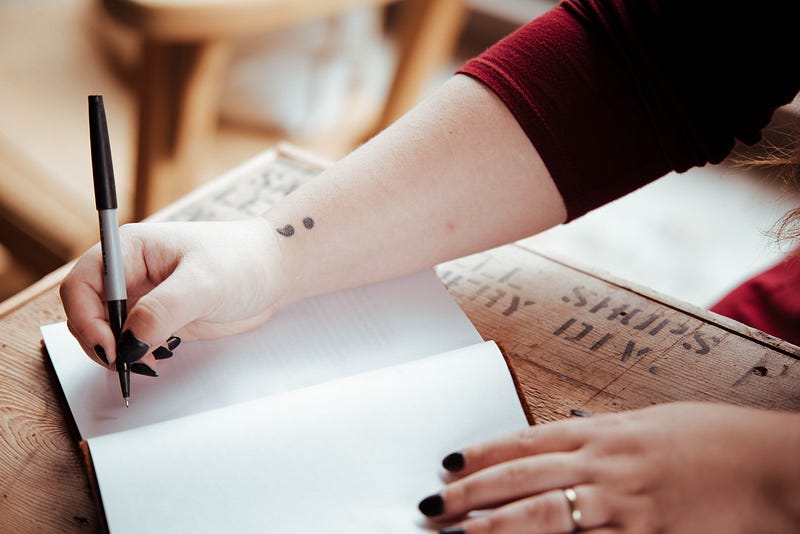
I have taken part in several 40Days40Writes over the last few years. If you have never tried to write every day for 40 days, I suggest you give it a whirl. Some prompts are fiction, others are creative narratives, but they all push you to create and explore.
The last one took place just as the school year was ending, and threatened to be “old school style” meaning as participants, we could choose to use a typewriter, (not something I have at the ready) or hand-write our entries. I put pen to paper, literally. It was an interesting experiment that showed me a few things about myself and how I write.
The first thing I noticed was my particular fondness for specific papers and pens. I realize I have become rather high-maintenance in this area, refusing basic notebook paper in favor of a lovely new Moleskine book. There is something almost sublime about the feel of the paper under my hand.
The proper pen is equally essential, ideally with a very fine nib, but it must remain smooth. If the ink is a color other than navy or black, this is a bonus, and I found the tween in me overjoyed at trying out different pens, some bold colors and others glitter.
But what I learned about how I write was surprising. I was used to trying to hit a specific word count; 800 always worked well as a guide for me in the past. These writing prompts are to be completed in 15–20 minutes. Clearly, that is not possible when writing by hand. At first, I was frustrated at the pace. I had all these ideas swirling around in my brain, but trying to funnel them slowly down my arm and out the pen meant I lost many of those ideas to the abyss of my own ADD.
It required far more planning, this writing out an idea by hand concept. I found that reading the prompt in the morning and then jotting ideas down throughout the day helped me stay on track.
Around the middle of the exercise, I found I could slow down. I could savor forming the words with my pen. I removed much of the fluff that was so easy to throw on a page when using a computer. I worried far less about spelling and grammar, as there were no pesky red lines under my words to derail me.
I spent my time truly focused on my task. Not once did I close my book to scroll on social media, whereas the simplicity of hitting a neighboring tab and getting off task means consistent, dedicated time to write with a computer requires much discipline.
At the end of the 40 days, I had not only 40 seeds of stories I might be able to flesh out later; I had a notebook full of thought and color. It was wonderfully satisfying to thumb through her pages and see all my work. I have no idea how many words I wrote, or for how long. I got to focus not on the metrics, but on the process. It was kind of lovely.
I do not see giving up my computer and bringing back the yellow legal pad for writing, but the change of pace gave me a new way of experiencing my writing, channeling my thoughts, and focusing on my work. It exercised a creative muscle that had been, for too long, neglected.