
6 Handy Tips for Writing During the Time of COVID-19
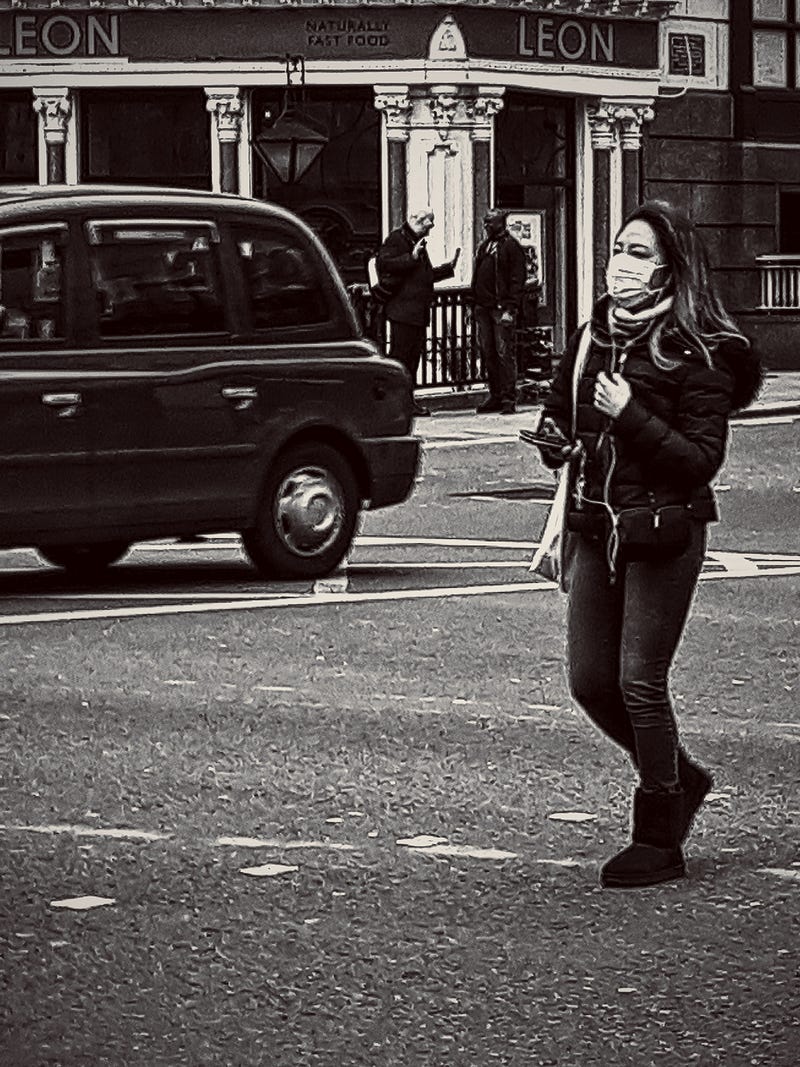
After all, Fermina Daza and Florentino Ariza were just two characters in Garcia Marquez’s novel Love in the Time of Cholera. You, fellow writer, on the other hand, are the only character in your own life’s novel. And you’re coming back to port now.
In times of self-isolation it is necessary, fundamental even, to free up our imagination. While four walls present challenges of a physical nature, the blank page in front of us is the window we can escape through.
Write. Write until you fill up that blank page. Write until your fingers hurt. Write until your eyes are red and you doze off to the point where you begin to question the reality (or lack thereof) of your own thoughts.
And when that page is filled up, and the next one, and the one after that one, pause. Because you will be tempted to submit your work there and then. I’ve had that urge myself. Pause, though. Remember, the world out there is still COVID-19-infected and that bastard, sadly, ain’t going nowhere soon!
Allow a few days to pass. Then, go back to your manuscript with a fresh mind, open eyes and a sharp pair of scissors. Revisit, revise and snip. Now, like any self-respecting cook, let the new mix sit quietly for a few more days. Busy yourself doing something else. If your neck of the woods is in lockdown, listen to a podcast (may I shamelessly plug my own one, Marathon Man, on East London Radio?) or, in the UK, catch up with anything BBC iPlayer might have on offer.
The logic behind waiting is that we’re not geniuses. Painful as it might be to admit, we, authors, can be self-conceited sometimes. We finish that draft and we think we’ve just written the next Great American Novel, or in my case, living in the UK and writing chiefly non-fiction, the next Down and Out in Paris and London. No, we haven’t. We haven’t even proof-read properly.
There’re only so many typos and grammatical howlers an editor is willing to put up with. Think of the poor souls, trudging through manuscript after manuscript, and instead of enjoying the ride, taking out a red pen to circle easily avoidable baby blunders.
At the same time, when revising, set yourself a time limit. After all, you do want to submit that manuscript eventually. Going over your draft ad infinitum will not help and it might knock your confidence. The key is in striking a balance.
What happens, then, if your piece is accepted? Even better, if it’s accepted and you’re paid for it? The trap to fall into easily here is to think that all your future work will be equally accepted.
No. You just got lucky.
The reality of writing and getting published is that we will be rejected more often than not. It is not that what we write sucks (although that might also be the case), but that the timing is wrong, or we pitched our manuscript to the wrong publication or publisher.
Don’t chuck. Recycle.
In the same way we want a greener planet, we also want a less-polluted literary world. That means, fine-tuning our work whilst maintaining our individual author’s voice. That draft that just got rejected because it didn’t meet the guidelines, yet you loved so much? That draft is a good one, but it hasn’t found its right home yet.
Writing and reading are the key components of literature. Literature is art. And art is subjective. Therefore both writing and reading are subjective. What for one publisher might be the next White Teeth might, for a different person, be the much sought-after loo roll missing from supermarket aisles up and down Britain now (just a tongue-in-cheek, Coronavirus-related joke). My point, though, is that if you believe in your own work, and you think it has merit, stick to it, tweak it a bit and submit it again, to different publications this time.
I shall be back to write about the next steps: how to pitch, when to pitch, to whom to pitch and how to keep track of what you pitch.
Happy (self-isolation) writing!
(Read the second and third parts below)
© 2020


