
Writing a Book Is Not as Easy as You Think
Even if you realize it’s hard, it’s still far harder than you realize

“I should write a book.”
How many times have you heard that? Hell, how many times have you said it?
Anytime a person has an amusing story or an interesting experience it seems like writing a book about it is the next logical step. Sometimes it’s even less than that. I’ve talked to people that want to write a book, not because they have something they feel could best be presented in book form, but because they just want to have a collection of pages on their shelf with their name on the binding.
Everyone thinks they can — and should — write a book.
Far fewer people say, “I should make a movie,” or “I should paint a portrait.” Why?
I believe that, for some reason, the idea of writing a book is viewed differently than other forms of art and entertainment. Most people agree that filming a movie or composing a musical album or painting a portrait is a difficult, involved process that takes patience, determination, talent, and specific skill, a combination that most of us do not have. However, that is not the case with authoring a book.
Perhaps it is because, unlike those other gifts, we have spent much of our lives writing. We write when we take notes in school. We write when we make a grocery list. We write (electronically) when we send an email. Aside from speaking, writing is the most common form of communication and, with the rise of the Internet, people are writing (typing) more than they ever have before. Whereas singing or acting or painting is seen as a specific skill that needs to be honed separately, everyone writes on a daily basis, so many people don’t really see it as a skill.
Yet it is.
Have you ever sat down to write a term paper or blog post or even an interoffice memo and you’re stuck with a blank page and a blinking cursor?
Imagine that multiplied by a quadrillion. That’s a book.
Keep in mind that I’m not even touching on the other difficult pieces that go into getting a book from the writer’s head into the reader’s hands — getting an agent, getting a publisher, packaging, marketing, etc. I’m only focusing on the actual words themselves.
Writing. Editing. Rewriting. Editing again. Rewriting again. Polishing.
The words are only one part and that part alone is extremely tough.
Let’s say you want to self-publish.
Unless you want to be viewed as a hack trying to make a quick buck, you still need to put in the work to make the book strong. In fact, in some ways you need to put in more work because (a) there (probably) isn’t a team of people helping you to make the book the best it can be, and (b) you need to convince people to buy and read it without the traditional marketing push behind it. There are thousands of books released by the major publishing houses every year that are supported by book tours and ad budgets that most people never hear about, so throwing yours up on Amazon and writing a Facebook post isn’t going to do anything to move the needle. Trust me, I know firsthand.
However, there is a flip side to that coin. The biggest benefit to the success of a book (or really anything) is positive word of mouth and that doesn’t come from publicity stunts or huge marketing budgets. It comes from creating a well-made product that people not only enjoy, but love so much that they can’t stop talking about it.
Just because a book is a “bestseller” doesn’t mean anything and just because another never went number one doesn’t mean it isn’t still selling and, more importantly, resonating long after its debut.
Take Business Adventures, for example. Written by John Brooks, it is cited by both Bill Gates and Warren Buffett as the greatest business book ever written. It was written in 1969 and went out of print shortly thereafter, but thanks to repeated praise from both men, it is once again back in print. John Brooks died in 1993. The book’s original publisher is out of business. No one has done any marketing for that book in nearly fifty years. Yet, demand for it was so high that it is once again available. All due to word of mouth.
So you may not be able to make a huge splash the first week, but if people like your work and think others will too, they will be the best public relations team you could ever have. Which means you’ll have to work even harder to make something that not only cuts through the noise today, but also endures tomorrow.
Regarding the content of the book, anything and everything is available to you.
At first glance, nonfiction may seem easier — you don’t need to create all new characters and settings, you can refer back to, and build on, the works of others, and you have years of practice thanks to all of those term papers you wrote in school.
Seemingly millions of others feel the same way and, as nearly all of them learned the hard way, it’s not true.
First, there is the research. To write a book on a specific subject, a writer not only needs to know about that subject, but also be able to bolster arguments and defend conclusions with written proof, whether it is through data or historical precedent or even quotes. It needs to be defensible. That takes months and years of studying, note taking, and critical thinking to synthesize all of that information into an idea and then turn that idea into a book.
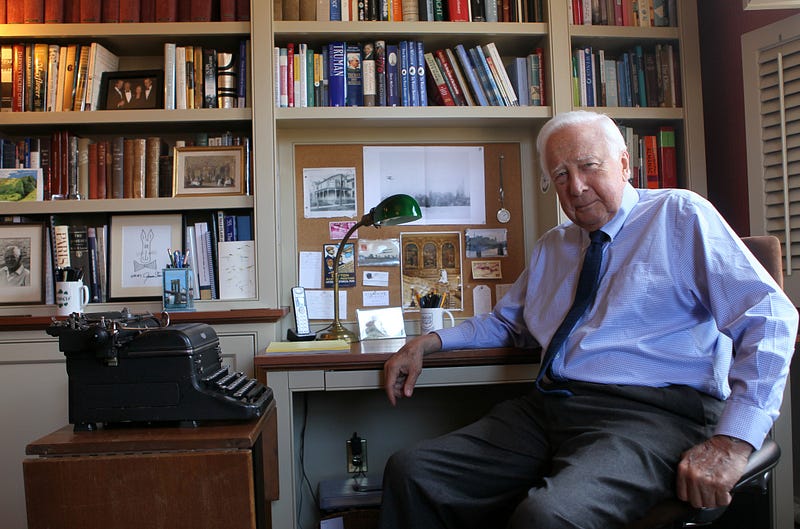
Secondly, it needs to be somehow different from all other books on that topic. Otherwise, why should anyone read it? If the content can’t be different, then the writing needs to be. There have been hundreds of biographies on John Adams over the years, but David McCullough won the Pulitzer Prize for his book. Why? Adams died on July 4, 1826 (the same day as his frenemy Thomas Jefferson), so it’s not like he did anything else in the 175 years in between, but McCullough’s brilliance is in his ability to make a page-turner out of a straight biography. The story of the life of John Adams has never changed; the way that story is told has.
Which brings us to the final, and most important, point: it has to be an enjoyable read.
Have you ever read a business book that has an interesting topic but becomes so repetitive that you want to throw it across the room? After two or three examples, the point is made. Unfortunately, that’s not enough to justify the publishing of a book — and that’s the point. Far too many business books should have been an essay or a blog post. They have a compelling thesis and conclusion, but both of those are wrapped up in about twenty pages, so the author fills the middle with 180 pages of examples that make it indigestible.
Nonfiction is extremely difficult. As Ryan Holiday explains, the thinking and researching and organizing of a work of nonfiction that sells well and also continues to make an impact long after its creation is a difficult process that lasts years.
That’s too much work, you may be thinking. I’ll just stick with fiction.
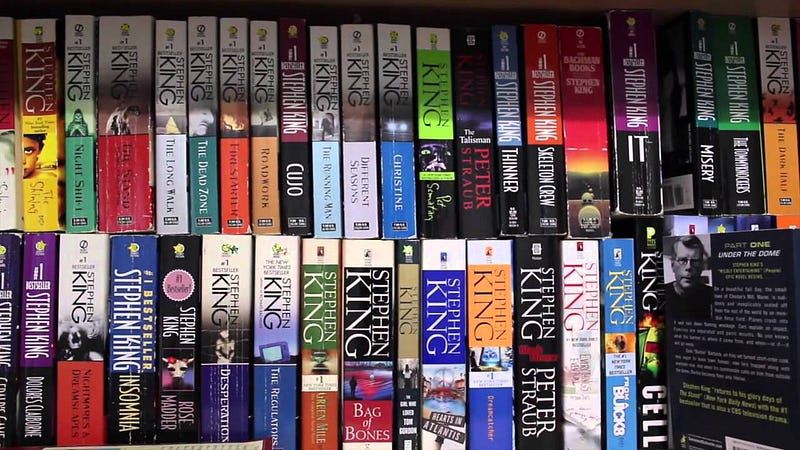
Well, I’ve got some bad news for you. Fiction, in some ways, is even harder. Even Stephen King and John Grisham — authors that publish at least once per year and make it look easy — repeatedly stress how much work goes into it.
First, you need to create an entire world out of thin air. Even if you base your novel in a real place, everything else — characters, names, events, backstories, descriptions, all of it — still needs to be not only invented, but also fit within the framework of the universe that’s been created, and have a coherent story arc.
The elements analyzed earlier? They are not confined only to nonfiction. In nearly every case, you still need to do research for a novel. Even if it is just street names or the year something occurred or what goes into a character’s profession. A novel needs a structure and background. In short, a novel needs an outline.
Outlines, if done correctly, are boring and tedious. They’re the hard work that most aspiring writers don’t want to do. They just want to start. So many people believe that writing a novel begins with a flash of inspiration and ends with happily ever after, but the truth is that nearly all of them are mapped out and planned.
Grisham writes a short paragraph synopsis of each chapter that serves as his outline. He’s said repeatedly that he doesn’t write the first scene until he already knows the last one, adding, “This necessitates the use of a dreaded device commonly called an outline.”
I’m certainly no James Patterson fan, but his success cannot be questioned and he, too, relies on an outline:
I’m a fanatic about outlining. It’s gonna make whatever you’re writing better, you’ll have fewer false starts, and you’ll take a shorter amount of time. I write them over and over again. You read my outline and it’s like reading a book; you really get the story, even though it’s condensed. Each chapter will have about a paragraph devoted to it. But you’re gonna get the scene, and you’re gonna get the sense of what makes the scene work.
Sylvia Plath, Norman Mailer, and William Faulkner all employed outlines of some kind for their books.
If your dream is to create an entire universe comprised of several books, an outline will probably not be enough. For her Harry Potter series, JK Rowling used a handwritten spreadsheet to keep everything straight, dividing columns by chapter number and title, organizing by month, and delineating between main plot, primary subplot, and secondary subplots.
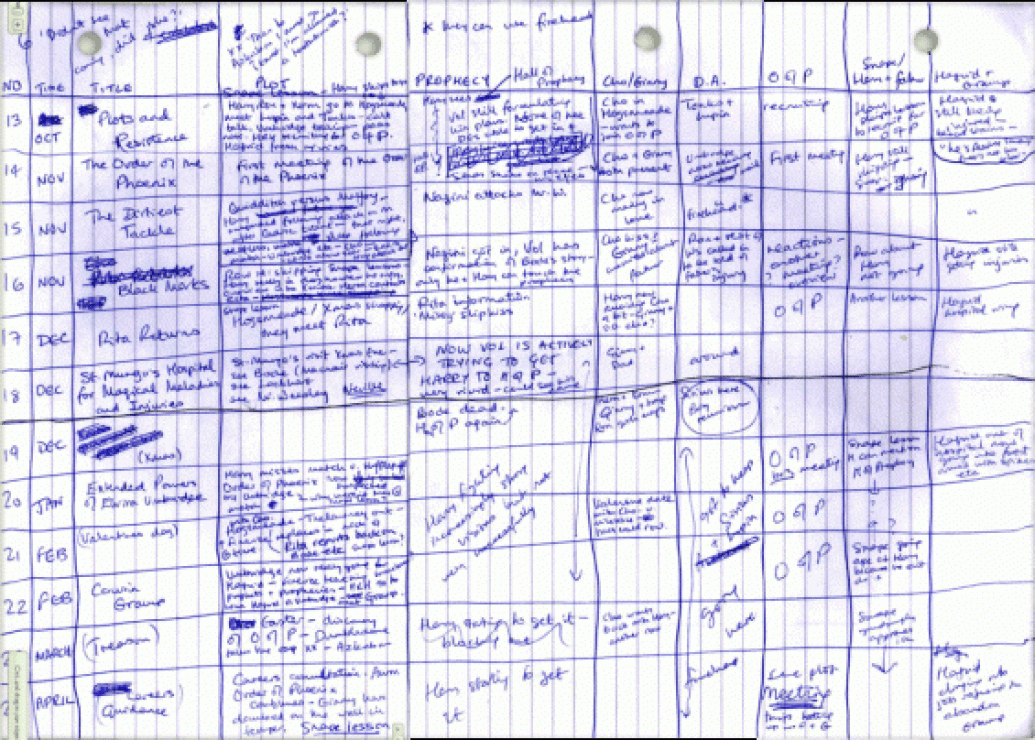
This is not only difficult and time-consuming, but also removes some of the romanticism people have about the craft of writing. Outlines? Spreadsheets? What fun is that?
It’s not fun, and that’s the point. It’s work, and outlines work. They’re important, because if you’re not careful, you’ll find yourself on page 85 with a cast of characters that suddenly have nowhere to go, the writing equivalent of painting yourself into a corner.
That’s a book.
Correction, that’s the first draft of a book. All of that time and effort for the first draft.
So the next time you or someone you know says they should write a book, keep all of this mind. Because a book, even a shitty book, is very difficult to write.
Christopher Pierznik is the author of nine books, all of which are available in paperback and Kindle. In addition to his own site, his work has appeared on XXL, Cuepoint, Business Insider, The Cauldron, and many more. Follow him on Facebook or Twitter.