
Writers: There’s Fire in Your Journal
And what it can do for your work

What do you do when you run dry on ideas? When you’ve hit the wall and simply don’t know what to write, or how to write your way out of a situation in something you’re working on? Maybe you don’t know the next line a poem, or a good line of dialogue for a character, or maybe you aren’t feeling inspired at all. What do you do?
Turn to your journal.
Journals have the potential to help us in many areas of our lives. They give us the power of collected reflections and can help us shape the big picture answers to the themes and rhythms of our lives. Journals can help us carve some meaning from the chaos, and maybe even begin to help us shape an answer for why we’re here and what we want or feel our purpose to be.
But they can also be a powerful tool for us as writers. Keep reading and let’s talk about it.
On keeping a journal
I write in my journal twice a day. This year, I am trying a guided journal for my morning reflections and I do an open-ended one at night before bed. How you keep yours, in what format and what topics you decide to record are and will always be yours to decide.
I can’t do that work for you. What I can offer are some super quick suggestions for how to keep your work and in the next point, what things you might want to jot down in yours. Consider both of these as merely suggestions and inspiration to help you get started, because the truth is, you can’t reap the benefits without laying the solid groundwork of having fat and overflowing journal first.
How to Keep a Journal
So, how to keep a journal? Straightforward, no B.S. answer: You just do. You decide the time of day and you sit down and you write.
Painfully simple and even more painfully hard to keep. Trust me, I’ve been there, I know. It wasn’t my experience that this was an easy habit to develop. One thing that has helped me though are these two rules (for me rules, for you, maybe guides):
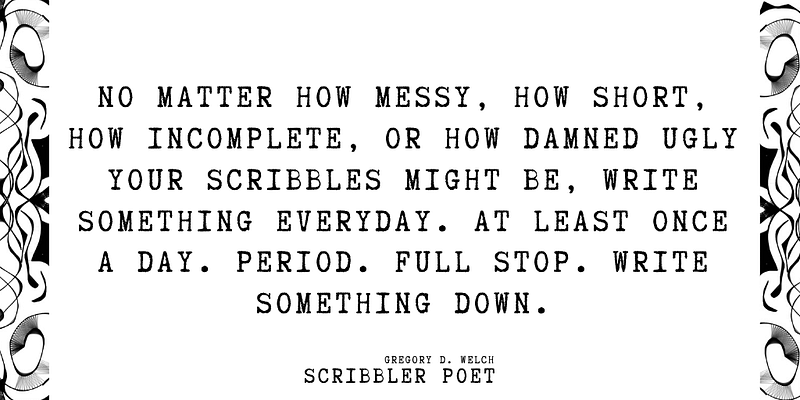
- No matter how messy, how short, how incomplete, or how damned ugly your scribbles might be, write something every day. At least once a day. Period. Full Stop. Write something down.
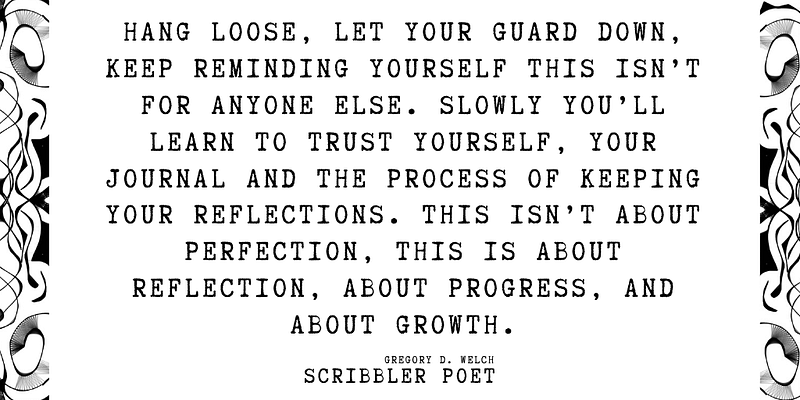
- Hang loose, let your guard down, keep reminding yourself this isn’t for anyone else. Slowly you’ll learn to trust yourself, your journal and the process of keeping your reflections. This isn’t about perfection, this is about reflection, about progress, and about growth.
Follow these two rules and build momentum, soon, the journal keeping will catch and you won’t want to break your chain. Then just keep repeating.
What to write
For me, this was always what tripped me up. What the heck do you write in this thing?
I think on some level I secretly worried about someone reading my work someday and that more than anything froze me up. It kept me guarded. It made me want to write pretty, to make sense, to do the things you normally do for an audience.
But once I shut that down and said this is mine. Maybe someday I’ll turn this into a memoir or some other public writing (which is what we’re going to speak about soon), but at that moment shared only between me and the sacred page of my journal, there isn’t another soul around. This is mine.
Learning to think that way about your journal is a real help in keeping one. It lets you scribble out mistakes, jot down, “haha” when you see a goof (I get dates wrong sometimes, or days of the week). So, pregame rule one, embrace your imperfections as the beauty of your humanity and just roll with it.
Topic ideas
OK, a quick list of topic ideas for your journal:
- What’s something you learned today?
- What’s something you wished you did differently?
- Did you make a royal mess? Write about it.
- Did you see something quirky, overhear something interesting?
- Describe the most unique characters from your day, just free flow, no worries for prettiness or perfection remember.
- What’s something that made you feel…happy, sad, excited, nervous, anxious, afraid, joyful, strong, empowered, capable? Write about it.
- Did you laugh today? What made you laugh, what kind of laugh, how long, why? What stands out to you about it?
This is a good place to start, but don’t let this limit you. This is your journal and yours alone. Write whatever the hell moves you and keep a record of your reflections and your days on this wobbly old ball we call home.
How to use your journal as a writer
Keeping a journal of almost any kind can work as a writer’s journal, and one of a writer’s most useful tools. It sharpens your mind in the ways and means of reflection, of contemplation, of working through the otherwise mundane moments of the lives we lead and live.
Journals give substance, answer questions, connect and ground us to moments and feelings and experiences in our own life. And what this can offer our writing is the ability to tap into these deeply intimate personal truths and put them into the lives of our characters, the stanzas of our poems, the narrative arc of our essays. Our journals can become a source of endless inspiration for what to write, as well as a great strength and motivation in sustaining the hard work of writing these things, to begin with.
How do you use your journal as a writer? You connect with the moments that have built you, and you find ways to weave them into your work so they can then connect with your readers. In short, you use your journal to inspire, motivate, and help you with the work you’re doing, and then you use these truths (feelings, experiences, lived in moments and observations) to better serve your audience.
Keeping a journal to help you grow as a writer
Journal writing is its own form and demands its own craft. It can, and will, help you grow in several areas of your life. You know all of this already by now, but now we’ve taken a look at what it can do for your writing and writing life.
If you’re struggling with any issues in what to write, turn to what you’ve kept in a journal. Need some creativity? Turn to your journal and look for those days where your pen fell a little harder on the page, there will be plenty. If you want to say something that’s been said a lot already but want a fresh twist, turn to your own experiences right there in your journal.
Keeping a journal is more than just a collection of scribbles about your days. It’s a way to scratch out the meaning from moments and what you put on a page gets written in your psyche and soul. That’s a good thing. Turn back to these pages often and you will grow and develop as a writer.
Enjoyed your read? Want more? Check these out: