avatarNicole Akers

Free AI web copilot to create summaries, insights and extended knowledge, download it at here

2876

Abstract

works.” — John Dos Passos (quoted in The New York Times, 25 October 1959)</p><h1 id="4b64">Fall in Love with the Idea of a Retreat</h1><p id="52de">Every writer I’ve ever met has a <a href="https://readmedium.com/why-i-love-being-a-writer-78fbd1d4455b">romantic notion</a> of having a retreat where you hideaway in a secluded place and can let the words flow without interruption. You eliminate distractions and seclude yourself for some time to come to terms with yourself. Maybe it’s a particular time set aside to work on your project or attend a workshop with other writers who are working on achieving their goals.</p><p id="4e50">I watched an interview with <a href="https://en.wikipedia.org/wiki/Matthew_McConaughey">Matthew McConaughey</a> about the release of his memoir, <a href="https://www.amazon.com/Greenlights-Matthew-McConaughey/dp/0593139135"><i>Greenlights</i></a><i>.</i> During the first couple of days in his desert retreat, he said he turned off everything electronic to be completely and utterly alone with his journals, to get in touch with the words he, himself had written. And in the loneliness, he found an idea. That idea became the book.</p><p id="24a8">It seems we love and hate being alone with ourselves. I wonder if it’s because we don’t know what to do with our boredom. Much like kids, who act out when they are bored, we seldom leave ourselves to boredom. We're mostly creating or thinking about creating, but rarely are we still. Maybe it’s that we don’t know who we are or are often lost in our creations.</p><h1 id="c971">We're Jealous People</h1><p id="1134">It’s okay to be honest that you’re jealous of your peers. You enjoy your friends and cheer them on, but you're also secretly jealous of their success. They started before you and got the favor of an advantage that had nothing to do with their talent. Or they started after you and had one piece blow up with virality you’ve been craving. You feel you deserve their success.</p><p id="2028"><a href="https://books.google.com/books/about/Essays_Speeches_Public_Letters.html?id=hKUJcOUQcHQC">William Faulkner</a> said the same thing about <a href="https://en.wikipedia.org/wiki/Mark_Twain">Mark Twain</a>:</p><p id="f166" type="7">“[A] hack writer who would not have been considered fourth rate in Europe, who tricked out a few of the old proven ‘sure fire’ literary skeletons with sufficient local color to intrigue the superficial and the lazy.” — William Faulkner</p><p id="3b32">And <a href="https://books.google.com/books?id=nUgqAAAAQBAJ&amp;pg=PT822&amp;lpg=PT822&amp;dq=None+of+these+people+have+anything+interesting+to+say+and+none+of+them+can+write,+not+even+Mr.+Kerouac%E2%80%A6.It+isn%E2%80%99t+writing+at+all-it%E2%80%99s+typing&amp;source=bl&amp;ots=A216b_0Kc8&amp;sig=bJaJ6TG1k8HNsjpwiJrRnwUnLOc&amp;hl=en&amp;sa=X&amp;ei=dhC3U_L-MIKMyATzk4HgDA&amp;ved=0CDcQ6AEwAg

Options

#v=onepage&q=None%20of%20these%20people%20have%20anything%20interesting%20to%20say%20and%20none%20of%20them%20can%20write%2C%20not%20even%20Mr.%20Kerouac%E2%80%A6.It%20isn%E2%80%99t%20writing%20at%20all-it%E2%80%99s%20typing&f=false">Truman Capote</a> said of <a href="https://en.wikipedia.org/wiki/Jack_Kerouac">Jack Kerouac</a>:</p><p id="eb9d" type="7">“None of these people [in the Beat Generation] have anything interesting to say, and none of them can write, not even Mr. Kerouac. It’s not writing, it’s typing.” — Truman Capote</p><p id="0ac8"><a href="https://en.wikipedia.org/wiki/Ernest_Hemingway">Hemingway</a> refers to <a href="https://en.wikipedia.org/wiki/William_Faulkner">William Faulkner</a> as “poor” and claims to be able to tell when he’s picked up a drink in the middle of his writing:</p><p id="73e4" type="7">“Poor Faulkner. Does he really think big emotions come from big words?” — Ernest Hemingway</p><p id="cb8a">For all the times you’ve been jealous of your peers, may you feel freedom in the words of others who lash out at their rivals.</p><h1 id="dbd3">Phrases We Love to Hate</h1><p id="cf7c">We’ve heard some phrases so often that they run tingles up and down our spines. You’re probably thinking of at least one already:</p><ul><li>You have a typo</li><li>Just add some words</li><li>This will only take a minute</li><li>I only need you to edit this</li><li>I liked it before you changed it</li></ul><p id="3469">Every favor you’ve done that will ‘only take a minute,’ but took all day may have you extra conscientious of your time. And you’re right to be aware of time constraints. We all have them. You’ll find it’s an incredible <a href="https://readmedium.com/every-writer-can-stand-some-encouragement-6ae0cb7ae108">give-back</a> to be involved with other writers and help each other in community. Help a friend, and they’ll never forget the effort you’ve invested in them. No matter how good you are, you’re not above helping someone, at least on occasion.</p><p id="e908" type="7">“I am nothing special, of this I am sure. I am a common man with common thoughts and I’ve led a common life. There are no monuments dedicated to me and my name will soon be forgotten, but I’ve loved another with all my heart and soul, and to me, this has always been enough…” ― Nicholas Sparks, The Notebook</p><h1 id="ca11">Be Forward-Thinking</h1><p id="8add">Those of us who think through our fingers have love-hate relationships with the creations of our minds. On the day you hate your favorite pen or can’t stand your favorite chair, don’t forget, you are not alone. Most writers hate their trade, their treasures, and their own voice at some point.</p><p id="c2a7">A reminder from one writer:</p><p id="0ffc" type="7">“We die in proportion to the words we fling around us.” — Emil Cioran</p><p id="0074">Fling with care.</p></article></body>

Writers Secretly Balance Love-Hate Relationships

Words carry responsibility
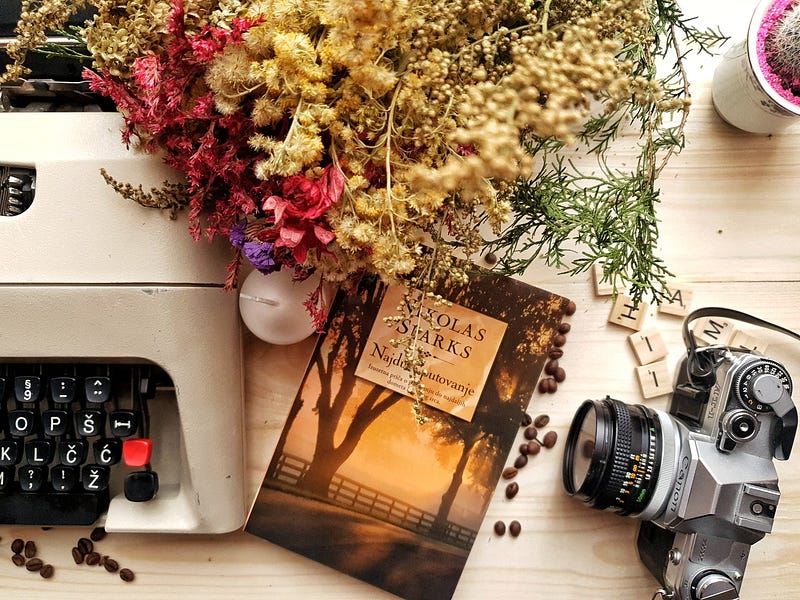
Photo by Ena Marinkovic from Pexels

Writers have secrets. Some even write about their secrets. It’s a delicate balance of how much “self” to reveal. Go all-in and wear your heart on your sleeve, partway in and be somewhat transparent, or share no personal details and write about subject matter that resonates with others. As with most things, balance is necessary. In a writer’s life, it’s a constant equalizing of emotions and relationships, not only with writers, but with one's self, and with others. If you’ve ever awakened and groaned at the thought of writing today, you may have a love-hate relationship with your craft:

“Writing makes no noise, except groans, and it can be done everywhere, and it is done alone.” — Ursula K. LeGuin

Grab their Attention and Keep It

Getting and keeping attention is a double-edged sword. You feel like a failure when you hear crickets after you’ve poured your soul into a piece only to hear relative silence. You crave attention for your work.

When you accomplish a certain level of success you wish you could go backward. Suddenly you’re scared and put pressure on yourself. You’ve tasted the attention you wanted, and it’s like a drug. You need another hit of success, acceptance, virality, a bigger paycheck, or the next idea that will get you in the limelight. You keep creating, and on some days, you’re not pleased with what you’ve written.

Create, then Hate your Creation

You fight through and finish the manuscript you’ve created. It was a masterpiece in your head, but the finished product came out unfavorably. Or, it came out favorably and added to the pressure of having to repeat the process tomorrow, or for the next book.

If you’ve ever come to loathe or be embarrassed by the piece you’ve created, you’re in good company with at least a few famous writers. If you’ve ever felt like this, you are not alone:

“If there is a special Hell for writers it would be in the forced contemplation of their own works.” — John Dos Passos (quoted in The New York Times, 25 October 1959)

Fall in Love with the Idea of a Retreat

Every writer I’ve ever met has a romantic notion of having a retreat where you hideaway in a secluded place and can let the words flow without interruption. You eliminate distractions and seclude yourself for some time to come to terms with yourself. Maybe it’s a particular time set aside to work on your project or attend a workshop with other writers who are working on achieving their goals.

I watched an interview with Matthew McConaughey about the release of his memoir, Greenlights. During the first couple of days in his desert retreat, he said he turned off everything electronic to be completely and utterly alone with his journals, to get in touch with the words he, himself had written. And in the loneliness, he found an idea. That idea became the book.

It seems we love and hate being alone with ourselves. I wonder if it’s because we don’t know what to do with our boredom. Much like kids, who act out when they are bored, we seldom leave ourselves to boredom. We're mostly creating or thinking about creating, but rarely are we still. Maybe it’s that we don’t know who we are or are often lost in our creations.

We're Jealous People

It’s okay to be honest that you’re jealous of your peers. You enjoy your friends and cheer them on, but you're also secretly jealous of their success. They started before you and got the favor of an advantage that had nothing to do with their talent. Or they started after you and had one piece blow up with virality you’ve been craving. You feel you deserve their success.

William Faulkner said the same thing about Mark Twain:

“[A] hack writer who would not have been considered fourth rate in Europe, who tricked out a few of the old proven ‘sure fire’ literary skeletons with sufficient local color to intrigue the superficial and the lazy.” — William Faulkner

And Truman Capote said of Jack Kerouac:

“None of these people [in the Beat Generation] have anything interesting to say, and none of them can write, not even Mr. Kerouac. It’s not writing, it’s typing.” — Truman Capote

Hemingway refers to William Faulkner as “poor” and claims to be able to tell when he’s picked up a drink in the middle of his writing:

“Poor Faulkner. Does he really think big emotions come from big words?” — Ernest Hemingway

For all the times you’ve been jealous of your peers, may you feel freedom in the words of others who lash out at their rivals.

Phrases We Love to Hate

We’ve heard some phrases so often that they run tingles up and down our spines. You’re probably thinking of at least one already:

  • You have a typo
  • Just add some words
  • This will only take a minute
  • I only need you to edit this
  • I liked it before you changed it

Every favor you’ve done that will ‘only take a minute,’ but took all day may have you extra conscientious of your time. And you’re right to be aware of time constraints. We all have them. You’ll find it’s an incredible give-back to be involved with other writers and help each other in community. Help a friend, and they’ll never forget the effort you’ve invested in them. No matter how good you are, you’re not above helping someone, at least on occasion.

“I am nothing special, of this I am sure. I am a common man with common thoughts and I’ve led a common life. There are no monuments dedicated to me and my name will soon be forgotten, but I’ve loved another with all my heart and soul, and to me, this has always been enough…” ― Nicholas Sparks, The Notebook

Be Forward-Thinking

Those of us who think through our fingers have love-hate relationships with the creations of our minds. On the day you hate your favorite pen or can’t stand your favorite chair, don’t forget, you are not alone. Most writers hate their trade, their treasures, and their own voice at some point.

A reminder from one writer:

“We die in proportion to the words we fling around us.” — Emil Cioran

Fling with care.

Writing
Parenting
Self Improvement
Advice
Travel
Recommended from ReadMedium