
Writers Against Accessibility — Why So Angry At Technology?
Turns out one of the most vocal groups opposing digital accessibility, are writers…
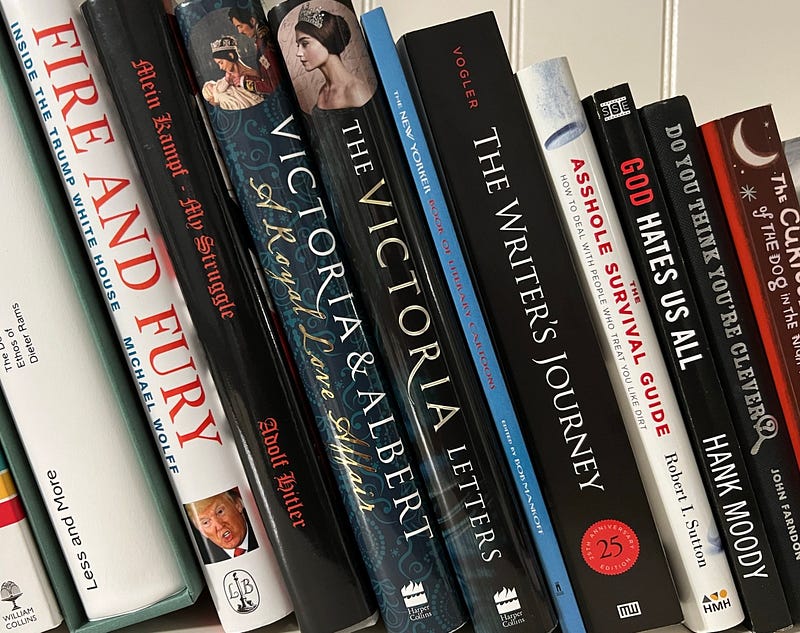
The more time I spend dealing with digital accessibility, the more I find pockets of unexpected groups who oppose it. You’d think it’s common sense by now that we don’t want to discriminate against people, and especially not based on disability. I mean, one of the infamous people who did that was Hitler — coincidentally, he was also a writer — and we all know how that story went down. But, common sense I suppose isn’t as common as one would hope, and it turns out there is a surprising number of writers who don’t just ignore accessibility requirements on the web, they genuinely fight against it quite vehemently, including this platform and its voice synthesis feature.
You have no control
The biggest writer fallacy that I keep reading and hearing is that an author gets to decide how the reader experiences their work. I really don’t know who came up with that load of horse-manure, but they need to stop stringing words together, and zip it. A chihuahua high on coke makes more sense, and I really dislike those tiny bastards. Barking stick-figures… Much like writers who keep yapping, they want to control the reading experience.
Only I, the writer, the belly-button of the Universe, know how my art is meant to be consumed.
You know what the universal truth about belly-buttons is? They’re full of lint and gunk. Go on, check it! Eh? And so are writers and they couldn’t be more wrong. Calling the Earth flat is less wrong than stating that text to voice tools ruin the reading experience and should be kept away from their work.
Sarcasm aside, though, the assumption that writers have any control over the reading experience is founded in zero reality. And that’s not even because of the digital age. Books are rarely read by the same person who wrote them, which instantly means that interpretations will be as many as there are readers. You cannot control the pace, the tone, the accent, the anything. You thought Shakespeare’s plays sound the same when interpreted by a British and a Russian? Think again! 🤣
Writers must understand that all they can control is the words they lay on paper or a digital canvas. How it’s read, on the other hand, is and frankly should stay entirely out of their control. No matter how passionately some writers hate text to speech software, it’s going to be used, it’s an accessibility requirement. The argument that writers would like to provide their own audio interpretation is silly as 99% of them are not voice-actors and even if they think they’re interpreting the text as they intended it, it will likely sound bad enough that they’ll end up actually doing more harm than good. It also removes the opportunity for interpretations and, like every form of art, writing should absolutely allow for that.
Let people consume text the way it best fits them, and move on. It’s a futile fight that will make you look like a tool.
You can’t have it both ways
I get that not everyone is a tech-head like me. Digital literacy is still evolving. My mum only learnt how to write emails at the age of 58. My grandad will never learn at all, ’cause he’s dead. So is my other grandad and all my six grannies. But that’s no excuse to bang on the table and scream that you want people to hear your amazing writing in a certain way because otherwise it’s all ruined.
You can’t say you only write for 85% of internet users because you don’t like how a screen reader sounds when reading your stories, or you hate text to speech due to its “robotic sound”. Maybe it sounds robotic to you, but disabled folks make a whole lot of use of that robot you hate so much. Perhaps before dissing text to voice software, writers need to educate themselves on what this technology is, why and how people use it. Or, alternatively, accept that it’s there, that people use it, and move the feck on.
Writers must accept technological evolution and embrace its capabilities, make the most of it rather than resist it. Writing that discriminates against 15% of the world’s population is just not the kind of writing the world needs. Tech is not the author’s enemy, quite the opposite. It gets their writing in front of people who never had the chance to it before. To me, that’s unprecedented and incredibly powerful.
A worse look than you think
There’s no sugarcoating this. The more a writer screams against people using technology to consume their content, the more they’ll look like a mean, mateless forgotten dinosaur stuck in a disaffected tube station’s toilet. Missed the last train out of a world that never was. Give yourself a minute to let that image sink in… 😈 I’ll even help you with a DALL-E 2 generated one. 😉

Fuming against accessibility tools and text to speech software is a bad look, an awful look, potentially career-stalling. I’m against cancel-culture myself, but some folks aren’t, and this is the kind of bad PR that writers can get into a lot of trouble for.
The objective, genuine needs of 1.2 billion humans trump a writer’s ego. Every. Single. Time. Get used to it.
Unless a writer is genuinely looking to be the poster-child of every bully, they might want to consider looking for something else to oppose. Something that has a truly negative effect on the art of writing. Accessibility isn’t one of them.
You’re not that special
Writers acting like they’re the sons and daughters of Zeus himself, above anything and everything, but especially above us mortal human beings, just because they threw some clever text onto a blank canvas, be that analogue or digital, needs to end. Writers have undoubtedly done a lot of good for human evolution, they continue to do so. One of the oldest pillars of human civilisation, but that’s not a right, it’s a responsibility.
Accessibility advocates get proverbially shat on and ridiculed for sticking up for the 15%. It’s a daily struggle, and we’re fecking tired of it.
None of the above makes writers special. I would argue that people cleaning and maintaining sewage canals are just as, if not more, special. Without them, we’d probably all be dead by now, writers included. The history of human civilisation has proven that while everyone might feel special, no one really is. Pandemics really don’t give a flying fudge whether you’re writing shit or wiping shit. It’s really that simple.
At the end of the day, every major catastrophe has taught humankind one lesson and one lesson only — humility. But it never lasts more than a couple of years; we’re all pretending to be senile, so perhaps that’s why the planet is repeatedly punching us in the groin. But if that’s not enough, allow me to be brutally harsh for a brief second and remind every writer that you’re just as human as everyone else. You may do your thing and do it beautifully, but none of ye, none of us, are special just because we semi-coherently strung several paragraphs together.
What we do, our skills, don’t make any of us special, but how we treat others despite those skills, how we relate to our fellow humans, that just might.
Writers, it’s time to sell your high horses and walk a mile in the 1.2 billion’s shoes you seem to have forgotten about. Empathy. A more useful skill than writing. Learn it. Use it. Then resume writing. The world needs you, but it needs your empathy too.
Pen drop.
Attila Vago — Software Engineer improving the world one line of code at a time. Cool nerd since forever, writer of codes and blogs. Web accessibility advocate, LEGO fan, vinyl record collector. Loves craft beer! Read my Hello story here! Subscribe and/or become a member for more stories about LEGO, tech, coding and accessibility!


