
Write Your Story the Army Way and You’ll See 10X Results
The art of writing is as simple as using your pen.
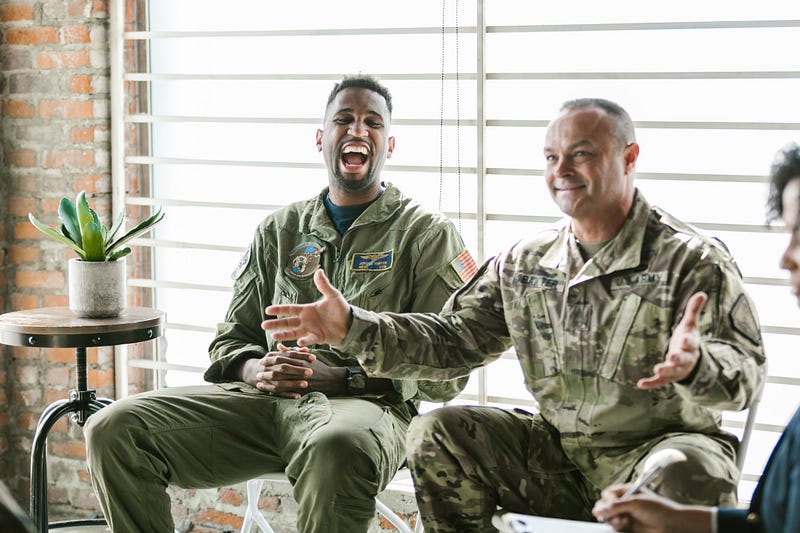
If you weren’t in the Army, don’t worry about that. That won’t keep you from being a successful writer.
I’ll give you the cliff note version and 20 years of experience in a matter of minutes to not waste your time.
Basically, the standard the Army teaches is simple but hard to master. I spent several years and assignments until I figured out how to tell the story - the right story.
So, trust me, I had plenty of practice, goof-ups, mistakes, and embarrassments.
But all those mistakes helped me be a better storyteller for you to understand.
You know writing is all about a story. If you can’t tell a story, no one will read it.
But if you can tell a story, you’ll make millions. Well, okay, maybe thousands, then. A million would be hard for most writers to make.
Bottom line — if you can’t tell a story, you’re in big trouble as a writer because no one will read your work.
Your story is the key.
Write your story
Telling a story in the Army is the same as telling a story as a writer. The two are basically the same except in one you use your mouth and on the other, you use your fingers to type away.
You see, leaders in the Army have things to do. They’re busy people and have a mission to run. So, they need you to tell your story so they can move on and learn what else they need to know to make the best decision because people’s lives are at stake.
It’s the same as briefing a CEO running a Fortune 500 company. They have all this data but someone has to give them the key points they really need to know.
So as a writer, you need to do the same for your reader. Write what the reader needs to know to get the point of your story.
From here, this leads to the next important area.
Be Brief, Be Blunt, and Be Gone
When you create your story you want your reader to understand what you’re saying but you also don’t want to waste their time.
In my very first story I gave in a unit, my boss said,
Tom, make your briefing 5 minutes long.
In my mind, I was thinking, he must be crazy.
At that point, I had about 10 minutes' worth of material, and you can imagine how I felt when I had less than 30 minutes before we were going live.
So I spent the next few minutes cutting down my information to the very basics. I quickly learned the Army way.
My boss's boss had things to do.
So, just like the person I was briefing had things to do, your reader also has things to do. You need to get right to the point. Don’t waste their time.
When you finish writing, you want to make sure your reader can visualize your story. If they can’t do that, then you have lost the reader and then you’re in trouble.
You have probably seen the same thing when you read an article and you have no idea what the writer is saying. The writer lost you after the first few paragraphs.
As a writer, you need to take this seriously just like someone in the Army. Of course, your life is not in danger, but your paycheck will be.
You do want to make money, right?
So, you need to take writing seriously.
As a writer, you need to capture your audience’s attention right from the start. You need to get to the point and not waste their time.
The Army uses the acronym — BLUF, short for bottom line up front. So in addition, to tell your story, you also don’t need to waste the reader’s time.
People value their time. If you can write something to read in 4 or 5 minutes, don’t stretch it to 7 or 8. At that point, your reader will lose interest and they may never come back again.
So get right to the point. Don’t waste your reader’s time.
Time is valuable, and it’s the one thing you can never get back again. Just as you value your time, so does your reader.
Paint a Picture Using Words
As a writer, you are telling a story. If you can’t tell the story, you’ll lose your reader.
The same is true in the Army. Leaders don’t have a lot of time, so you need to paint a picture when you give your briefing. The briefing needs to paint a picture so they’ll remember what exactly they need to know.
I used to describe the weather and terrain and what effect it had on soldiers on the ground. Using Army lingo, I had to be precise.
When I did that, my boss could make his decision.
As a writer, you are painting a picture with the words you put on the blank pages or in this case, your screen.
You need to tell your story so your reader can imagine every little detail just like they could see it in their mind. That is how detailed you need to be.
Once you do that, the story you write paints a picture for your reader.
Final Thoughts
To see 10X results from your work as a writer, you need to be detailed so your reader can see your work. The more detail you provide, the better.
But don’t add every single word to stretch out your work. Your reader doesn’t care for that. Just get to the point.
Here’s a quick recap to write the Army way:
1. Write Your Story
2. Be Brief, Be Blunt, and Be Gone
3. Paint a Picture Using Words
Don’t waste your reader’s time, and you’ll see the 10X results.
Which of these 3 tips did you like best?
Feel free to support my work by becoming a Medium member for $5 a month. I may earn a small percentage and you get to read all the articles on this platform when you join here.