
[Write-up] Programming 01 & Blockchain — WhiteHat Grand Prix 06 — Quals 2020
Programming 01
Question
nc 15.164.75.32 1999Answer
PROGRAMING - WHITEHAT GRANDPRIX 06:

--> COUNT THE NUMBER OF POSSIBLE TRIANGLES <--

HOW MANY TRIANGLES ARE CREATED BY N (1..N) NUMBER. N < 10^6

Example:  N = 5
OUTPUT : 3

(2,3,4),(3,4,5),(2,4,5)
................/\...................|\...................
.............../  \..................| \..................
............../    \.................|  \.................
............./      \................|   \................
............/        \...............|    \...............
.........../          \..............|     \..............
........../____________\.............|______\.............

n = 11
Answer: %
So the problem requires finding the number of triangles whose sides are integers, which can be created with natural numbers from 1 to N. Because N is very large (> 99999), it is highly likely that there will be a mathematical formula For the answer, we can google or sit and analyze the algorithm. But I am ignorant, so I will google :(( . Quick code 1 program to find the right triangle for the purposes of the problem:
then try to run with small N (4, 5, 6, 7, …), we get following sequence:
➜  whqual2020 python brute_triangle.py
1
3
7
13
22
34
Google it and get https://oeis.org/A173196
a(n-1) is the number of integer-sided scalene triangles with largest side <= n, including degenerate (i.e., collinear) triangles. a(n-2) is the number of non-degenerate integer-sided scalene triangles. — Alexander Evnin, Oct 12 2010
OK, so the remaining job is to implement the calculation formula, connect and get the flag (note the offset of N in question against n of the sequence):
Run and get the flag
So the flag is WhiteHat{Y0u_h4v3_4_Sm4rt_Br41n}
Blockchain — Misc
Question
Blockchain application in IOT system.
Using vulnerable chipset to generate public keys.

http://52.78.210.118/Blockchain.zip
Answer
At first glance at the title, I thought that there would be something related to blockchain with hash, timestamp, block, and so on, but once done, it was simply a disguised crypto post 😧. Unzip the file we have:
.
├── 34a7370734caff5d129ad355f78f3ccf.pem
├── 8a95963d7bedd2b81ad09cd1838c7a4d.pem
├── block1.json
├── block2.json
├── block3.json
└── flag.zip
The flag.zip file inside has a flag.txt file with a password, our task will be to find the password to decode this file. Reviewing the 2 pem files, the public key is very short, adding a hint to the article Using vulnerable chipset to generate public keys. it is possible that the factor will be or these 2 public keys will have the same factor. And it is true that the problem is in the second direction. We quickly find the corresponding p and q for 2 keys:
# 8a95963d7bedd2b81ad09cd1838c7a4d

p1 = 1091951834898382993408357240646061116416467734213916798265279491274843400183
q1 = 968357930958770928862265655524254201820039464684491130864944605493368598601

# 34a7370734caff5d129ad355f78f3ccf
p2 = 1091951834898382993408357240646061116416467734213916798265279491274843400183
q2 = 3602083547017910155331521957638413821351348404017103506647493207187611603783
check it out block1.json
{
  "data_block": [
    {
      "34a7370734caff5d129ad355f78f3ccf": {
        "messger": "864826346328927043007924641380681736981324987926997370887020532699182309378599192043216478265476219278213123962074508284028662403643532629433329761492"
      }
    },
    {
      "8a95963d7bedd2b81ad09cd1838c7a4d": {
        "messger": "259242051785557714557594066190019826465030870294179284671916925100489488841761299528416294893049464518482888070747927907550583942630013791833474340284"
      }
    }
  ]
}
We tried decrypt with the corresponding private key for the 2 messages will produce a plaintext, and surprisingly, both block 2 and block 3 can do the same (regardless of the front block? !!, seems to be due the checking is removed, leaving only the data inside). Quick code decoding file:
And run code:
➜  whqual2020 python blockchain.py
Password using open flag.zip
Do you understand the blockchain?
Password = Password1+Password2
flag in flag.txt
Password2:'D@V!4P##Ij'
Password1:'irVOwoJR7d'
Using password irVOwoJR7dD@V!4P##Ij to unzip the file flag.zip we get a new file with content is base64, decode it to get a QR code image. Scan QR code then we capture the flag:
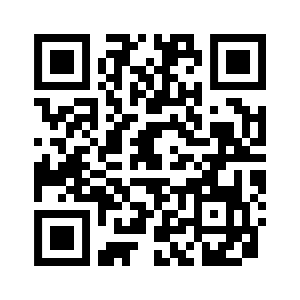
Flag: Whitehat{the_ flag_blockchain_ iot}
Enjoy it guys.
Follow Infosec Write-ups for more such awesome write-ups.


