
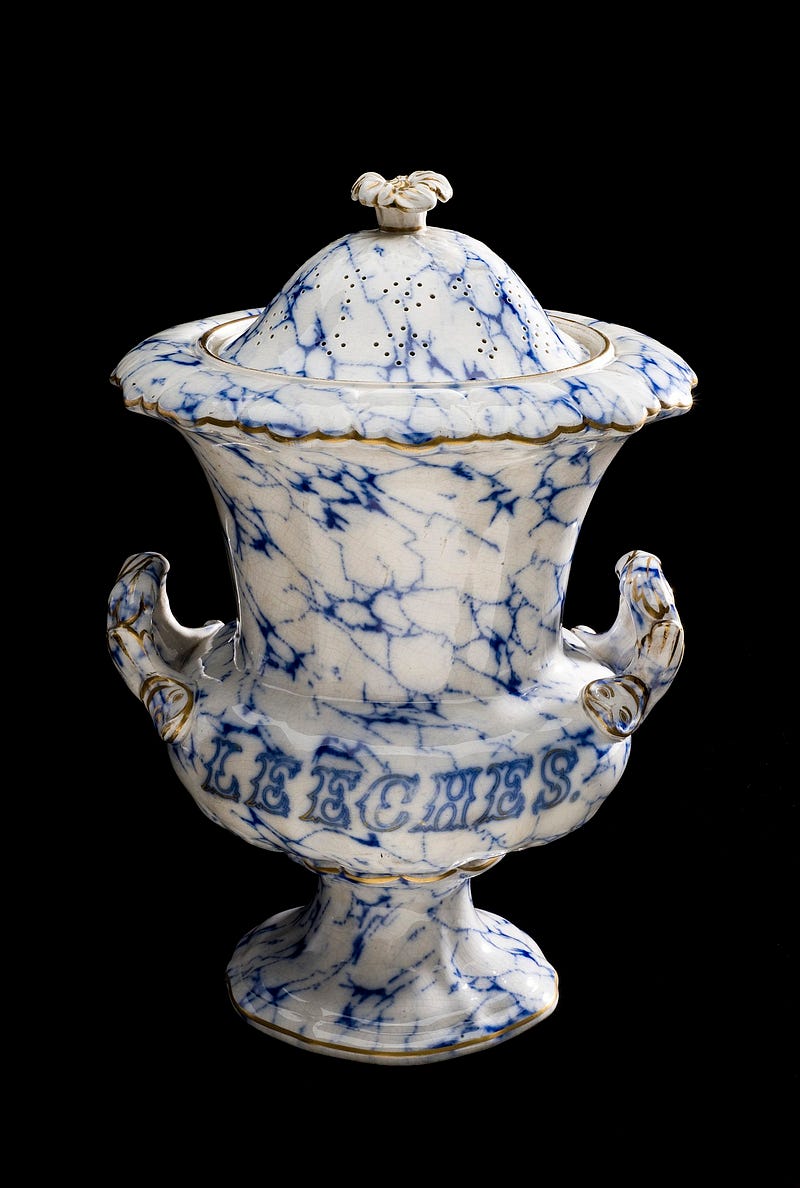
Would You Let Your Doctor Treat You With a Bloodsucking Leech?
Our past, present and future with these slimy creatures that love to suck out our blood
My partner and I went on a camping trip in BC’s Interior region this past summer. One of our overnight camps was on a small remote lake up in the mountains that just a few locals seemed to know about. A Mom and her young son were paddle-boarding it. When we asked them if it was ok to swim in they said “Yeah, but you have to pick the leeches off when you come out.”
Yuck! We DID NOT swim in it!
I don’t know about you but the thought of having leeches sticking to me and sucking my blood didn’t sound like fun. 😧 And then having to pick them off me…..shudder!
So we sat on the small dock and watched the dragonflies. And then took a walk around the lake. And then went back to watching dragonflies and fish jumping until it was time to cook dinner, watch the sunset and eventually retire to our tent for the night.
We left the next morning for more pleasurable destinations where you could swim in the water.
I forgot all about that leechy lake until I ran across this article, Leeches and Maggots Are FDA-Approved and Still Used in Modern Medicine in Discover Magazine.
And that’s when I knew I had to know more and write about these bloodsuckers.
As I thought about it, I realized I had a choice of 2 different options for this article.
Option 1, just do a quick article with brief summaries of leech and maggot medical history and where it all stands today,
or
Option 2, really educate myself (and you) about the biology of one of these creatures including an in-depth history of their relationship with humans from as far back as I could find up until the present-day situation described in that article.
Yup, you guessed it. I never take the easy way out! Option 2. And just stick to the leeches.
But first, a warning.
Warning! This article contains pictures that might really gross you out! If you’re squeamish about leeches or worms, blood or seeing wounds, stop right now and find something else to read.Alright, you’ve been warned.
In this article, you’ll learn about leeches and the history of our medical relationships with them over the centuries. Then we’ll look at their basic biology; life cycles, where they live, status in the overall food chain and stuff like that. Finally, we’ll look at both the pros and cons of using them for medical treatments in modern times.
So if you’re still with me, sit back, get comfortable and prepare to learn a whole lot about creatures you never thought you’d spend time with. Those bloodsuckers, the leeches.
The Past
Ancient leech therapy
The idea of using blood-sucking leeches to alleviate suffering goes back at least 3000 years or more. There are wall paintings found in sepulchres from the 18th dynasty Egyptian pharaohs (they lived around 1500 BC) that show leeches being applied to people.
Leeches in Ayurvedic Medicine
The earliest known documented publication of leeches being used medicinally is from about 800 BC and is recorded in the Sushruta Samhita, an Indian Ayurvedic* text where it is called Jalaukavacharana. The Ayurvedic surgeons employed the Jalaukavacharan**, aka leech therapy, as one of their para surgical Raktamokshana*** (bloodletting) procedures because in this system, it has a reputation for the potential to manage many inflammatory, ischemic, and infectious diseases.
Interesting Sidebar- definitions and derivations:*Ayurveda (आयुर्वेद) is a branch of Indian science dealing with medicine, herbalism, taxology, anatomy, surgery, alchemy and related topics. Traditional Āyurveda Medicine in ancient India dates back to at least the first millenium BC and is still practiced today.**Jalaukavacharan is leech therapy and is derived from the words….Jalaukā (जलौका) refers to “leeches” and Avacāraṇa (अवचारण), moving, going, employing, application, mode of proceeding.***Raktamokshana is bloodletting and is derived from….. rakta (रक्त), the sanskrit word for ‘blood’ and and mokṣaṇa (मोक्षण), releasing, liberating, emancipating, setting at liberty.This information was obtained and copied from the Wisdom Library.In Ayurvedic Medicine, there are 2 main categories of leeches that are used. They are listed in the tables below that were taken from this article. Savisha means poisonous and Nirvisha means not poisonous.
The 6 Savisha leeches are shown in the table below.
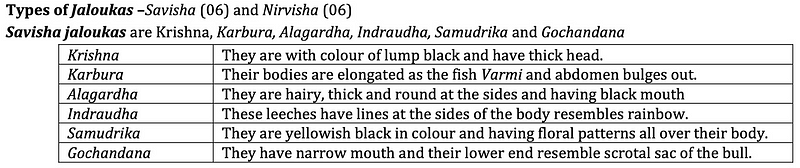
Application of any of these six leeches can lead to severe swelling, itching, a burning sensation or vomiting.
The 6 Nirvisha leeches, in the table below, are born in clean water, round in shape, have blue lines in their back, a rough or hard back, a thin body and a slightly yellowish belly.
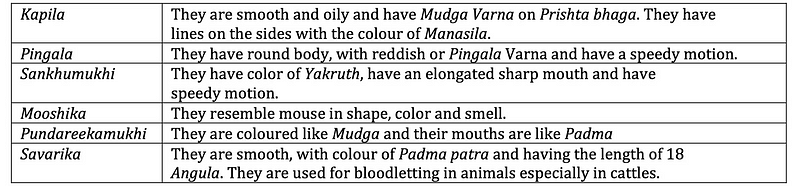
The Nirvisha leeches are especially favoured for eye conditions.
“Application of leech mitigates diseases in eyes, Jalukavacharanahas. [They have] the property to subside immediately the pain, swelling, burning sensation and redness of eyes.” taken from here.
“Ayurvedic physicians have used leech therapy to cure everything from headache to haemorrhoids. This includes chronic skin, eye, and musculoskeletal diseases, gynecological disorders, ENT disorders, thromboembolic diseases, local congestive conditions, as well as brain congestion and mental illness.” taken from here.
How did leeches come to be so revered Ayurvedic medicine?
The legends tell the story thusly.
Physician Dhanvantari was considered the physician of the Hindu gods and an incarnation of Lord Sri Maha Vishnu. He appeared as a four-armed being, holding an Amrit pot (nectar pot), Shanka (conch shell), Chakra and Jalauka (leech) in his four hands.

Dhanvantari is also considered as the earliest practitioner and trainer of Sushruta, his foremost disciple. Sushruta is considered the father of Indian surgery. He wrote the famous ‘Sushruta Samhita’ that I mentioned above. The Sushruta sages descend from him and as far as we know, were the very first surgeons in the world.
Dhanvatari Jayantari celebrates Dhanvatari’s birth and is celebrated throughout India by the practitioners of Ayurveda. It is also the first day of Diwali, India’s 5-day celebration of light festival.
There is a whole lot more to the story of Dhanvantari than the tip of the iceberg I’ve given above. If you’re interested, check out this article.
So for ancient bloodletting, we have not one but two major cultures, Indian and Egyptian, separated in both time and distance, with records going back thousands of years of using leeches to help in healing.
Leeches in Euro-Western Medicine
There is also mention of using leeches in Greek, Roman, Russian and early Byzantine writings. (check out this article: Medicinal use of leeches in the texts of ancient Greek, Roman and early Byzantine writers.)
Maybe there’s more to this fascination with leeches than meets the eye? Or maybe not?
Let’s go back about 2500 years ago and work our way forward to modern times to see what Western cultures thought about this practice.
We’ll start in Greece, with the father of modern medicine, Hippocrates (~460–370 BC). In his time, the general thinking was that 4 elements were required for existence; earth, air, fire and water. These were manifested in the human body as blood, phlegm, black bile, yellow bile, respectively, and were called the 4 humors.
Each of the humors was associated with different organs of the body and when you were sick or had a disease, it was because one or more of the humors was out of balance with the others. They were also related to certain personality types; sanguine, phlegmatic, melancholic, and choleric.
Funny, I don’t remember meeting any of those kinds of people these days! But I do know some folks that definitely lack a sense of humour (pun intended, groan)! And a whole lot that are viral!
In order to restore the balance, you had to remove whatever humor was present in excess. This was done by bloodletting, purging, catharsis, diuresis and other assorted means depending on the physician who was treating you. Not the easiest way to restore a person’s sense of humour (sorry, I couldn’t resist)!
Now jump forward about 600 years to the Greek and Roman physician Aelius Galenus or Claudius Galenus, also referred to as Galen of Pergamon, born in the year 129 CE. So just under 2000 years ago. He was the most famous physician of his time and his teachings influenced medical practice for more than 1300 years!
Galen believed that blood was the dominant humor and when there was too much of it, you had to remove some. Which led to even more bloodletting practice by cutting open blood vessels. The technical terms for doing this surgically are venesection and arteriotomy which refer to cutting veins or arteries, respectively.
As a result of his writings and physicians educated in his medical lineage, by the Middle Ages bloodletting was an accepted standard treatment for many conditions.
Venesection and arteriotomy were performed with knife-like instruments called lancets or fleams, or a localized method done by scarification with cupping and leeches.
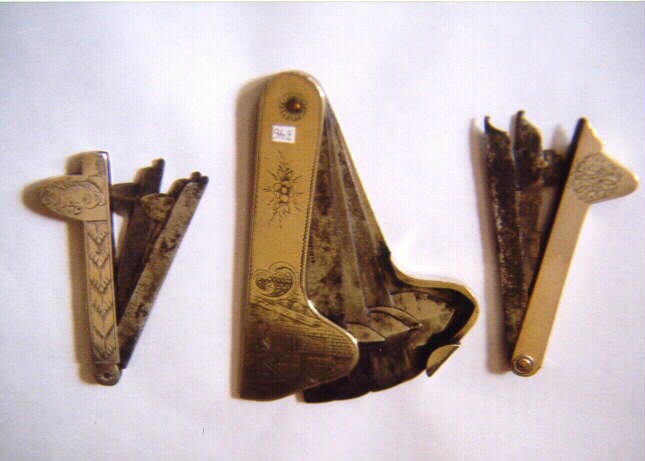
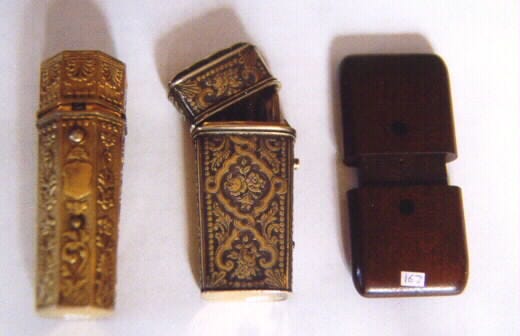
Thumb lancets were small sharp-pointed, two-edged instruments often with an ivory or tortoise shell case that the physician could carry in his pocket. Fleams were usually devices with multiple, variably sized blades that folded into a case like a pocket knife.Of interest, one of the primary medical journals in the world today is based in England and is called The Lancet.Jump ahead a few more hundred years and we find leech therapy becoming quite popular in the late 1700s and early 1800s, especially in France. This was due to the influence of a noted and famous physician, Dr. François Broussais (1772–1838) who practiced in Paris. He used both leeches and physical instruments such as the lancet for bloodletting. His advocacy for placing leeches over an inflamed organ became quite popular in the 1830s and spread throughout Europe.
As a result, between 5 and 6 million leeches were used every year in Paris with another 30 million throughout the rest of France.
Another popular use for leeches at that time was in certain dental practices.
One of the more famous cases from that era of bloodletting popularity involved George Washington, the first President of The United States.
“After riding in snowy weather, George Washington (1732–1799) developed a fever and respiratory distress. Under the care of his three physicians he had copious amounts of blood drawn, blisterings, emetics, and laxatives. He died the next night of what has been diagnosed retrospectively as epiglottitis and shock. His medical treatment aroused significant controversy, particularly the bloodletting.”
Unfortunately, he died the following day and it still isn’t known whether it was due to all the bloodletting or other causes.
But by the late 1800s, the popularity of leech therapy had declined with only sporadic evidence of its practice in future years.
And that’s enough leech history for now. Let’s learn about the creatures.
Leech Biology
If you’ve read any of my previous articles, you’ll know that I’m a lover of words and where they come from. I was surprised to find that there were 3 different forms of the word leech. Two were nouns and the third was a verb.
The first noun form: A “bloodsucking aquatic worm,” from Old English læce (Kentish lyce), of unknown origin (with a cognate in Middle Dutch lake). Figuratively applied to human parasites since 1784.The second noun form: “physician” (obsolete, poetical, or archaic), from Old English læce “leech,” probably from Old Danish læke, from Proto-Germanic *lekjaz “enchanter, one who speaks magic words; healer, physician” (source also of Old Frisian letza, Old Saxon laki, Old Norse læknir, Old High German lahhi, Gothic lekeis “physician”), literally “one who counsels,” perhaps connected with a root found in Celtic (compare Irish liaig “charmer, exorcist, physician”) and Slavic (compare Serbo-Croatian lijekar, Polish lekarz), from PIE *lep-agi “conjurer,” from root *leg- (1) “to collect, gather,” with derivatives meaning “to speak (to ‘pick out words’).”The verb form: “to cure, heal,” c. 1200, from Old English also had a verb læcnian, from the source of leech (2nd noun form). Meaning “to apply leeches medicinally” is from 1802 (implied in leeching), from leech (1st noun form). Related: Leeched.Another related term is leechcraft: “art of healing,” Old English læcecræft; see leech (2) + craft (n.). Old English also had læcedom “medicine.” A later word for it was leechery (c. 1600).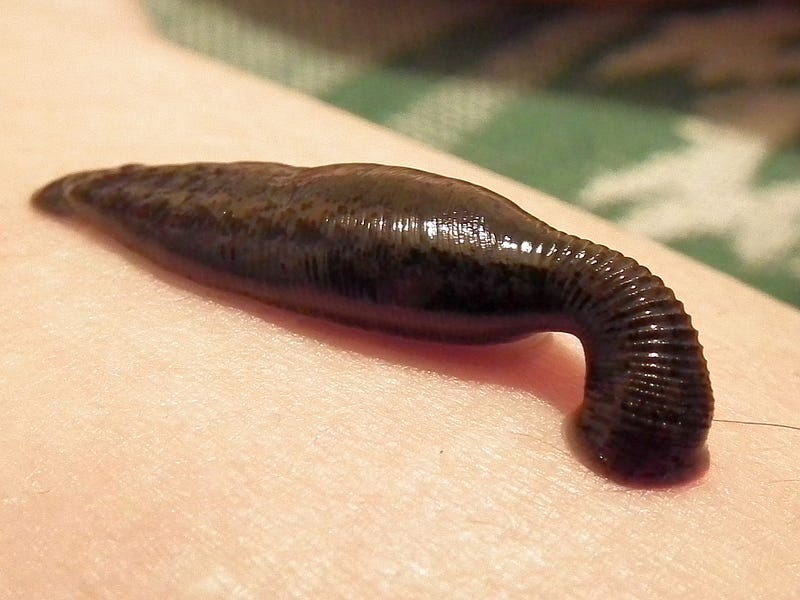
As a biologist, I find that delving into the basic biology and life cycle of a creature that has caught my attention never ceases to fascinate me.
The leech most commonly used in Western medicine was and still is Hirudo medicinalis. Other medicinal leeches used include H. orientalis, H. troctina, and H. verbana. The Asian medicinal leech is Hirudinaria manillensis, and the North American medicinal leech is Macrobdella decora.
The popular press loves to describe leeches as worms with 10 stomachs, 32 brains and nine pairs of testicles. These are great attention-getters but I have to say, as far as the number of brains, that’s a bit of an exaggeration!
Why is that claim made?
A bit of leech anatomy
As you can see in the drawing below, running down the centre of the leech from its mouth to its anus is a nerve cord. In each of their segments, you can see a swelling called a ganglion which is a bundle of nerve and other cells and other structural components. All these ganglia are connected to each other to form a single, coordinated brain. If they weren’t, each segment would function independently and the worm wouldn’t be able to coordinate them all to move in a single direction! So their brain does have 32 distinct sections but they do not operate independently of each other.
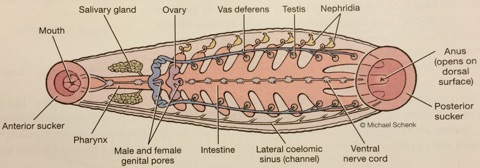
“In all leeches, the body consists of 33 segments. The first five are designated as the head and include the anterior brain, several ocelli (eyespots) dorsally and the sucker ventrally. The following 21 mid-body segments each contain a nerve ganglion, and between them contain two reproductive organs, a single female gonopore and nine pairs of testes. The last seven segments contain the posterior brain and are fused to form the animal’s tail sucker.”A similar case can be made for the 10 stomachs. Again, they are not independent of each other.
Classification of leeches
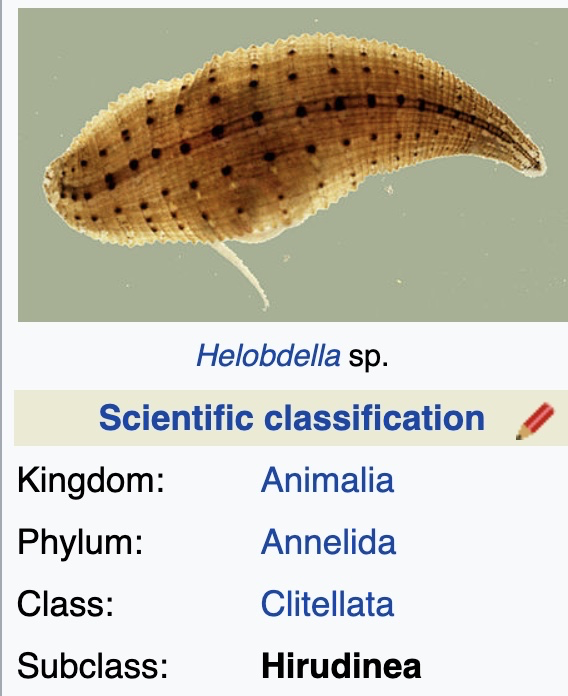
Leeches are part of the segmented worm family (the Annelida) and are members of the subclass Hirudinea. (FYI, the Annelid family also contains our friendly backyard earthworms and many other different species.)
Almost 700 different species of leeches have been described and they range in size from 1 cm (½ inch) to 30 cm (12 inches). About 100 of these species live in marine environments, 480 of them are in freshwater and the remainder live on land. Many of the water-dwelling species feed on fish and other creatures in that habitat.
It’s interesting to note that the leeches that live in water can enter a kind of dormancy or hibernation state called aestivation to survive if the water dries up for extended periods during warm weather. When they aestivate they bury themselves in the moist sediment that still remains and can lose up to 90% of their body weight and still survive!
Think about that for a minute.
I weigh 160 pounds. If I lost 90% of my weight, that would be 144 pounds and I would only weigh 16 pounds.
Would I still be alive if I only weighed 16 pounds?! NOT!
And I couldn’t even go that low because the average human skeleton is 14% of your total weight, which in my case would be 22.4 pounds. But then, leeches don’t have skeletons so it really is like trying to compare apples and oranges. Still, it’s fun to think about those kinds of things 😄.
Life cycle
Leeches have a very simple life cycle. Sexually, they are hermaphroditic which means both male and female reproductive structures are present in the same individual as you can see in the anatomical drawing. The male testes mature first and then the female ovaries finish developing.
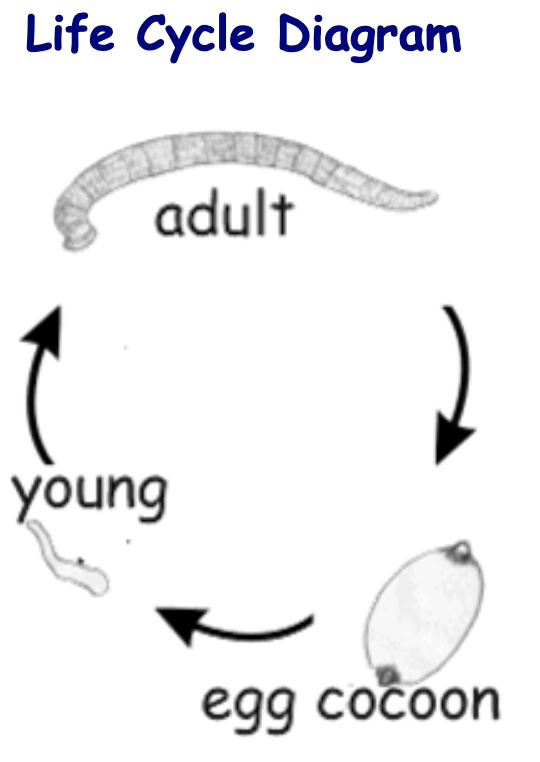
Although leeches of the Hirudinea subclass have both genitalia present in the same individual, they do not self-fertilize. Rather, two leeches line up alongside each other in opposite directions so that the male genital pore faces the female genital pore (see the anatomical drawing above again).
Mating involves the intertwining of bodies where each deposits sperm in the other’s clitellar area through the female genital pore into the vagina. This is where the sperm is stored until used for fertilization.
Once copulation is accomplished, the two leeches go their own separate ways and in many species die soon after depositing the eggs.
Medicinal leeches may survive for another mating session and then die.
Hey, if leech sex is your cup of tea, check out this video:
From the vagina, the sperm make their way to the ovaries where fertilization takes place. Then a tough gelatinous cocoon is formed which contains nutrients including albumin, and it is in this protective casing that the eggs are deposited.
More than one cocoon may be laid and there can be up to 1000 eggs in a cocoon with about 50–250 eggs being most common.
The leech shrugs itself free of the cocoon, sealing it as it passes over the head. The cocoon is either buried or attached to a rock, log or leaf and dries to a foamy crust. After several weeks or months, the young emerge as miniature adults. The cocoons are highly protective structures; studies show that they are capable of passing intact through the digestive system of a duck!
Depending on the conditions, the eggs may take anywhere from 1 week to 9 months to hatch. As soon as they can after they hatch, they attach themselves to a host from which they can draw blood. Large adults can consume up to 10 times their body weight, or a volume of 5–15 millilitres.
After taking a blood meal, the leech detaches itself and becomes a free-living creature. Some species eat a lot and digest quickly while others feed more slowly and take longer to digest the blood. Some don’t need another meal for 6 months!
What’s so great about eating blood?
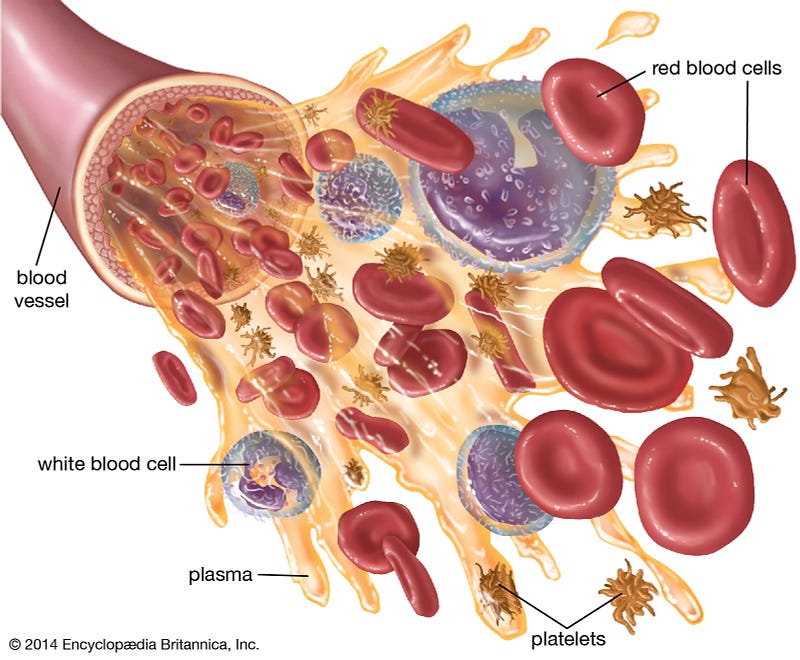
Ask your friendly local vampire; for sure, it’s not an easily obtained food!
Imagine you’re a leech. You have to find an animal that has blood, attach yourself to it, then break through their skin, fish scales or whatever outside protective barrier they have and manage to consume the blood without being swatted away or pried off and killed. And you have to keep the blood from forming a clot so that it keeps flowing while you suck.
So there must be some pretty good reasons to make that your main course. You also need the necessary “tools” to get to it and you have to be pretty sneaky so you’re not noticed while you’re bloodsucking.
Blood is a rich source of many nutrients, but it also lacks certain vitamins which the leech needs, and it often contains toxic levels of iron. So how does the leech deal with this?
It employs several strategies.
To compensate for the lack of certain vitamins it needs, it relies on a symbiotic relationship with at least two bacteria that live in its gut, Aeromonas veronii and a still-uncharacterized species of Rikinella. They are what convert substances in the consumed blood into the vitamins the leech needs.
To deal with the excess iron, leeches make a variety of proteins that attach themselves to the iron and they also have a tissue to which the iron attaches that renders it non-toxic. Toxic dilemma solved!
How do leeches find and get the blood?
The first task is to locate an animal that has some!
One of the primary jobs of those 32 “brains” is to sense their surroundings. “Leeches can detect touch, vibration, movement of nearby objects, and chemicals secreted by their hosts”. They also sense temperature and light. If a warm-blooded animal enters their environment, it will move toward it because it will generally be at a higher temperature than the water it is living in.
Okay, they found the host they were looking for and it just happened to be you!
The medicinal leeches we are looking at attach themselves to a host with their suckers, using a combination of suction and mucus secretion to stay attached.
Then using their three jaws, each of which has a saw-like blade with about 100 sharp edges, they make an incision into the host. The incision looks like an inverted Y inside a circle, kinda like the Mercedes-Benz logo.
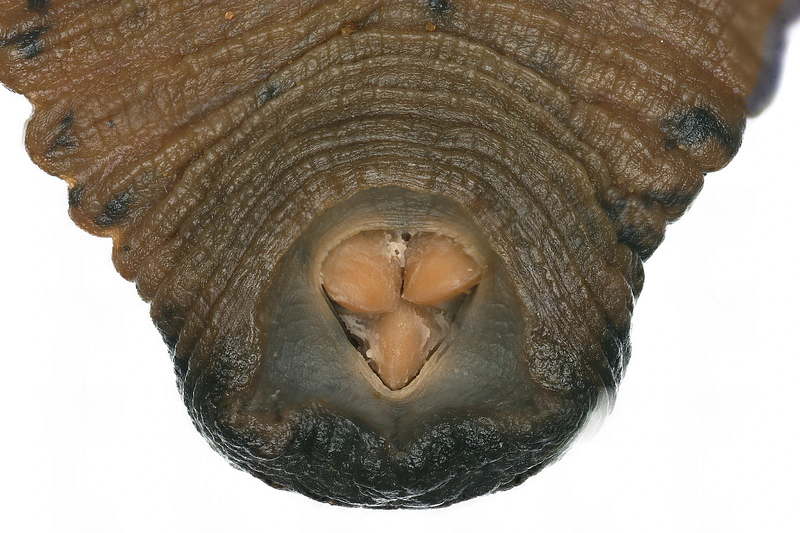
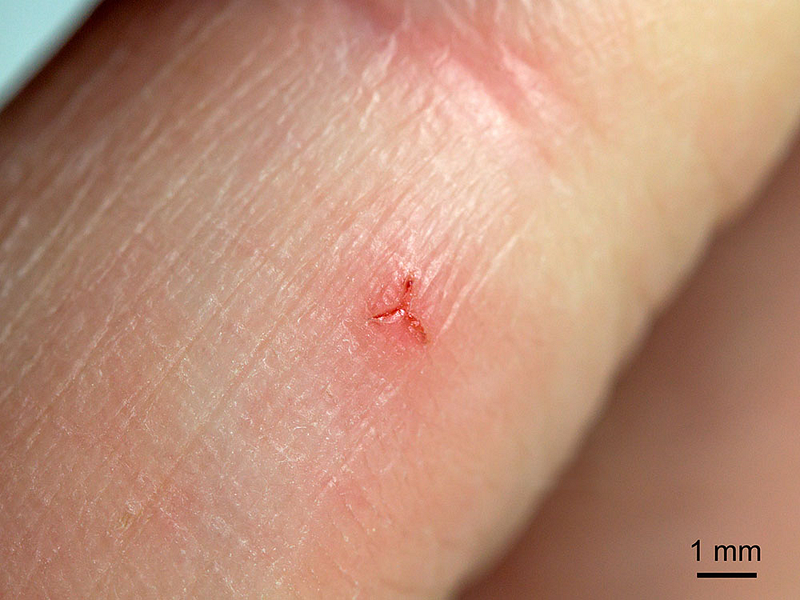
When they attach, they secrete a chemical called hirudin, which prevents the host’s blood from clotting and thus allows them to feed as long as they need to. There are also many other chemicals in their saliva and one or more of them is thought to have anesthetic properties as once leeches attach, the host doesn’t seem to notice or feel them.
After taking a blood meal, the leech detaches itself and becomes a free-living creature. Some species eat a lot and digest quickly while others feed more slowly and take longer to digest the blood meal — up to 6 months!
There’s tons more basic leech biology and life cycle details but for our purposes, that’s more than enough!
Modern medical uses
On June 28, 2004, the US Food and Drug Administration approved the marketing use of certain species of leeches by calling them medical devices.
That’s not very long ago. What led them to make such a decision?
As we learned above, leech therapy has been in use for thousands of years for a variety of ailments. And like many other forms of treatment, over the centuries there were ups and downs as to their favoured uses.
In modern times, the first real application of leeches occurred in the field of surgery.
Over half a century ago, in 1960, Deganc and Zdravic published an article that detailed how their use of leeches in the previous 5 years had solved a serious medical problem, the venous congestion and thrombosis that often occurred during the healing of surgical flaps. It was their success that paved the way for the reintroduction of leech therapy in modern medicine.
In the 1980s, plastic surgeons found that they could apply medicinal leeches to relieve the congestion of blood that resulted in the patient’s veins after they had received a transplant.
Are you beginning to see a pattern here? That in certain types of surgery, veins become clogged and congested and this undermines the body’s attempts to repair them.
A few more examples.
One of the problems surgeons encounter when they reattach limbs after traumatic amputations are that they can reattach the larger arteries but they can’t really do that with the thinner, more delicate venous vessels. Since the veins are needed to drain the blood, if they are not able to do that, the deoxygenated blood can collect and block fresh oxygen-carrying blood from entering the newly attached limb. If this happens, the grafted tissue will die. Applying leeches prevents the “used” blood from collecting during the period that the veins are reforming and betters the chance of a successful graft.
They have also been used to treat deep-vein thrombosis in the legs to prevent post-phlebitic syndrome, a condition that can result from the destruction of valves in the leg veins.
Another application is reattaching a finger that has been cut off. Without any kind of therapy, the blood may simply thicken, clot and prevent the finger from reforming the blood vessels it needs to remain attached. Sound familiar?
Leech therapy prevents the blood from clotting and after about 5 days of therapy, the necessary blood vessels have reformed which greatly enhances the percentage of success in these operations. A Dr. Friedman is quoted as saying
“For someone whose finger has just been reattached, the choice is brutally simple: We can cut your finger off again or use a leech.”
“We can cut your finger off again or use a leech”
Other clinical applications include varicose veins, muscle cramps, thrombophlebitis, and joint diseases such as epicondylitis and osteoarthritis.
Here’s a recent series of photos of a wound before and after leech therapy.
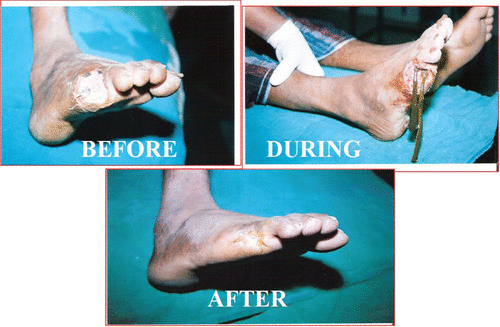
Pretty gross looking but impressive, right!
So there were lots of good reasons for the FDSA to approve them, they just needed to figure out how to do that. And the way that seemed to satisfy all requirements was to just call them medical devices.
Weird, I know, but it worked.
Problems arising from leech therapy
First, not all leeches are safe to use as we noted in the Ayurveda leech therapy discussion. Some of them are poisonous to humans. If you’re getting leech therapy in a bona fide medical establishment, this is not something you need to worry about.
But there are two major problems that can arise from leech therapy; excess hemorrhaging or subsequent pathogen infection.
The unwanted excess bleeding can be attended to by applying pressure to the wound over time, or treating it with agents that counteract the hirudin and hasten the clotting. Or if a really serious loss occurs, by transfusion.
Infection usually starts 2–7 days after therapy and shows up as an abscess or cellulitis. If not attended to, it can progress to sepsis, a very serious condition. All this is usually prevented by giving the patients antibiotics as long as they are not antibiotic-sensitive or immuno-resistant.
Other minor complications include mild to severe allergic reactions, pain and hypotension.
Non-medical uses
You can use them for wildlife surveys. Because leeches often take a while to digest the blood they have ingested, you can actually recover DNA from them that belongs to the previous animals they have fed on.
If the area you want to survey has leeches, you’re in business. You just capture a bunch of leeches, sequence the DNA from their guts and you’ve got a fairly accurate survey of the mammalian population. Much easier and more accurate than capturing the animals or setting up camera traps.
Where do all the leeches come from?
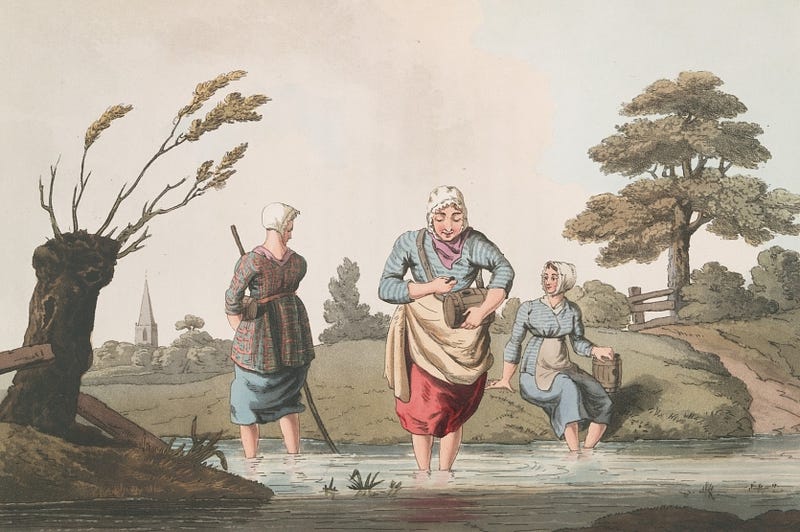
In the 18th century and early 19th century, leeches were harvested in the wild by leech collectors.
One technique, illustrated in the picture above shows women wading in leech-infested waters. The leeches would attach to their legs and then they would pull them off and put them in the buckets they’re carrying. Then they’d sell them at the market or give them to suppliers who had hired them.
The demand was so high that by the end of the 18th century the medicinal varieties were all but extinct in countries like France, Ireland, England, Wales and the Netherlands.


There are reports that during this period, in one year, France imported as many as 33 million leeches for therapeutic uses.
As you might predict, the high demand ultimately exceeded Nature’s supply. To fill the need, they were imported from countries like Russia and parts of the Ottoman Empire.
Nowadays there are businesses that will supply them to you. Or find a local leech hustler. See the section below on growing leeches if you’re looking for a side hustle.
Leech status and conservation
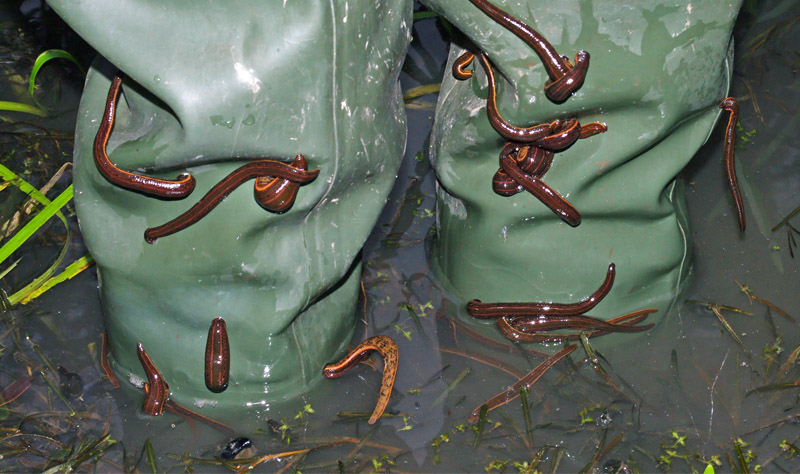
Leeches are not nearly as commonly available as they used to be. This is due to a combination of factors.
First, there was their popularity during the 1800s which led to a demand that exceeded the actual supply available from local sources. So the leeches were harvested faster than they could replenish their populations.
But that’s not all.
The growing popularity of agriculture led to the draining of fields, which significantly reduced natural leech habitat.
Of course, to compensate entrepreneurial folks started up “leech farms”.
Growing leeches
Growing leeches to supply doctors began in the 1800s and still continues to this day.
“…these large operations created nearly as many problems as they set out to solve. Overcrowded and poorly oxygenated pools fostered disease, hindered breeding, and attracted predators. In one particularly devastating incident a flock of migrating ducks wiped out a farm’s stock of 20,000 leeches in a single day.”
a flock of migrating ducks wiped out a farm’s stock of 20,000 leeches in a single day
It took many years and a lot of studying to actually find establish the conditions necessary for successful leech farming.
Nowadays, it’s officially called hirudiculture.
If you want to start your own leech farm, check out this 30 minute video, How to Start a Mini-Leech Farm, to Breed Medical Leeches at Home by Tsetsi.
Mechanical leeches
Ok, you want to use leeches but there just aren’t any available. What’s a leech therapist to do?
Never fear, we have been inventing and improving devices that can substitute for the real creature.
Here are several pictures of said devices from long ago to the present. The first two shown below were in use during the middle of the 19th century.
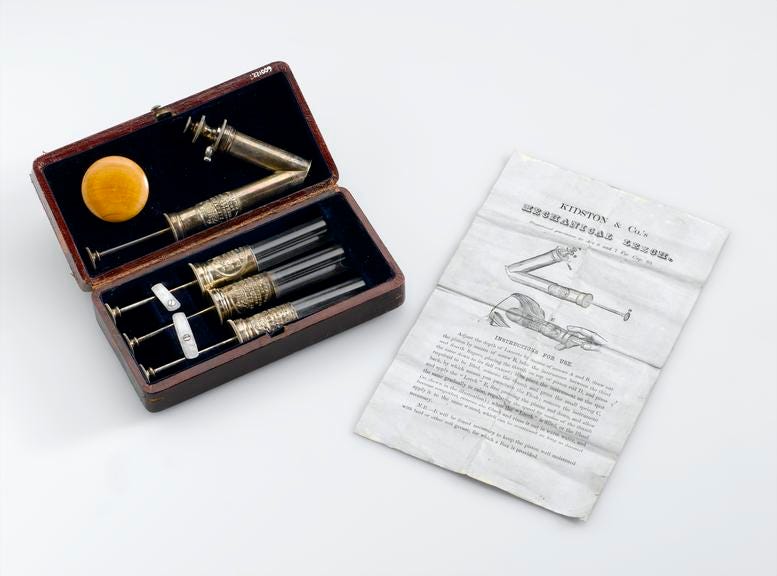
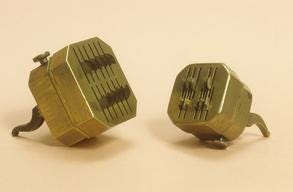
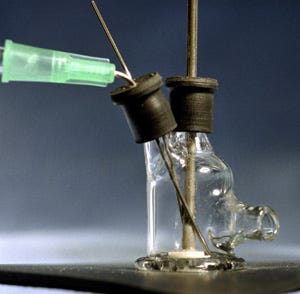
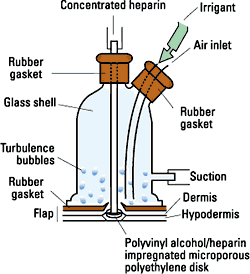
Ok, jump forward almost 200 years! In the next 2 pictures, we have a more recent addition to the mechanical leech therapy field. A quote from the article showing the device below.
“Mechanical leeches, on the other hand, have none of these drawbacks. They don’t get full, exercise impeccable hygiene, stay were the doc puts ’em, and most patients find them more attractive than their fleshy counterparts. We can’t think why.”
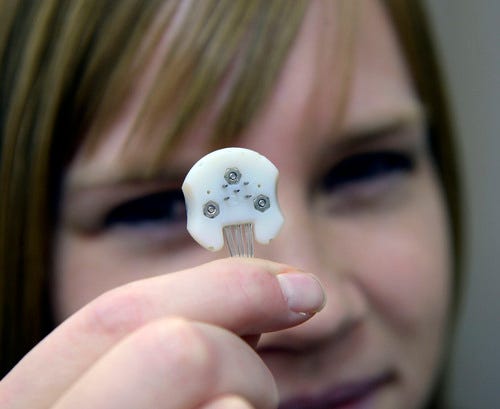
And lastly, we have 2 very up-to-date additions to the field. The tiny white image is a device submitted to a competition in 2017 and was described by the contestants as follows:
“The Mechanical Leech System will mimic a biological leech by injecting a small amount of anticoagulant while concurrently removing congested blood from the desired region. This will be accomplished with a needle housing and tubing attached to an external pump.”
It can be produced with 3D printed parts or by assembly line, depending on the need.
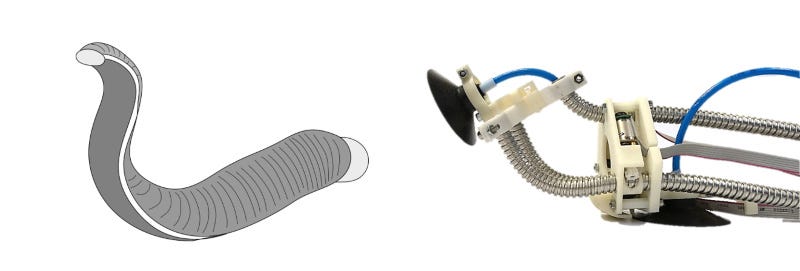
The “leech” on the right is actually a robot designed in 2019 that uses the leech method of locomotion to propel itself forward and climb.
“The Longitudinally Extensible Continuum-robot, or “LEeCH,” can climb vertical walls, thanks to its flexible body.
Made with shower-hose material and two suction cups, the robot elongates and bends without constraints — just like a leech.”
Here’s a video if you want to see it in action. Kinda cool if you like to watch robots.
What’s the prognosis for leech therapy in future years?
“With our present understanding of pathophysiology, we might be tempted to laugh at such methods of therapy. But what will physicians think of our current medical practice 100 years from now? They may be astonished at our overuse of antibiotics, our tendency to polypharmacy, and the bluntness of treatments like radiation and chemotherapy.”
This article concludes “With appropriate indication, leech therapy remains valuable in contemporary reconstructive surgery as an adjuvant to promote successful flap microvasculature survival, and can even make the difference between limb loss and salvage.”
So let’s not be too harsh on all those past practitioners that bled their patients. They didn’t know what they didn’t know and acted according to what their times endorsed as the best medical procedures.
As we do now.
And that brings us to the end of our bloodletting leech explorations.
I don’t know about you but I sure learned a lot researching this piece. And there’s so much more I didn’t include because it was already WAY too long!
Until next time,
Rich
Did reading this post get your blood up? Want more? Subscribe to my newsletter and get a free, fun ebook!
Sources for this article:
- Online etymology dictionary.
- Leech Wikipedia page
- Leech therapy (Jalaukavacharana) — A gift of ayurveda for treatment of medico-surgical diseases by Saxena Varsha, Srivastava Niraj and Kumar Pradeep
- Role of Jalaukavacharana in Netra Roga by Anjali, Gunjan Sharma, Poonam Bamola (2016)
- Clinical Significance of Leech Therapy in Indian Medicine by Syal Kumar, MD, Gustav J. Dobos, MD, Thomas Rampp, MD (2012)
- Dhanvantari Jayanthi — Day To Worship The God of Ayurveda by Yashoda (2017)
- The History of Bloodletting by Gerry Greenstone, (2010)
- Meet the Bloodsuckers by James Gorman (2019, 2020)
- Leech Farming Guide at Leech.com
- 10 stomachs, 32 brains and 18 testicles — a day inside the UK’s only leech farm by Rose George (2018)
- Hirudotherapy, the healing art: alternative biocure with medicinal leeches. Amazingleeches.com
- Hirudo medicinalis — historical and biological background and their role in microsurgery: Review article by Abdul Kerim Yapici et al., (2017)
- Leeches and Plastic Surgery in the Modern Era by Oliver, Jeremie D. and DeLoughery, Emma P., (2018)


