
Interview
Takeaways From Teaching Young Children Outdoors in Freezing Cold — An Interview with Olivia Phipps
An American student from Seattle takes notes from Norway
Many people automatically assume teaching school outside can’t be done. It’s too cold, too hot, and children don’t have the appropriate attire are some common arguments. Another good argument — people resist change.
I ask you to approach this interview with an open mind. If snowy Norway has figured out a way to teach kids outside, shouldn’t the US be able to do the same? What does it say about our public school education system that an appropriate argument is lack of federal and local funds? What message does this send to US kids about the future?
The message that children aren’t worth investing in bothers me. Let’s take a moment to imagine a United States in which we do invest our dollars in children’s education.
Olivia Rose Phipps is a cherished friend and childhood educator who spent a semester interning at an outdoor school in Norway. For Olivia, the solution to reopening American Public Schools during the COVID-19 era is obvious. And, the New York Times Editorial Board agrees, “Officials need to think outside the building. Some fall classes could be held in the open air, or under tents with no walls — spaces in which the available evidence suggests transmission risks also are much lower. In Denmark, schools held spring classes on playgrounds, in public parks and even in the stands of the national soccer stadium.” Olivia reflects on her experience in Norway in our interview.
Thinking Outside
AG: You spent a one-semester internship in 2014 teaching outdoors school in Norway, correct? What was that like? How was it different from the typical American education experience?
ORP: Yes! When I was studying Early Childhood and Family Studies at the University of Washington in Seattle, I was required to gain internship experience with children. Through an exchange program, I was privileged to get to travel to Trondheim, Norway, and fulfill my internship requirements at a forest kindergarten on a fjord.
If I had to explain it in one word, I would pick: magical. A day in the life of my forest kindergarten went something like this: I would wake up before the sun rose, don specific clothing layers for the cold, and take two buses to the fjord. There were two “indoor” facilities at the school; one, a small hut built into the side of the hill (imagine a hobbit home), and two, a lavvu with a wood stove inside. A lavvu is a dwelling established by the Sami people of Northern Europe; it resembles the Tipi but is less vertical to account for high winds.
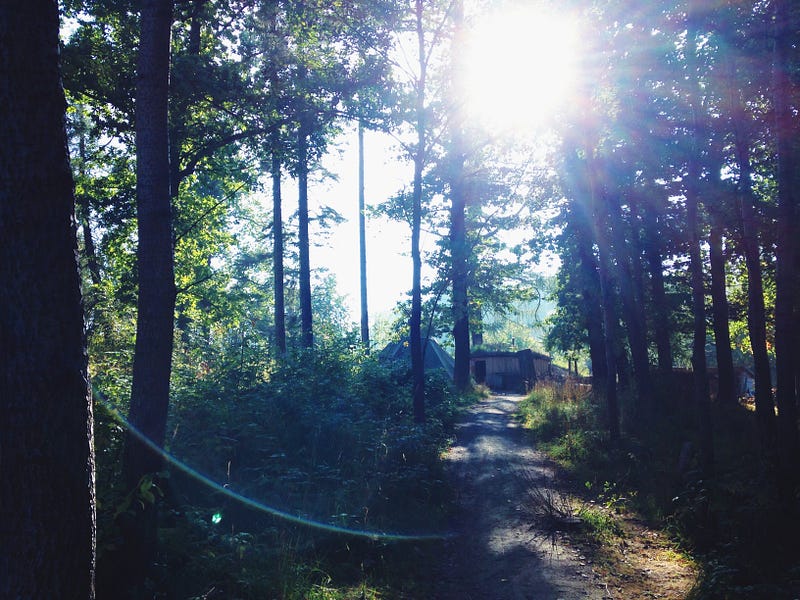
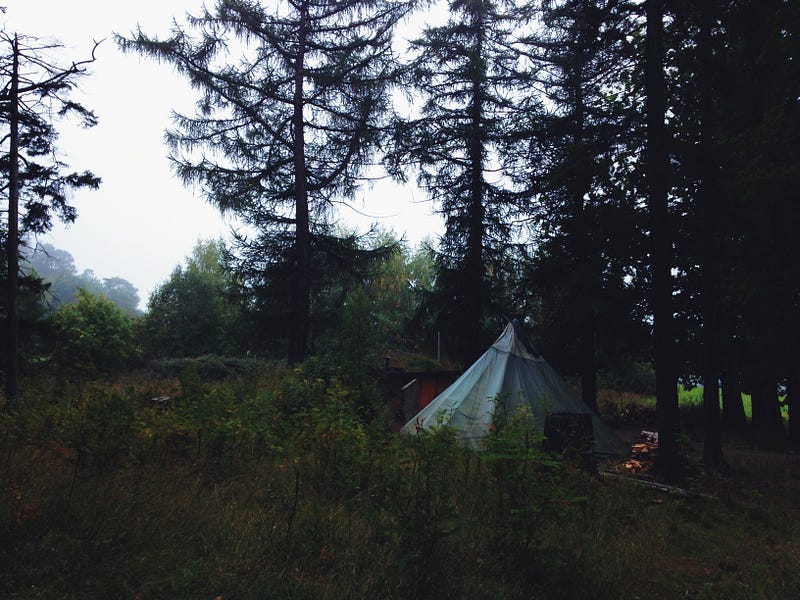
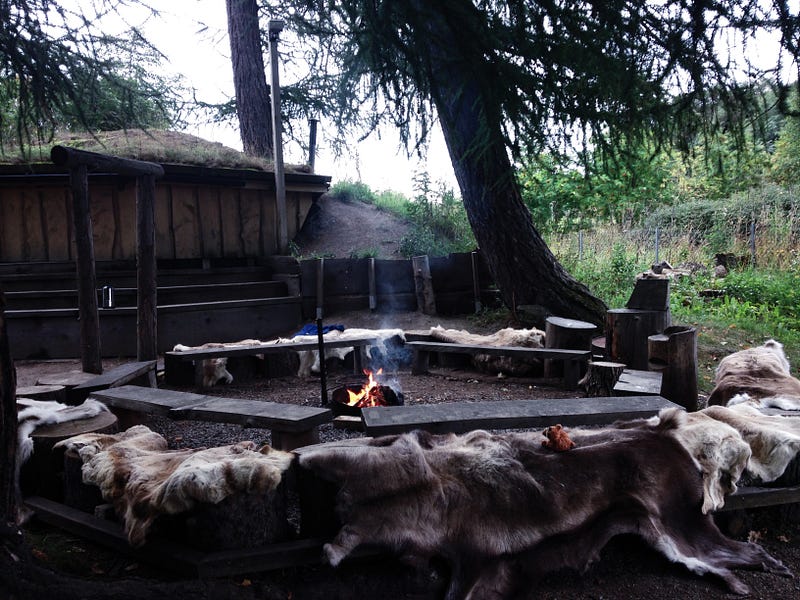
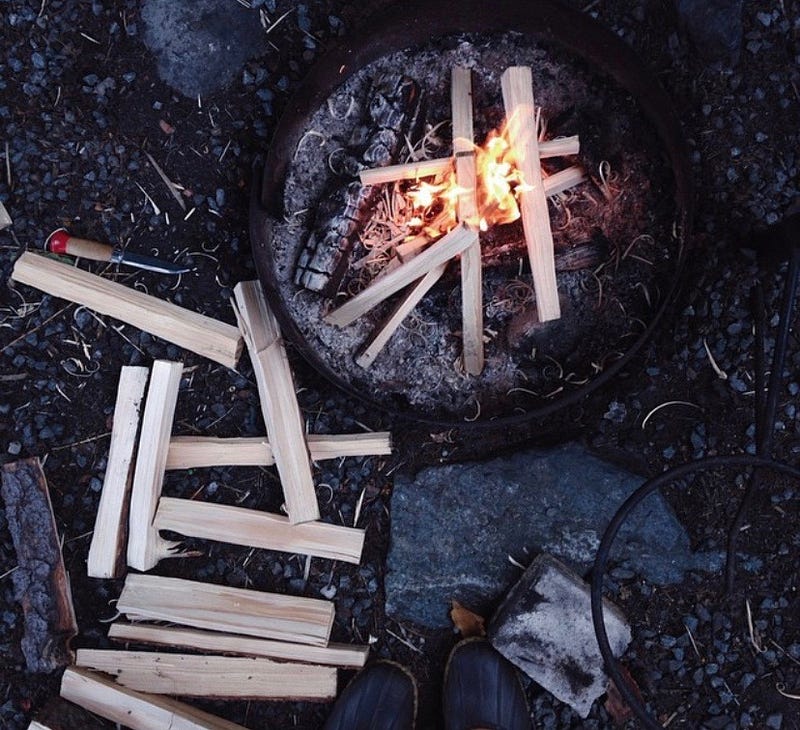
Once I arrived at the school, it was my daily task to chop firewood and start the outdoor fire for the children. The fire was in the middle of a clearing, surrounded by wooden logs, and benches covered in reindeer pelts. Around the time the fire was made, the children and their parents would arrive, and we would share coffee or tea around the fire.
When the parents left, there were two options for the day: we either went on an adventure along the fjord and in the forest, or we stayed at the kindergarten and played outdoors. Children climbed trees, had rope course challenges, played in the sand and mud, went on hikes (including overnight backpacking!), and skied all around the forest!
Breakfast and lunch were eaten when the children expressed hunger, rather than at a set time for each meal. This was successful because the children were hungry when it was their time to eat, and thus ate their meals and had energy for the rest of the day. It’s hard to imagine schools in the United States without designated lunchtimes; I remember being a child in the public school system and only having 15 minutes to eat my lunch at a time of day when I wasn’t hungry.
It was incredibly different than the typical American education experience, perhaps in more ways than I can even describe. The difference that stands out to me the most is the contrast in the structures of each environment. In a typical education experience in the United States, I often experienced a strict structure that required students to meet standardized learning goals by the end of a certain timeframe.
The focus was not on social-emotional development, but rather if children checked academic boxes. This can be an incredibly stressful and confusing type of structure for a child because they don’t speak the language of adults; their language is play.
In Norway, I experienced a type of structure that children understood because they were given a voice. The children got to choose what they wanted to do each day, and the teachers followed their lead and incorporated educational concepts into their play. Because of this, children continued to learn important concepts that prepared them for schooling while they fused an important relationship with the natural world.
AG: Something must have struck you as beneficial in this methodology of teaching. What were the benefits? How could they be incorporated into American schools? Would teachers be willing to make the transition? Do you think this could be a pivotal moment in American education as we problem-solve the need for school during the era of COVID-19?
ORP: There are a plethora of benefits to outdoor education. One that is especially prudent to reference is the emphasis on risky play. While interning in Norway, I studied risky play both through academia and through experience.
Risky play is when children play in ways that expose them to high speed, heights, and other types of risks that cause them to overcome fears. For example, children in Norway learn to climb trees at a very young age (think two years old). Thus, as they get older, they continue to be able to climb higher and higher.
Each time they venture up an additional branch, they are most likely going to feel fear; since they have been practicing the process of managing fear since they were younger, they have tools to manage this emotion and continue to climb the tree. They also will know when fear feels unmanageable and can ask for help.
In contrast, many children in the United States are not allowed to climb trees; I have worked at schools where children are required to keep two feet on the ground at all times.
While this prevents injuries and lawsuits, it also prevents a fantastic opportunity for social, emotional, and physical development. Children in the United States are then taught to avoid the emotion of fear, rather than feel it and learn how to manage it. Thus, risky play is incredibly important to a young child’s development.
Of course, if risky play is a little too risky for the adults, there are other benefits of nature schools. Children that grow up in nature then foster an appreciation for nature, and will in turn take care of the earth. This is very important in an age when the earth is falling apart.
Children that play outdoors with other children all day will get increased social and emotional development opportunities. When they are given a schooling structure that is child-led, they will also develop greater independence, innovation, and problem-solving skills. They will engage in what they are interested in, and in turn, they will be more interested to learn.
In the United States, COVID-19 presents us with a great opportunity to begin the transition to nature schools. If we choose to start small, let’s begin by increasing outdoor time. Recess is often the only time when children get to go outside during the school day.
Let’s change this, and teach a few lessons outside each day. Use sidewalk chalk on the concrete to do math problems or do spelling tests. Start a garden at the school and incorporate counting, have children write or illustrate recipes with the foods grown, and allow children to tell or write the story of their garden experience. If provided the lessening of needing to teach to a test, we can get creative with how we uniquely teach required concepts.
Of course, I like to dream big. I imagine children being bused or dropped off at a large park each day, like Mohawk Park or Turkey Mountain in Tulsa, Oklahoma. Each school would have it’s “home park,” and children would explore the park for the year. They would learn about the wildlife, the weather, the vegetation, all while incorporating creative learning lessons that I mentioned above.
In terms of teachers being willing to make the transition, I believe that truly depends on the teacher. I experienced outdoor education early on in my career and was unable to go back to the traditional classroom setting; however, I cannot speak for teachers that have been in the traditional classroom setting.
If I had to recommend a strategy for transition, I would encourage trainings on outdoor learning, then provide teachers an ample amount of time to adjust lesson plans based on their additional outdoor time requirements. There would also need to be patience, grace, and kindness among teachers, parents, and children, as we would all need to work together to make this concept work for everyone.
This is a pivotal moment because it provides fresh air to the classroom experience. The transmission of the virus is lower in outdoor areas with ample room for social distancing. Why keep classroom windows open to circulate air when you can just go outside?
AG: How would funds be created for these programs?
ORP: If we think about dreaming big, and imagine completely outdoor classrooms, we might not need as much money as we are currently using to fund indoor schooling. If there was a need for more funding, funding would be needed from the federal government.
AG: The NYT also agrees with this point, “To maximize in-person instruction, the federal government must open its checkbook…The School Superintendents Association estimates that necessary protective measures would cost about $1.8 million for an average district of eight schools and 3,500 students. With more than 13,000 school districts in the United States, the total adds up.”
ORP: Keeping physical, indoor schools closed would allow for funding resources that normally fund indoor facilities to be allocated to outdoor classrooms. Breakfast and lunches provided to students would be made by students each day to promote lifelong learning skills.
In Norway, lunch was provided to students but it was their job to “make” it, such as putting together sandwiches or grilling sausages over a fire. This eliminates a need for an indoor kitchen with stoves. Food can be stored in coolers and delivered to the outdoor classroom site each day.
There would need to be an agreement between the city parks and the school districts to allow for use of the outdoor spaces; this could require a monetary contract. However, you are no longer paying for electricity, for wifi, for computers, other types of technology, running water, and other indoor infrastructure expenses.
You may even save money if resources are correctly allocated. However, I have not created a budget for this model for an entire school district, so I cannot be absolutely certain about the costs associated with public schooling.
AG: How would educators communicate with parents effectively to promote the transition?
ORP: It can be very difficult to convince someone of a new way of learning if they are unfamiliar with the model. However, parents want the best for their children, always. I would recommend that each teacher sit down with parents (outside, of course) and explain the benefits of outdoor schooling.
They would also need to be prepared to take questions and respond with authentic listening to allow the parents an opportunity to convey their concerns. School districts should create physical resources, such as flyers or videos, for parents to watch if they want to learn more about the benefits of outdoor play. One such video, “Play Again,” is a great resource for the entire family to watch.
Of course, many safety concerns in the United States are not safety concerns in Norway. One of these major concerns is the weather. Many parents do not want their children to play outdoors in weather they consider to be bad. I would recommend the book “No Such Thing as Bad Weather,” but I would also outline contingency plans for what each day looks like dependent on the weather.
Raining? Students will be provided with rain gear, we will have an opportunity to take shelter at this location. The only solution I’ve been able to devise for tornadoes and tropical storms are underground shelters built into each park or nearby indoor facilities that students can take shelter in. This would be a cost that would need to be funded by the federal government, almost as “pre-emergency” funding.
But where will my child go to the bathroom? This is another great concern. Many city parks have public bathroom facilities that children could use.
AG: You mentioned the provision of all-weather gear for every child. I see that as a government-funded program. Is that how you envision it? What does SES stand for?
While the New York Times Editorial Board sees weather as a major limiting factor in facilitating Outdoor Education, Olivia does not.
Outdoor education is not a cure-all. Students still would need to use shared bathrooms. Equipment still would need to be stored in buildings. Environmental conditions also are a limiting factor: heat, rain, high winds — and air pollution. — The New York Times Editorial Board
ORP: In Norway, up around the arctic circle, children would be fully dressed for below-freezing temperatures, layered in a base layer of thin wool, then fleece, then water-proof, insulated jackets, and pants. Parents provided these clothes.
However, in the United States, this would need to be government-funded. A large difference between the United States and Norway is the wage gap between the poorest and the richest humans. SES stands for “socio-economic-status.” When analyzed properly, SES examinations take into account the way that history and cultural systems perpetuate inequalities among different groups of people.
Many families in the United States are paid such low wages, they often can’t afford to put food on the table, let alone buy each of their children a full snowsuit and wool hat from REI. In contrast, some families could afford to buy that same gear for 100 children.
To be adequately prepared for all weather, students would need to receive outdoor gear for each season.
In Spring and Fall, children would be provided gear for rain and crisp mornings, such as rain boots, GORE-TEX coats and pants, rain hats, and wool socks. In Summer, sun hats, sun shirts, sunglasses, sunscreen, and mosquito repellent would be provided. In Winter, depending on the location, children would need clothing that prepared them for an entire day to be out in the snow. Out of all the costs associated with outdoor schooling, this would be the absolute largest.
AG: How will the standard curriculum fit with the outdoor curriculum?
ORP: Most standards for the curriculum can easily be implemented into the outdoors. You can still write, read, draw, explore science, and do math all while being outside. Children often show more excitement for learning when they are fully engaged or interested in the topic.
Another key element to learning in nature is “soft fascination.” Soft fascination refers to the idea that our attention is focused on something, but in a more relaxed way. Think of the last time you sat by a creek and watched a leaf float from one end to the other; you were focused on that leaf, but without the stress of needing to focus on the leaf.
In many schools currently, in order to teach to the test, we demand direct focus from children at all times. They must focus on this exact math problem, or they won’t meet the standard that year. In outdoor classrooms, we can switch that focus to be more aligned with soft fascination. Give children math challenges for the whole day and see what they come up with!
Granted, some standards would need to be pushed aside for a bit, such as computer science standards. Considering we’ve been on Zoom for about 5 months now, I don’t think many people would object to a break for a year.
Being outdoors in nature is a love that spans across all peoples. When people really engage with nature, especially in solitude, they often come out of it with a renewed sense of being in the world. I often think of solitary fishermen in remote rivers and lakes, of children inspecting little bugs on a log, of families splashing in sun-speckled creeks. When treated with respect and care, the outdoors are for everyone.
AG: I have read concerns about children losing educational progress as we go through COVID-19 challenges. I believe that children are learning resilience as we go through these times. I also believe that children are being traumatized by isolation scarring. For example, my almost-teenager is not experiencing the foundation of adolescence in which he forges his identity outside of his family. Do you think Outdoors School is a solution for the psychological wounds that America’s children are currently facing?
ORP: YES. If we bring everyone outdoors, we can begin to socialize again. We can also experience what it’s like to take care of something bigger than ourselves and do it with groups of people.
Children will be taught to work together to learn and to collaborate to meet their needs each day. In an outdoor learning environment, social and emotional development can flourish, because there is more of an emphasis on taking care of the earth and each other. Children will also understand how to take care of their own needs, such as expressing when they feel cold or scared and can help their friends when their friends express such emotions.
AG: Do you think Outdoors School works for Pre-K through high school students? Is this something colleges could consider doing as well?
ORP: Yes, again.
I was lucky enough to grow up in Washington State, where the weather is relatively mild but always rainy, and most of my memories of learning are times when our teachers brought us outside.
In Pre-K, I remember walking to the farm nearby and feeding the horses each day. In elementary school, I remember sitting in the grass outside the classroom and writing poems during our poetry unit. In junior high and high school, our outdoor field trips for science classes are what I remember the most.
In college, I had professors that gave us challenges in the quad; adventure into nature to solve these philosophical questions related to learning theory! We sometimes even just took the class outside when the teachers wanted us out of the basement of the Education building for two hours.
Time and time again, we see that when humans reconnect with the natural world, increased learning outcomes of social, emotional, and educational development happen.
What’s happening across the US?
The idea for moving school, and even business, outside is taking root across the country. In Tulsa, Oklahoma, Margaritte Arthrell-Knezek established an outdoor education program called Under the Canopy: Nature Explorers Program.
It has been running since 2016. This school year, Ms. Arthrell-Knezek plans to teach small group outdoor in-person classes, and she is providing consultations for businesses and schools interested in incorporating outdoor education into their current structure.
I wonder if we will see a trend towards more privatized outdoor options. While these opportunities are great, where does that leave lower-income families for the 2020/2021 school year?
“Some states, including Florida, Minnesota and Connecticut, have encouraged schools to use available outdoor space. Particularly in cities, where space is scarce, officials should give serious consideration to closing streets around schools and holding classes there” New York Times Editorial Board
Takeaway
The New York Times cites several cities and countries, including Westerville, Ohio; Harlem, New York; and Denmark that are already creating new outdoor solutions to the pandemic. Rice University is calling in this innovative thinking for its fall term. Kevin Kirby, Vice President for Administration at Rice University states “the construction project [is] ‘a statement to the community…We’re creative. We’re resilient. And what we do matters.”
While the age of COVID-19 is problematic in many ways, it also begs of us to engage in imaginative problem-solving and innovative thinking. American public schools were in a crisis prior to the pandemic we are now going through.
Could bringing school outdoors be a way to solve not only one, but two crises, of American public education?
About Olivia Phipps
Olivia Rose Phipps is a human development professional and artist living in Tulsa, Oklahoma, US. Originally from the Pacific Northwest, she earned a BA (2015) in Early Childhood and Family Studies from the University of Washington, which included a semester-long internship in 2014 teaching outdoors in Trondheim, Norway.
Later, Olivia earned her MA (2018) in Clinical Mental Health Counseling with a certificate in Expressive Arts Therapy from Appalachian State University. Olivia believes that simply being with children in nature can have a profound impact on the healing of this world.
Further Resources from Olivia
Garrick, R. (2009). Playing outdoors in the early years (2nd ed.). London: Continuum.
Gelter, H. (2000). Friluftsliv: The Scandinavian Philosophy of Outdoor Life. P. 77–92 Canadian L of Environmental Education Vol. 5.
Gibson, J. (1979). The ecological approach to visual perception. Boston: Houghton Mifflin.
Guldberg, H. (2009). Reclaiming childhood: Freedom and play in an age of fear, Chapters 2,4,5,&10. Milton Park, Abingdon, Oxon: Routledge.
Lost adventures of childhood [Motion picture]. (2010). Films for the Humanities & Sciences.
Louv, R. (2005). Last child in the woods: Saving our children from nature-deficit disorder. Chapel Hill, NC: Algonquin Books of Chapel Hill.
McGurk, L. Å. (2017). There’s No Such Thing as Bad Weather: A Scandinavian Mom’s Secrets for Raising Healthy, Resilient, and Confident Kids (from Friluftsliv to Hygge). Simon and Schuster.
Norwegian Ministry of Education and Research (2011). Framework Plan for the Content and Tasks of Kindergartens.
Play again [Motion picture]. (2010). Bullfrog Films.
Tovey, H. (2007). Playing outdoors spaces and places, risk and challenge. Maidenhead: Open University Press.