
MY FIRST YEAR IN FRANCE
Would I Be Lonely By Myself in a Foreign Country Where I Knew No-One?
It was the one question everybody asked
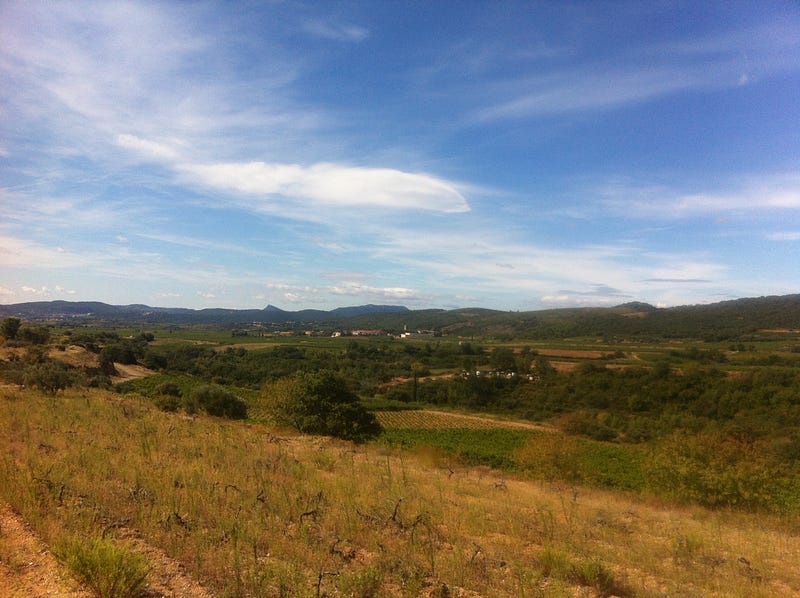
When I moved to France ten years ago, the possibility that I might be lonely didn’t top my list of concerns. I knew I’d miss friends and family, but even at 68 and not knowing anyone, nor being particularly outgoing, I was confident that once I was comfortably settled in, I’d make friends.
To that end, I’d leased, sight unseen, what was described as a “cosy cottage with 18th-century stonework in a winemaking village.” It sounded great, best of all it was affordable — my limited finances were more of an issue than loneliness. I pictured my new life. No car, I wouldn’t need one. I’d make friends in the village, enjoy convivial evenings with the locals, drinking wine as we exchanged philosophical views. My French would be perfect, of course.
On a more realistic note, I knew before I left that I’d need a reliable internet connection to communicate with friends and family back in the States and make connections in my new country — ex-pat groups, writing associations, social sites — and I was right.
I can’t even imagine how I’d have managed without the sound of familiar voices on Skype and WhatsApp calls. In the early months, the ease of online communication was the difference between seeing the move as an exciting adventure or an impulsive act that wasn’t quite working out.
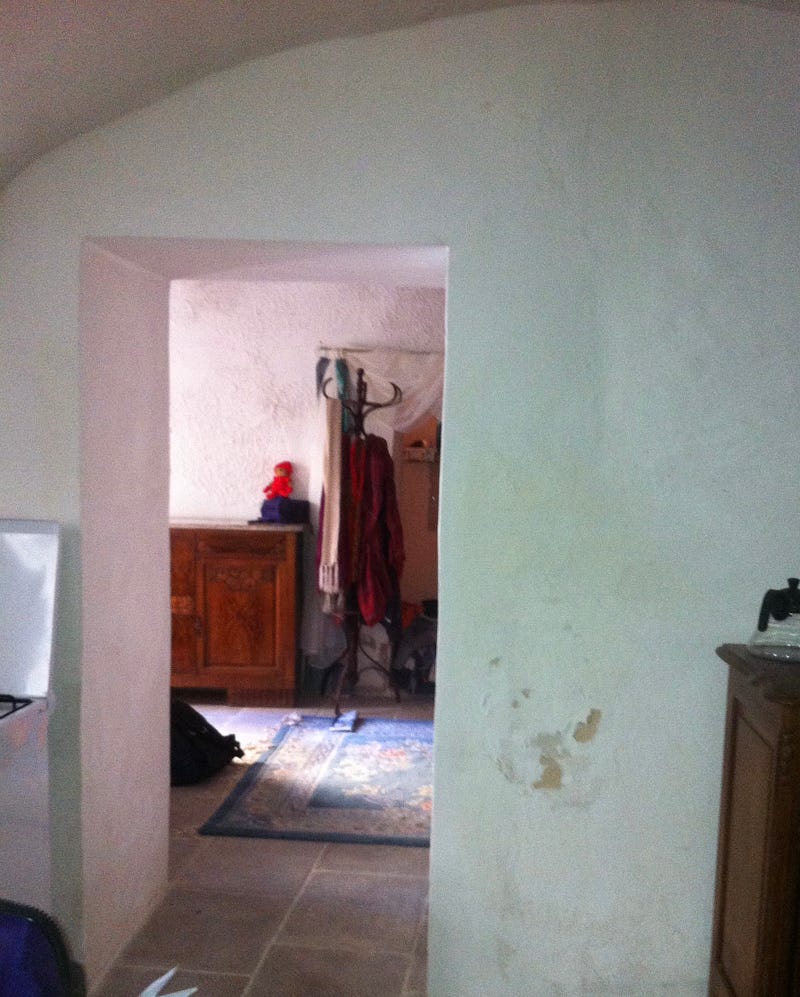
One look at the ‘cosy cottage’ suggested the latter. Getting settled in, if not impossible, wasn’t going to be quite as easy as I’d imagined.
An excerpt from an essay I wrote about it.
The cosy cottage I’d imagined was a tall stone house with closed wooden shutters sandwiched between more tall stone houses. Similar structures across the narrow street combined to effectively block out all but a narrow strip of sunlight.
As I knocked on the front door, I glanced up at the blue sky. It was like looking up from a very deep canyon.
It took a couple more knocks before Sally, the owner, came to the door. Pasty and a bit dishevelled in mismatched cotton pyjamas, her hair spilling from a loose bun, she looked older than I’d imagined, maybe mid-sixties, and was clearly in pain. While recovering from breast cancer surgery, she’d injured her back. It was difficult to stand for more than a few minutes, she explained, and even harder to navigate the steep, narrow stairs that led down from her third-floor apartment.
“I wanted to get this ready before you got here,” she said, “But I haven’t been able to do much.”
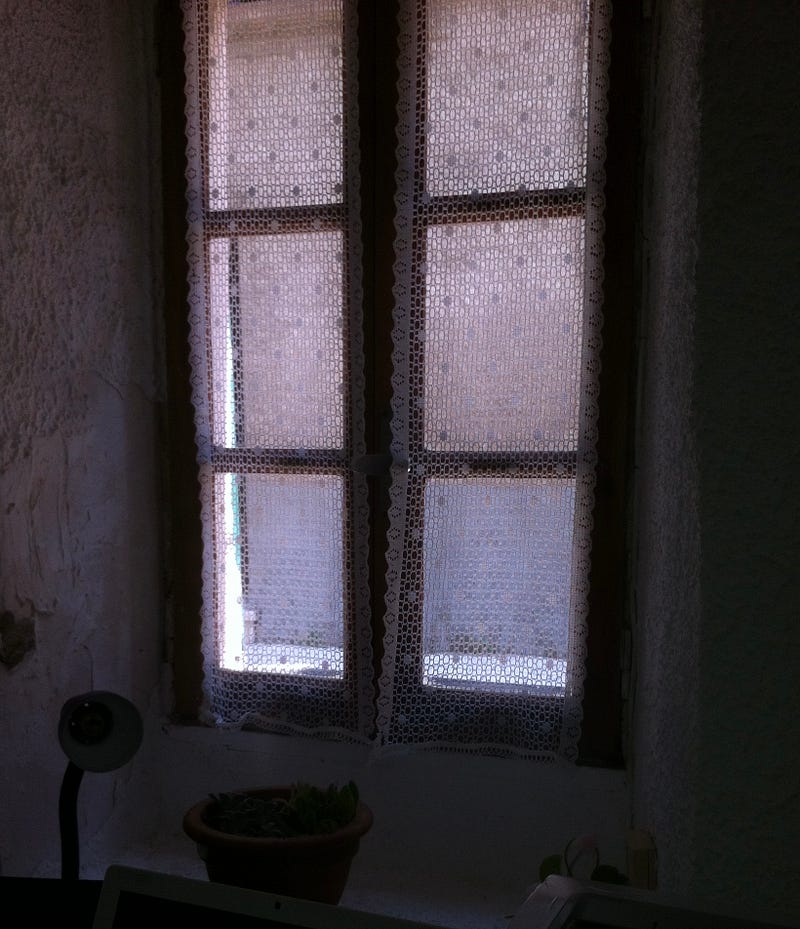
I descended the three steps into the living room and peered into the murky gloom. Dim as twilight until Sally flipped on a light, my new abode had uncarpeted concrete floors, a mix of flaking whitewashed and bedrock walls and a curved, dome-shaped ceiling. The only source of outside light was a tiny window in the kitchen, another in the bedroom and a frosted pane in the bathroom; all faced an already dark street.
Like hulking beasts, two enormous wooden dressers added to the cavelike feel. Plaster had fallen like snow across the wooden surfaces and over a turquoise Formica table, one broken leg propped on a jar. A faded striped couch almost obscured the large brick oven, its metal doors bolted shut.
“It doesn’t work,” Sally said.
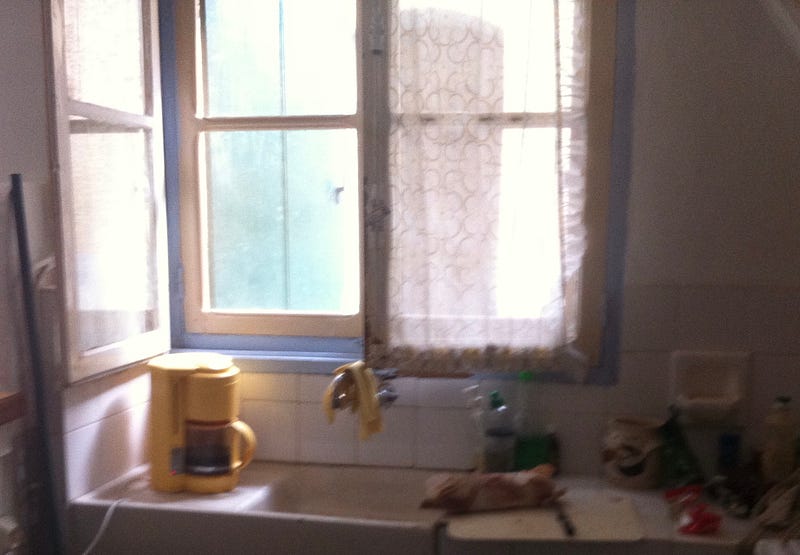
Too disheartened to question her, I glanced at the kitchen area and realised that the picture of a concrete ledge I’d imagined decorating with plants was an awkward shot of the kitchen floor. A shallow brown sink under the window, a tiny refrigerator and an equally minuscule gas stove all but filled the narrow space.
“This isn’t Ikea,” she said, perhaps having read my expression. “It’s a place with history.”
I asked her about a microwave. There was none, no toaster either. Yes, there was a coffee pot. She pointed to a battered yellow plastic electric model. “You’ll have to run vinegar through it.” She lifted the lid. “There’s scale, the water’s hard here.”
I asked about a washing machine. She shook her head. A laundromat in the village?
“No, but you can catch a bus to the next village,” she said. “There’s a laundromat there.”
Then she hobbled back up the stairs.
Should I stay, or should I go? I could think of little else. I envy nomadic travellers who move from place to place, country to country with little more than a backpack — Sara Burdick comes to mind. I admire her bravery and sense of adventure. Perhaps it’s an age thing — I have a few decades on her. At 68, I wanted my adventure to come with a few home comforts. I needed a nest. Everything about my move to France was contingent on that.
I didn’t want to be the spoiled American demanding all the modern comforts, but what I sought was an authentic French experience, whatever that was. This place felt authentique — perhaps trop authentique. Could I make my nest here? Live with the gloomy lack of light, the flaking plaster, the concrete floors? Could I return after a day away and feel that this place was home?
From my journal:
I moved the Formica table to the kitchen — this all but eliminated space to walk around — and tried to see things in a more positive light. Given the gloom, it was difficult to see it in any light, but I tried. The kitchen had no cabinets, no cupboards to store food. Coffee? First I’d have to close the shutters to make room for the electric kettle.
A motorcycle careened past the kitchen window, a pneumatic drill on wheels. Five minutes later, it screeched back. Then it returned. Then it came back. This went on until the children got out of school and set up a playground outside my window, shrieking at each other.
In French, of course, a reminder that this language would be a lot harder to learn than I’d ever imagined.
My eczema flared up. I clawed at my arms until I felt blood under my fingernails. At the sink, I ran water over my burning skin and tried to calm down. I reminded myself that writers wrote in garrets. At least the internet worked.
Just move, my daughter texted. “It makes us sad to think of you living somewhere you’re not happy. You found that place, you can find something else.”
I received much the same advice from everyone else. “Keep looking,” a friend wrote. “Life’s too short for bus rides with dirty laundry.” I’d have probably given much the same advice to someone else in my position, but finding another place wasn’t easy.
There were practical considerations as I discovered when I began searching the internet again. Places that I could afford were in small villages some in areas hundreds of miles away. While the accommodations might be more comfortable, hauling three large suitcases and various bits and pieces from one train station to another would be difficult. Where, for that matter, was the train station? What would a cab cost? As always, money was a concern. If I conquered my driving fear and rented a car, I’d incur significant expenses that would put a dent in my already meagre savings.
That night and for the next few days as I considered and discarded various options, I felt like a rat in a maze. An old rat. As much as I hate it when friends preface sentences with, ‘Well at our age,” I couldn’t help wondering if moving to France alone was an appropriate adventure for someone nearing seventy.
While I was dealing with my dilemma, Sally, the owner, was upstairs confined to bed. A constant stream of visitors, French and English, brought food and did her laundry. I’d hear them on the stone staircase outside my door. As voices and peals of laughter drifted down, I felt the first faint pangs of loneliness.
From my journal
As I write this, I’m feeling ever so slightly melancholy. Nothing more than I ever felt back in the States, just a vague bluesy feeling. But melancholy here in the land of cheap wine and good bread and cheese? A bit ungrateful, non? Where’s the joie de vivre? Shouldn’t excitement and discovery colour everything? Well, yes and no.
Some days do seem that way; nothing escapes my attention. Buying eggs is an adventure. On other days, not so much. I miss the familiar. I tire of not being able to express myself. I think I’m feeling ever so slightly homesick.
I knew no one in the village, no one in France and, as I was discovering, electronic communication can’t entirely replace human contact. Sally had told me to knock on her door if I needed anything. Given her health problems and my uncertainty about whether I’d even stay, I was reluctant to bother her. But one day, after buying a few things at the weekly market, I put together an impromptu picnic — baguette, cheese and some paté — and knocked.
The loneliness dissipated almost immediately followed not long after by my thoughts of moving elsewhere. I’d felt the Universe had let me down with the cosy cottage, but I was wrong. In a foreign country where I knew no one and barely spoke the language, I’d landed in a remote village in a place owned by a congenial American university professor who was only too happy to talk — about anything.
A routine of sorts developed. Early evenings, after I finished writing for the day, I’d bring up food for us both. She’d be in bed surrounded by books and papers, glasses on her nose, a pencil stuck in her hair. I’d sit in an old leather armchair, stuffing falling out of the bottom, and we’d drink wine and talk. It all seemed incredibly exotic, as though I’d climbed the stairs and walked onto a film set.
Ten years on and it’s all still vivid. The tap of tree branches against the long window, the way the fading light threw shadows across shelves overflowing with books. More books piled on the floor. Empty wine glasses on dusty table tops. All it lacked for atmosphere was a couple of prowling cats.
Conversation flowed — books, writing, men. We shared our crazy stories of our less-than-conventional lives. She was still hung up on an eccentric Hungarian who had taught her French. Health problems were her big concern. She said she worried about what would happen when she was really old. I asked her how old was really old and she laughed.
From my journal:
I notice that Sally makes a difference in the way I feel about being here. I might be sort of discouraged with everything — writing, this place, what to do, then I go up and talk and she’s interesting and engaging and I think it’s not so bad.
When she felt up to it, Sally would come downstairs to the cave of gloom as I dubbed it and I’d make dinner. With fewer thoughts of moving, at least for a year, I’d started making my nest — rugs on the concrete floors, lamps. Candles everywhere. And now I had a friend. My first in France and an introduction to more.
From my journal
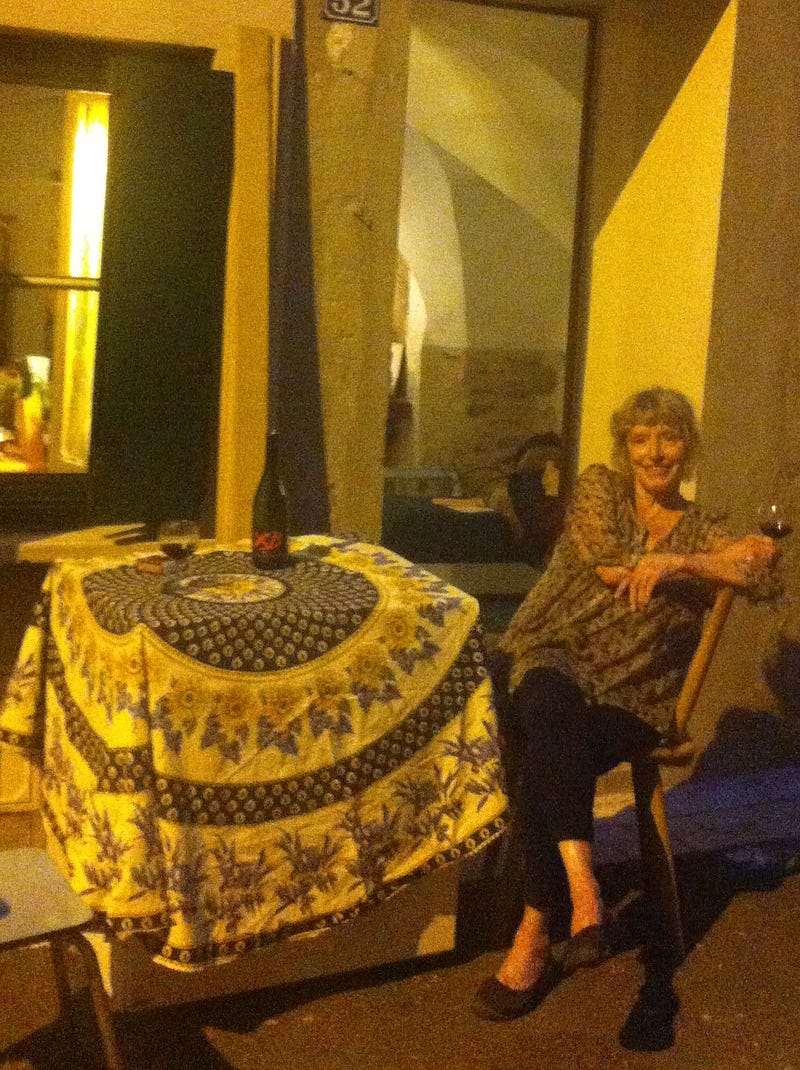
Sally put an old metal icebox outside to be picked up. We covered it with a cloth, took our chairs and wine outside and spent the rest of the evening out there. People coming by in cars (she knows everyone and chatters away in French like a native) stopped to talk to her, then ended up joining us. Eventually, we had a small crowd just sitting outside on the street, enjoying the mild evening. I’m feeling very good about everything.
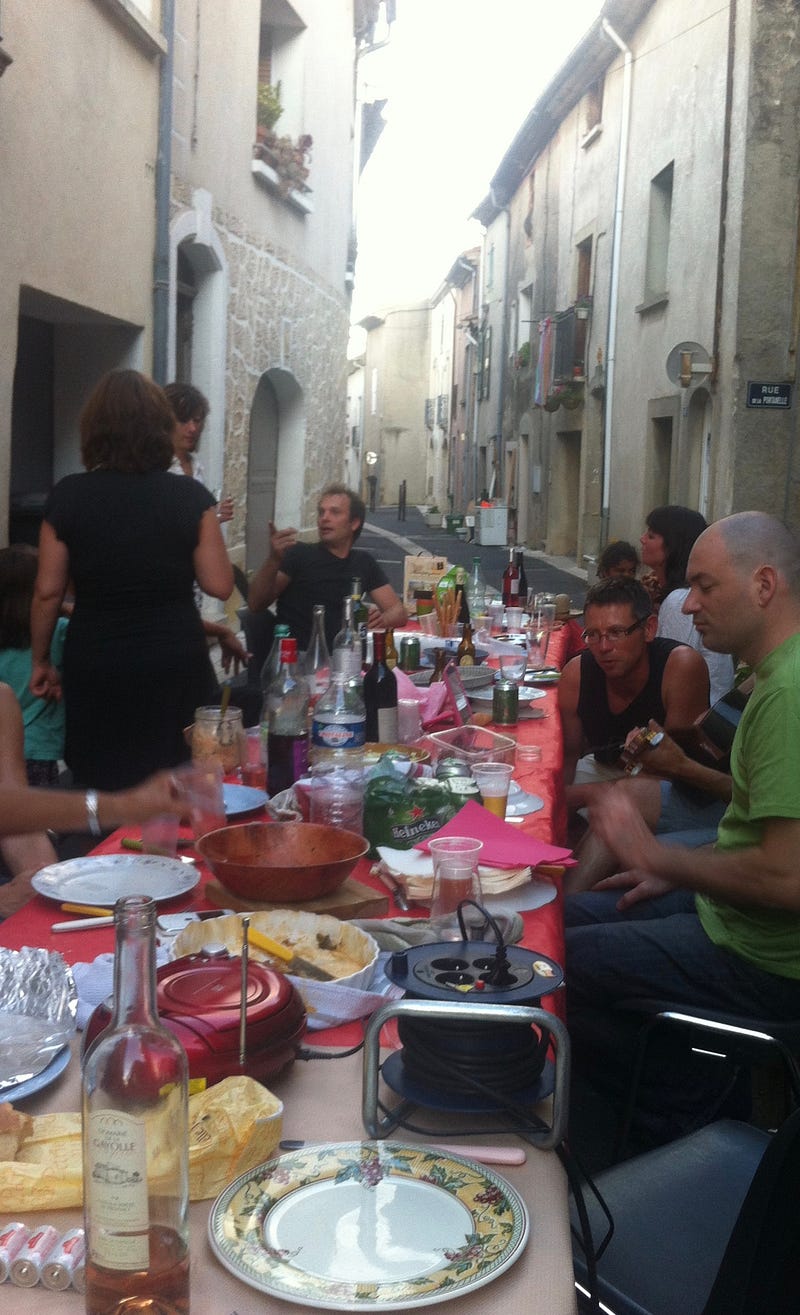
I’m still asked whether I get lonely living in a foreign country, and also whether my experience of moving to France would have been different if I’d come here with a partner.
Sure, there are moments of loneliness — but they can happen wherever you are. I have no doubt my experience would have been different with a partner — not better, just different. But maybe with a partner, I wouldn’t have felt the pang of loneliness that prompted me to knock on Sally’s door. And some friendships that lasted long after I’d moved out of the ‘cosy cottage’ might never have happened.
It all seems so long ago now, but looking back on that first year in France and the richness of experience that I still enjoy today, I’d honestly say that a few moments of loneliness are a small price to pay.
Thanks for reading. I love to hear from readers, so feel free to respond. Claps are good too. Five, ten, fifteen — if you hold your finger down you can make it 50, I’ll be really happy and you’ll get a little exercise. Win-win.