
World’s First Pregnant Mummy Discovery ‘Shocked’ Scientists
2,000-year-old pregnant Egyptian mummy discovered in Poland.
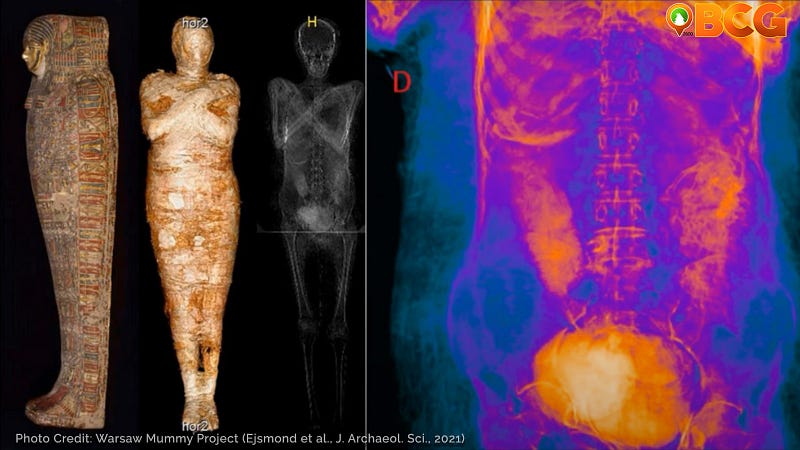
Every Egyptian mummy hides several secrets which will remain unsaid, untapped. Covered in bandages, these Egyptian mummies remain mysteries until discovered — and some are more mysterious than the others.
One such mystery is of a mummy held at the National Museum of Warsaw who was found to be 6.5 to 7.5 months pregnant. Let’s dig into the details of the case:
An overwhelming discovery of a pregnant mummy
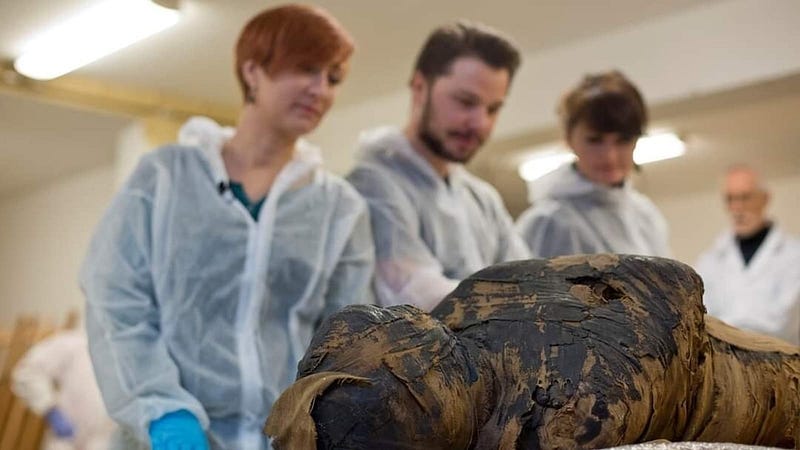
An archaeologist of the Warsaw Mummy project found the discovery to be an absolute gold mine. As Dr. Wojciech Ejsmond stated,
It’s like finding a treasure trove while you are picking up mushrooms in a forest.
The entire team was taken aback by the discovery, as the initial research was to find the diseases or causes of deaths of the Egyptian mummies.
Marzena Ożarek-Szilke, another archeologist, commented how they were just wrapping up the research. It was at the last minute when they discovered such peculiarity about the mummy in question. Marzena Ożarek-Szilke said,
We had the last look at the images and noticed a familiar image for parents of three children . . . A tiny foot.
Brimming with insane interest, the team dug into further investigation, finding that the tiny foot belonged to a small fetus.
Before this, archaeologists had never found a pregnant “mummy” — though there have been instances when the burial of pregnant women was found across ancient Egypt.
Details about the pregnant mummy
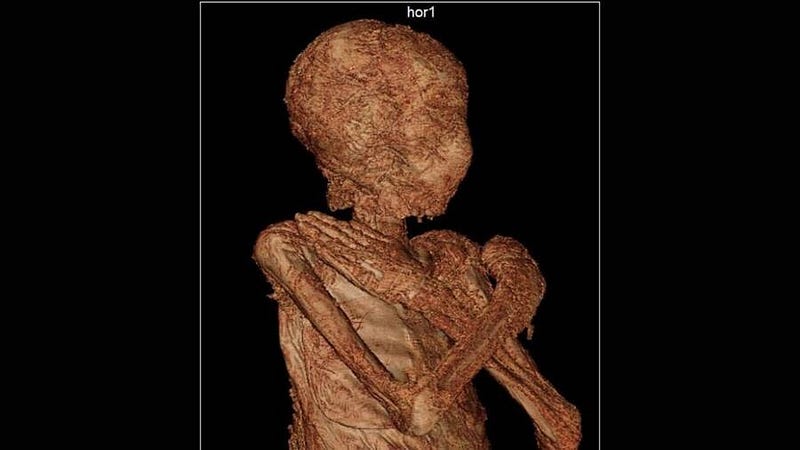
Archaeologists discovered that the pregnant woman was mummified around the first century B.C. Wrapped in plain-weave fabrics, linen and buried with amulets, the mummified woman reflected that she belonged from a high-status Egyptian family,
Upon getting the 3D scan of the body, the researchers found that the woman had long and curly hair.
Interestingly, the mummy under investigation was initially thought to be of a male priest as the engraving on the coffin reflected it. But it turns out she was a woman who died somewhere aged between 20 and 30 years.
How did she land up in a male priest's coffin?
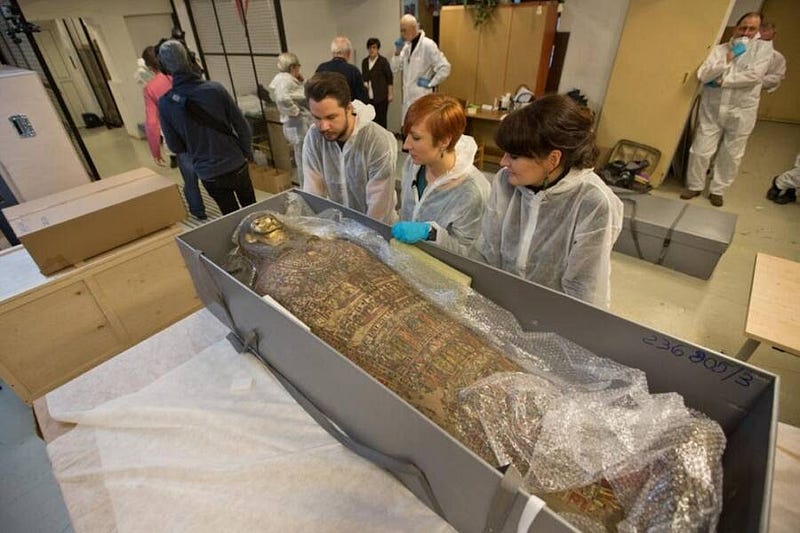
The question in concern was how did pregnant mummy rest in the coffin engraved with hieroglyphs translated for an Egyptian priest named Hor-Djehuty?
What’s more concerning was the findings of a 1990s radiological examination which previously suggested that the mummy was a man.
The presence of a pregnant mummy inside an Egyptian priest’s coffin suggests a complex history of coffins. In ancient times not only were they reused but also robbed and stolen.
Sadly, such practice was not long carried out — it was a matter of the 18th and 19th centuries. Antiquity dealers used to rob the tombs to collect precious items and replace the bodies.
The mummy of a pregnant woman was a victim of such grave theft. The archeologists proved it by highlighting the damages around the mummy’s neck, which she had incurred when the robber tried to steal her amulets.
Sadly, about 10% of the mummies are found in a “wrong” coffin due to grave robbers’ mischief — an act that distorts historical preservations.
Another puzzling mystery about the child
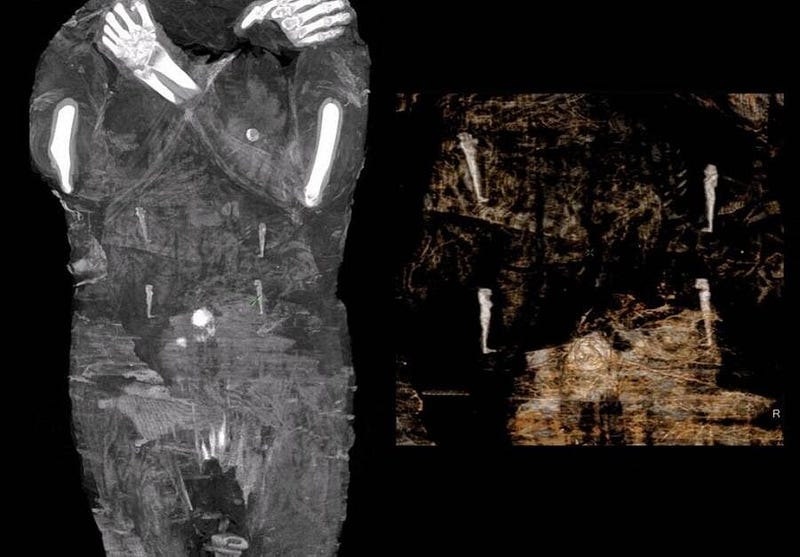
Upon cracking the mystery of a pregnant mummy, the archeologist uncovered another puzzle — the scans of her body revealed only four mummified organs.
According to the conventional embalming practices, the mummy was embalmed where her lungs, liver, stomach, heart, and intestines were embalmed before getting placed in the abdominal cavity.
The question or better say a ‘puzzle’ manifested when researchers probed that why the ancient embalmers left mummy’s fetus untouched.
Hypothesizing different possibilities of embalmers not removing the fetus, the researchers at the Warsaw Mummy Project reached a conclusion: Ancient Egyptians considered a baby an integral body part of the mother, so it got considered as one unit.
Other researchers settled on several possibilities and stated:
We don’t know why it was left there. Maybe there was a religious reason. Maybe they thought the unborn child didn’t have a soul or that it would be safer in the next world. Or maybe it was because it was very difficult to remove a child at that stage from the womb without causing serious damage.
According to Egyptian traditions naming a child was a vital part of individuality — it was an essential factor of being human. A baby, until not named, didn’t use to get considered something apart from its mother.
What next?
The Warsaw Mummy Project had continued its research, diving into what the pregnant mummy could further reveal about Ancient Egypt’s society — especially prenatal care.
More from the author:
References:
https://www.thesun.co.uk/tech/14799118/world-first-pregnant-ancient-egyptian-mummy/


