
World-Wide Wonders
Animals of South Africa, Uganda, New Zealand, and North America
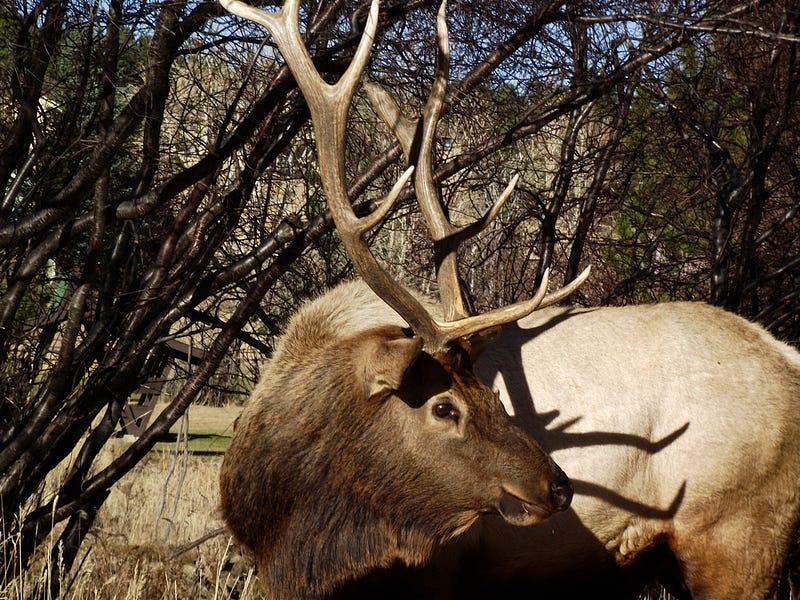
I’m a major animal lover, having owned many horses, dogs, cats, rabbits, ducks, chickens, cockatiels, parakeets, and goats!
But I always feel a thrill to observe animals in the wild, whether they be sweet bunnies or deer in neighboring woodlands, hummingbirds in my feeders, or majestic wildlife only encountered on trips to national and international parks.
As I considered how to respond to this prompt, I thought of my most joyous encounters with wild animals over three continents: Africa, Eurasia, and North America. My encounters with these beautiful animals cause me to pause and think about the world where it is not so mechanized and driven by mass media, commercialism, and stereotypes of what one ought to be for acceptance. I wonder, for instance: do animals have a complex about getting old?
2001–2015: South Africa and Uganda
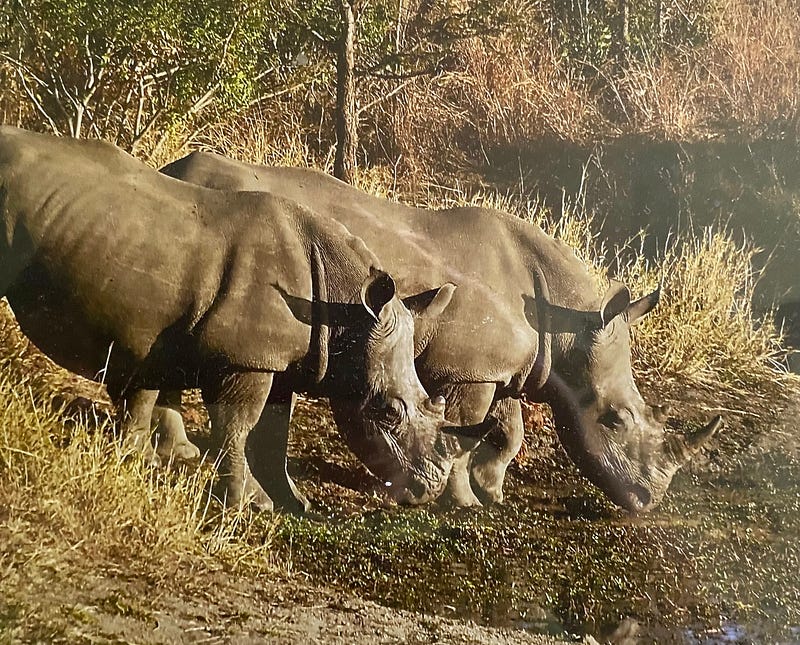
Who would not long to see majestic African animals in their natural habitat? My first opportunity was in 2001 when I was a delegate to the UN World Conference Against Racism, held in Durban, South Africa. I arrived early, as I had never been to Africa and saw this as a lifetime opportunity to observe beautiful animals in natural settings.
From the Durban Airport, I drove north to Endomini Lodge, a project that accommodates visitors to learn about their cheetah program to protect and rehabilitate cheetahs back to the wild. We went on horseback around the area where we also observed wildebeests and many more wild animals near the compound. What amazed me the most was the meows of the cheetahs as they waited to be fed. They sounded just like my domestic cats!
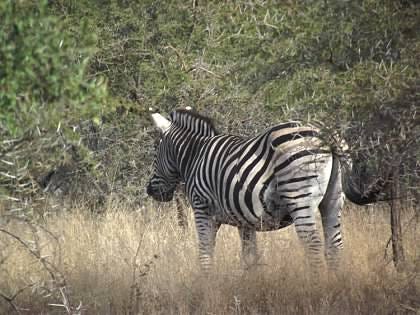
From there, I drove to further north and visited Hluhluwe Imfozoli Game Reserve. Driving on my own in Hluhluwe, I honestly became concerned that I might run into a giraffe, as I encountered them around nearly every curve in the road at sunset! I was also thrilled to see rhinos, zebras, and elephants at this reserve. It’s hard to express the thrill I felt seeing these beautiful animals in their natural habitat. These observations also brought me great peace. Humankind has taken over so much of the habitat of animals. There was something comforting about seeing animals that still have their habitat preserved.
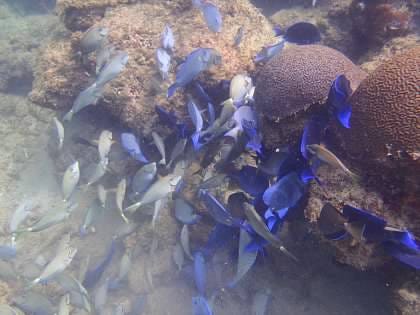
I’ve been a diver for over 25 years, so, of course, I wanted to discover the animal life in the ocean just off the South African coast. I picked sites just north and south of Durban — St. Lucia and Port Shepstone. I was amazed — just as visiting other countries offers diverse topography, so the underwater topography in Africa is very different than that in the Caribbean or Asia. My favorite excursion was a night dive through a maze of coral reefs that hosted many “raggie” (ragged tooth) sharks.
I could be wrong, but I think that the quiet movements of scuba seem unproblematic to sharks, as opposed to lots of quick movements of regular swimmers. I never felt unsafe calmly moving among these potentially life-threatening creatures. It felt surprisingly peaceful.
Two or three years later, I returned to South Africa for a break after several weeks of research in Uganda, working with former child soldiers and others in Lira greatly affected by the Lord’s Resistance Army (LRA) War. I spent five days at a camp in Kruger National Park. Safari excursions began early in the morning, and they also went out in the evening into the darkness.
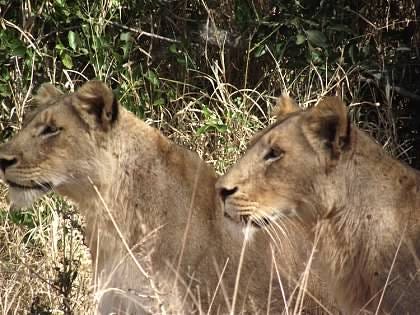
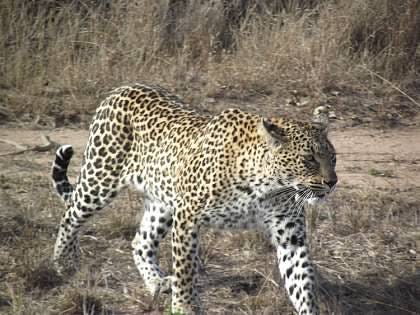
I recall being in a jeep with a family who had ungrateful American kids who were annoyed that they were awakened early for the safari. Sorry — I wanted to scream at them. How few kids get the opportunity to have an African safari? That morning we witnessed a pride of lions that had a recent kill. There were babies playing near their mother. We also got a rare view of a leopard.
One evening we took a jeep excursion to find animals by night. As we returned to camp, our driver stopped the jeep and told us to look skyward. It was the first time I saw a dark sky and the most amazing vision of the Milky Way. Again, words fall short. I felt at once so small, but also so connected to the universe.
Ugandan Treasures
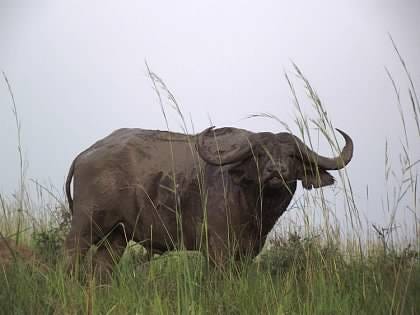
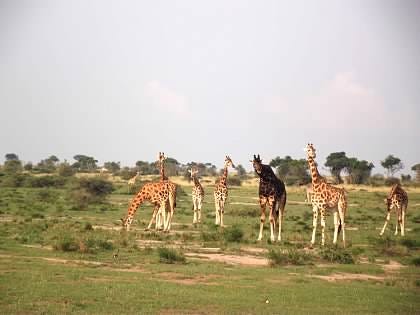
I primarily went to Uganda for my research into ways in which the LRA war affected northern Ugandans and ways to support post-war education. However, during two of my trips there, I had the opportunity to visit Murchison Falls National Park in northwest Uganda. Aside from the falls, where the Nile flows over a narrow gap culminating in a massive drop, the park has a large wildlife population that includes elephants, hippos, giraffes, grey crowned crane birds, and rare shoebill storks.
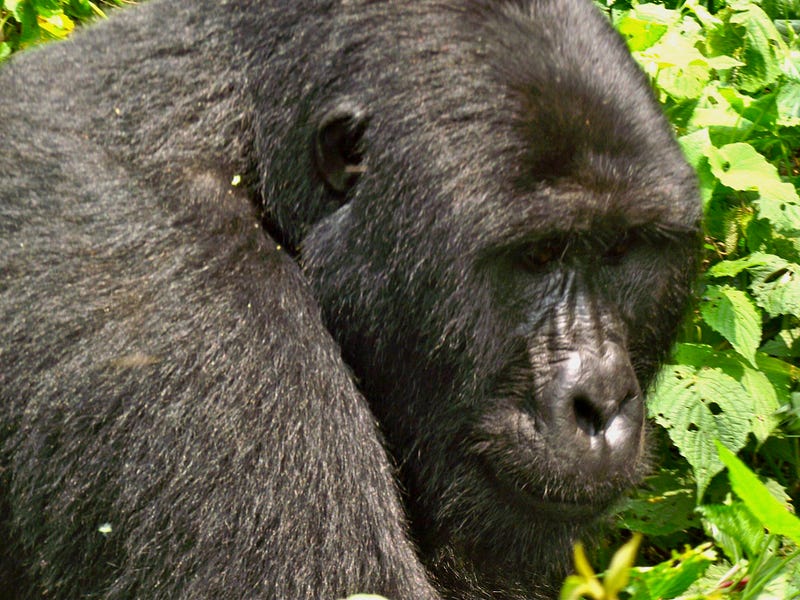
In 2014, after time spent in Lira, I also traveled with my new husband as a kind of honeymoon to the southwest of Uganda, hiking in the Bwindi Impenetrable Forest to see silverback gorillas and in Queen Elizabeth National Park to see tree-climbing lions. I so wish someone had been doing a video when I got knocked down by a large male silverback who had been startled by a noise! Fortunately, I fell into a tree on my way down the mountain, so I was not hurt. Quite the adventure, though.
The Birds of New Zealand
Later in 2014 I received an Ian Axford Fellowship to work in Wellington, New Zealand, critiquing the country’s new policy on refugee resettlement. To both me and my husband, there are fewer places on earth than we would rather be. The country is STUNNING. In such a small geographical space, it offers everything from rain forests to snow-covered mountains, dark sky reserves, and urban areas with high-class museums, theatres, and musical events.
New Zealand’s natural history is bound up with amazing local birds. It has almost 100 bird species that are found nowhere else on earth. This is due to geological evolution that made the island nearly free of mammals until explorers arrived. It has island habitats as well as sanctuaries that offer protection to rare birds.
Living in Wellington, my husband and I had opportunities to visit Zealandia, where we were able to observe rare kiwis, kākāriki, tuatara and takahe. Tiritiri Matangi Island, just off of Auckland, was another place where we enjoyed the chance to see bellbirds, petrels, New Zealand fantails, terns, and herons.
Perhaps my favorite birds were the ones that visited the tree just outside our dining room in Wellington every day, tui tuis. They reminded me of mockingbirds, with their seemingly endless ability to sing out new and diverse calls. I miss them.
Wildlife Treasures of the United States
While remarkable wild animals are found in other continents, my own country of the United States houses fabulous wildlife as well. I was especially reminded of this when on a trip to the northwest a couple years ago, when my husband and I had our first chance to visit Yellowstone National Park.
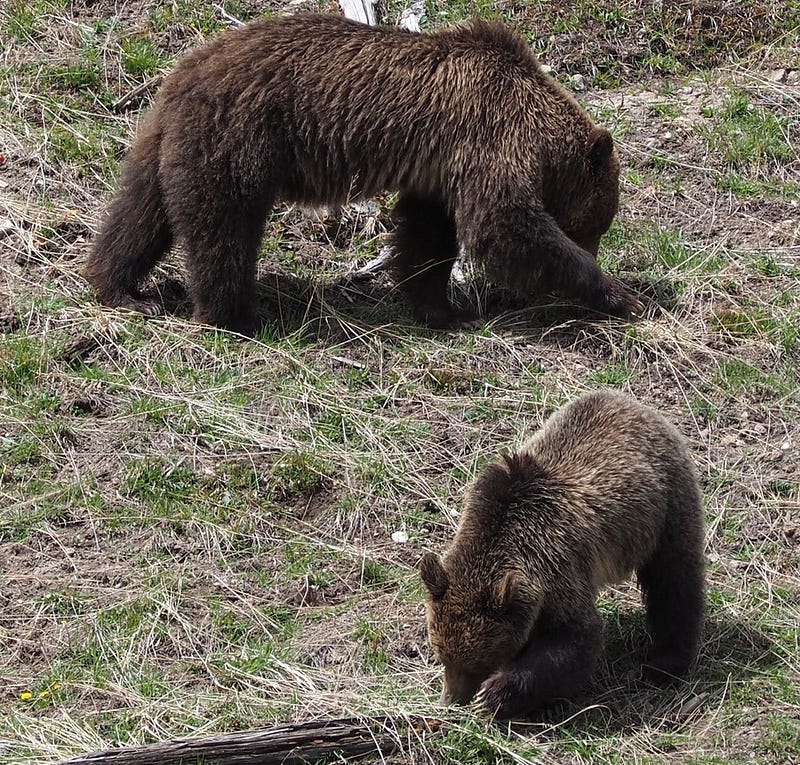
Between the stunning natural beauty of the mountains, waterfalls, and geothermal formations, I’m not sure I expected to find so much remarkable wildlife at nearly every turn. We waited for buffalo who stood in the middle of the road. Elk grazed on the mountainsides. We observed brown bears at a close proximity.
What Is It About Wildlife?
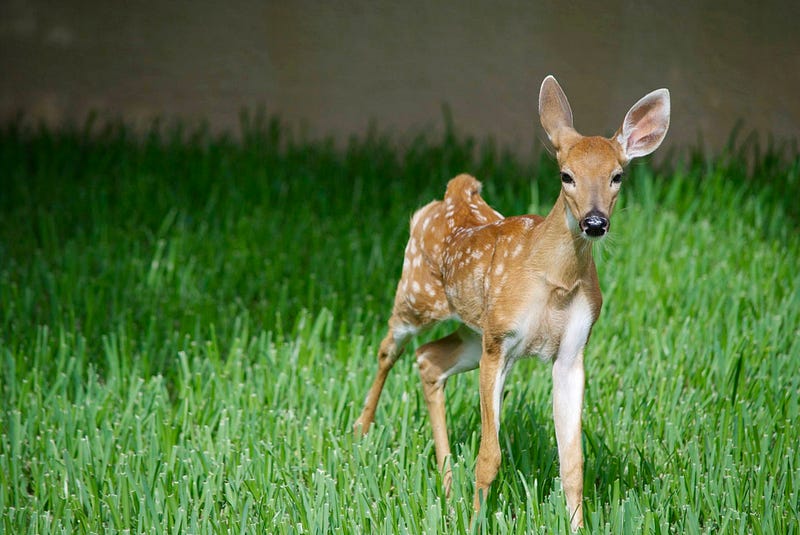
I’m sure I’m not alone when I comment on how I am moved by having the opportunity to glimpse wild animals, whether in exotic locations or deer who have wandered into my backyard. And I wonder what it is about these beautiful animals that take us to another realm.
Honestly, I’d love to hear your responses, as I don’t have a complete answer. I think that for me, at least in part, it is that they are so far removed from our commercial and material world that being in a place with them just offers a space of profound peace.
Thoughts?
If you enjoyed my article, please clap, comment, and/or follow me! And thank you!
Wow, Jillian Amatt - Artistic Voyages’s article on wildlife in Costa Rica is fascinating! I’ve also been to Costa Rica and learned a good bit about the biodiversity there, but Jillian really brings it to life.
The photos in Joel R. Dennstedt’s piece “All the Wildlife in the World” are amazing! Not to be missed, for sure! I love good wildlife photography, and these are beautiful.


