[World Spotlight] The Impact of Russian Aggression & Global Food Inflation on World Affairs
Follow Areas & Producers for content about World Affairs
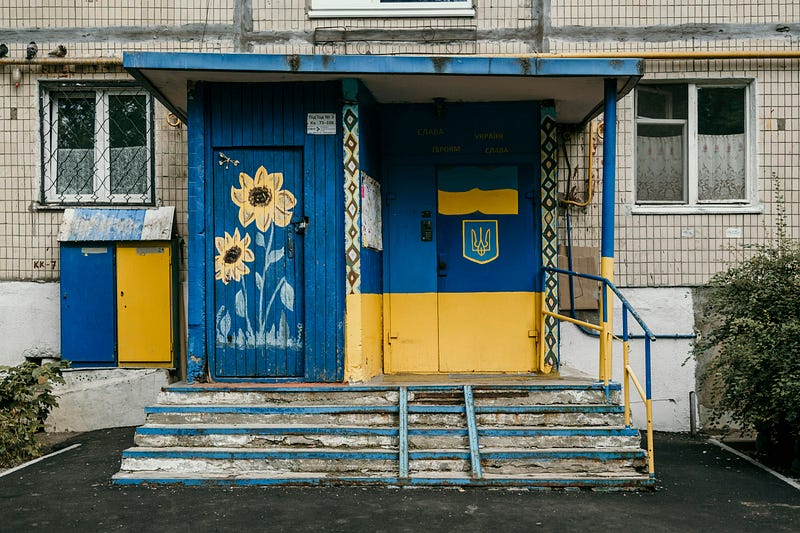
Russian aggression toward Ukraine is making a lot of people afraid for a much wider war between NATO and Russia to spark at any moment. I don’t blame them. Arms sales and even more sophisticated weapons systems are going from West to East at an alarming rate. Does that sound familiar?
There is an in-depth discussion about these geopolitical trends in a story by Oksana Kukurudza's Sunflowers Rarely Break entitled “My Perspectives on the Ukraine Invasion Two Years Later as a Ukrainian Descendant”.
I definitely had to chime in on it. I wrote a comment about the parallels between Russia’s invasion of Georgia in 2008 and Ukraine. Here’s that part of the story:
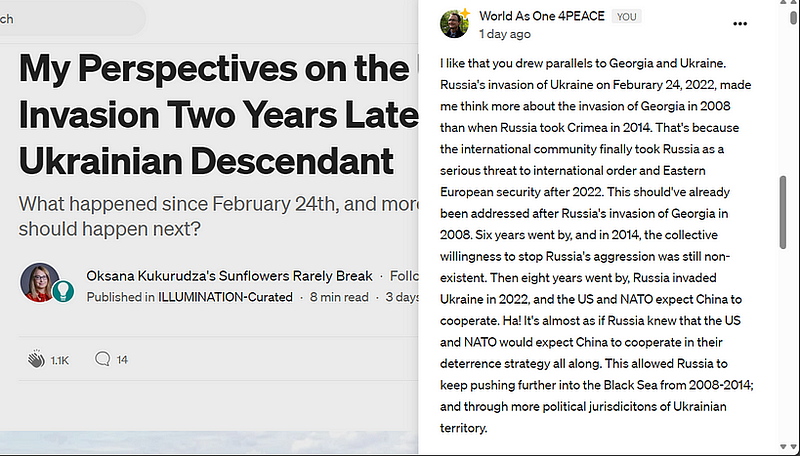
The writer did not hesitate to respond to me. This is a remarkable achievement considering that there are already 14 comments on the story at present.
Here’s what she said to me:
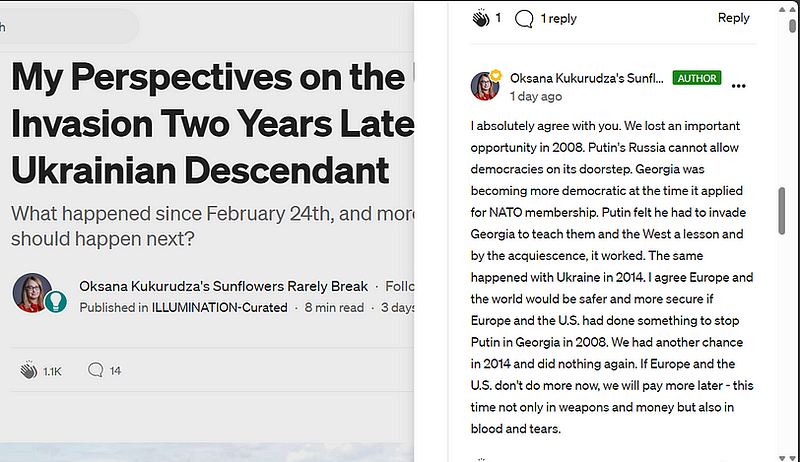
I am delighted to carry out this conversation about Russian aggression in the context of international events dating back to 2008. Meanwhile, another writer made a surprising remark — surprising to me, anyways — about this historical perspective on Russia’s invasions.
Here’s what devildogRJ PA said to me:
“It recalled my disappointment in our response to the invasion of Hungary. It’s time to fix this, Joe.”
He is referring to the Soviet Union’s invasion of Hungary in 1956. This is a year to remember for Hungary, and probably most countries that formed the Soviet bloc during the Cold War Era. I know this to be true; in fact, because I was traveling in Hungary last year. I noticed that the presence of 1956 was quite vivid there. For instance, I saw the 1956 logo on several statues and even outside of a popular shopping mall!
And that’s why Oksana’s perspective, as well as everyone else’s perspective, on Russia’s aggression toward Ukraine should be a topic of discussion that involves the entire world.
Explore more content about the impact of Russian Aggression & Global Food Inflation on World Affairs in the publication Areas & Producers below.
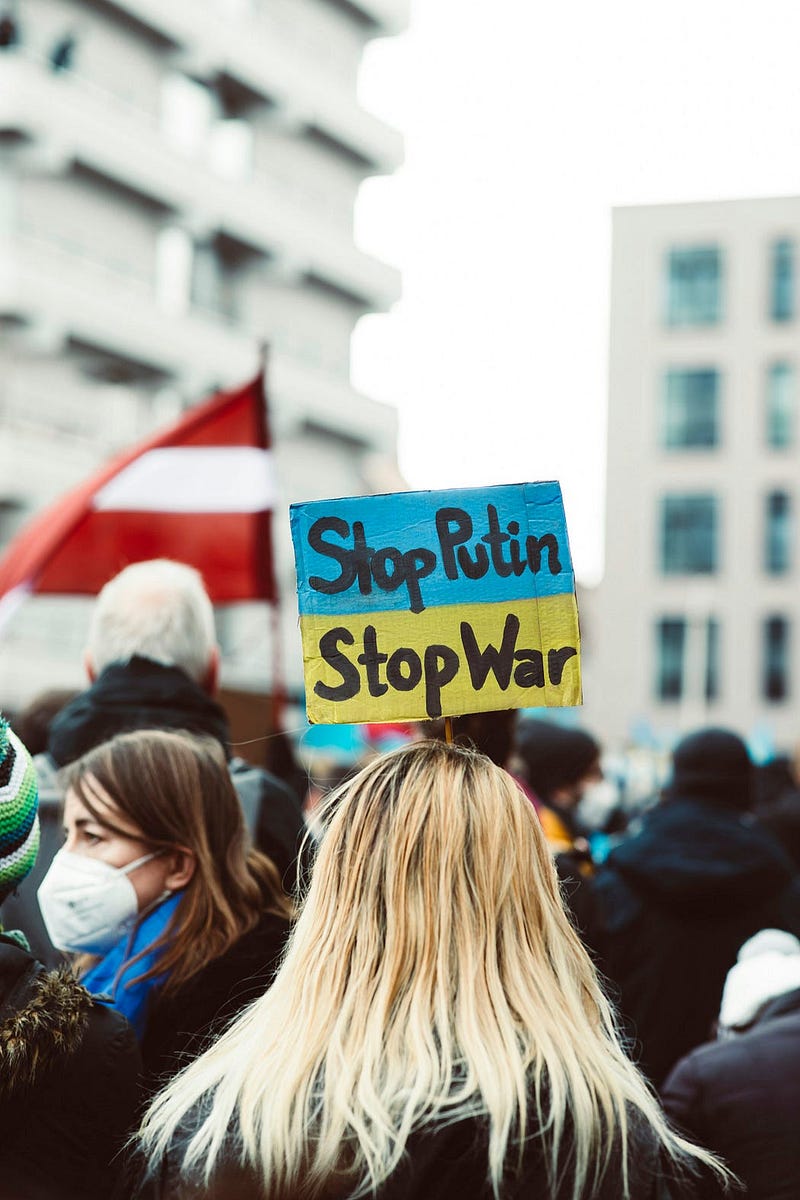
Is Russia becoming more dangerous and ruthless toward Ukraine?
George Friedman is founder of Geopolitical Futures and author of many books on geopolitics. This latest writing by Friedman about the death of Alexei Navalny, an opposition figure to Vladimir Putin’s regime in Russia, is insightful and a little controversial. Have a look at it here.
Now, here are my thoughts about the article.
“[Putin’s] primary enemy is the United States, and the issue of continued U.S. aid to Ukraine is in question. The explanation here is that he sees that the U.S. is at least divided on Ukraine and at most tired of the war. If this is so, then he might also have concluded that the more dangerous and ruthless Russia becomes, the greater the likelihood that the U.S. would choose to abandon the Ukraine project.”
The continued aid to Ukraine is in question, but not in doubt. The issue is over how much — or how little — aid to give Ukraine, though the discussion on what type of aid is clear: military aid to assist Zelensky in Ukraine’s war effort against Russia. This means that NATO is trying to take charge, even though it appears to be unsuccessful in the face of Russia’s latest attacks on Ukraine in the lead up the war’s second anniversary on February 24, 2024.
Russia is definitely becoming more dangerous and ruthless toward Ukraine, since the Red Sea attacks have given Putin the ultimate opportunity to play peacemaker by supplying grain supplies to countries in the Middle East and North Africa, all the while the US and UK carry out wide-ranging missile attacks on Houthi ships claiming to be fighting for the cause of Palestinians.
“This week he has two poles to lean on. One is the fall of an important Ukrainian city. The other is that he is prepared to resort to Stalinism, blaming the U.S. for forcing him into this position and further undermining the U.S. position.”
I argue that one of the reasons why we are hearing about Putin’s Stalinist propaganda is because he thinks that this is the only way that Americans view the Russian Federation in today’s international relations landscape. It’s possible that many American citizens only know about Russia from what they learned in their schools at a young age, which would have been mostly about how or why the fall of the Soviet Union was due to the inevitable failures of Communism.
However, today’s Russian Federation poses a much greater threat to Ukraine than it did to the whole world under the Soviet Union during the Cold War. My point is that the Russian Federation still claims some of the world’s most sophisticated military capabilities, and, oh yeah, a mutually-assured-destruction force of nuclear weaponry that could still turn the world to dust, irrespective of ideological competition between the West and the rest. This renewed perception of ideological adversaries has been brought to bear during the rise of China in the global economy; it gives Putin’s regime the greatest purpose to revanche Ukraine and much more.
“It is clear to me that [Putin’s] thoughts are on the United States, and that he wants to display his willingness to engage in ruthless action.”
Friedman’s concluding statement could not be more to-the-point on the geopolitical implications of Navalny’s death. The killing of Navalny was a ruthless act, Russia’s invasion of Ukraine is a ruthless act, and any threat given to countries spanning the Black Sea to the Baltic Sea only promises to bring NATO into a much wider war that will pose a serious security threat to the whole continent of Europe. I wish that the news of Navalny’s death could have come much sooner than the Putin-Carlson interview.
Nestlé CEO Mark Schneider Talks Food Inflation & Commodities Prices in 2024
Food inflation has been an ongoing problem since the outbreak of the Covid-19 pandemic. The rising cost of food has translated to broader impacts to the global economy, such as changing dietary habits and frugal spending at supermarkets or food stores.
One of the key companies to track for food inflation is Nestlé. The company reported its full-year results for 2023 this week with an outlook on global food inflation and commodities prices. According to the earnings report, food inflation has been a robust driver for the company’s overall profits — hitting historical levels of free cash flow at the company’s disposal.
CEO of Nestlé Mark Schneider was interviewed after the company’s earnings release. Here’s what he told CNBC reporters about the company’s outlook for global food inflation in 2024:
“We have seen food price inflation come down somewhat already, albeit not to the level of pre-pandemic, and toward the latter half of the previous decade. I also see a more nuanced picture going forward; I see more choppiness. Certain commodities are at or near historic highs: think about cocoa, think about robusta coffee or sugar.”
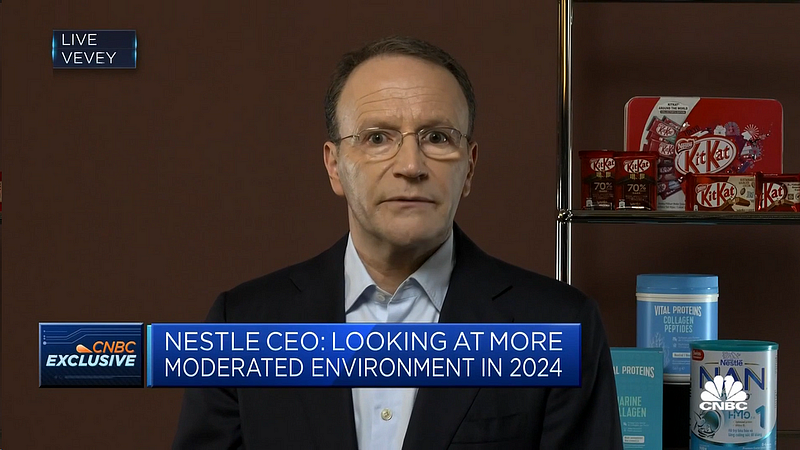
CEO Mark Schneider brings up the point that the company is keen on growing its business in the future by investing in the brands with the highest potential for innovation across their product portfolio. He specifically mentions pet food and coffee as two of the key categories for innovation.
Moreover, the company intends to launch an advanced manufacturing facility in the United States — in Glendale, Arizona — by the end of 2024.
Said that, it appears that this line of thinking parallels with what most US-based companies in the food and beverage industry are telling the public in regard to rising food input costs that have translated to global food inflation.
This is also indicative of how the company is carrying out its global portfolio of products, by shifting its manufacturing presence to other parts of the world, such as when the company decided to close close its baby formula manufacturing facility in Askeaton, Ireland, due to declining demand from China for baby milk formula products.
But these trends also reveal how the company needs to compete with other companies leading in the food and beverage industry — an industry that relies on satisfying dynamic consumer behavior trends.
For example, Nestlé CEO Mark Schneider shared his insights with a reporter on Bloomberg TV about these the industry changes. Here’s what he said:
“Innovation is a key growth driver and we have an industry-leading budget there, with about a billion seven Swiss francs [1.7 billion CHF]. And, more importantly, making sure that translates then to short cycle times, from concept to shelf, and a steady flow from each category. That’s important. I spend a lot of time with our head of R&D, sampling products personally, because clearly I want to be sure that they understand that their function is vital to ensuring future growth.”
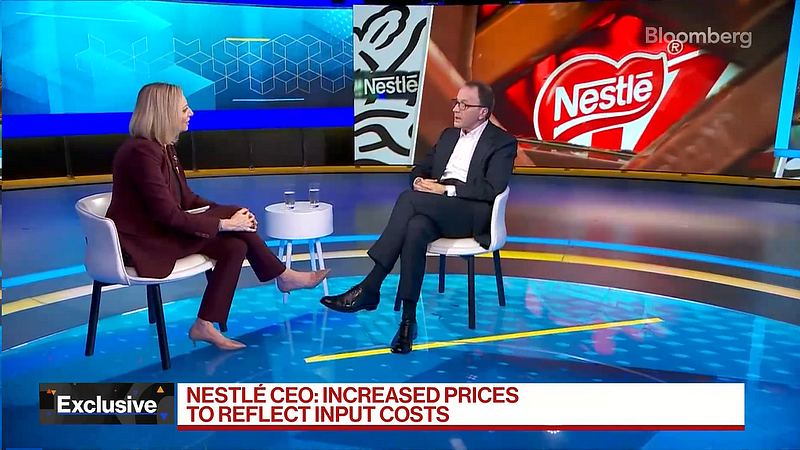
When CEO Schneider refers to how he personally spends time with the head of R&D and the whole team, he is talking about how the company’s outlook revolves around future developments in Industry 4.0. Industry 4.0 requires deep expansion into advanced manufacturing, which means incorporating the latest hi-tech features in the manufacturing operations, as well as addressing rapidly changing consumer preferences for food.
On the other hand, the company will need to tread carefully with its innovation plans, since several global food brands are coming under pressure from geopolitical tensions.
When Israel launched its counter-attack into Gaza, McDonald’s and Starbucks were two of the first global brands that everyone was talking about in the media space. That’s because people in Morocco and other Middle East and North Africa (MENA) countries were directly blaming companies like McDonald’s and Starbucks for their responsibility in fomenting Israel’s military response toward Palestinians in the Gaza Strip.
We tend to side-step this issue due to the more immediate problems facing the global economy in the Red Sea right now. But if Nestlé’s profit margins become more linked to geopolitical trends, then the company is going to have to rethink its strategy and outlook, since much of its sales revenue comes from global markets. Food inflation isn’t likely to go away soon, either.
Follow Areas & Producers for content about World Affairs.