World Spotlight: Attacks On Israel Are Relevant To Global Oil Markets
There was an attack on Israel during the weekend
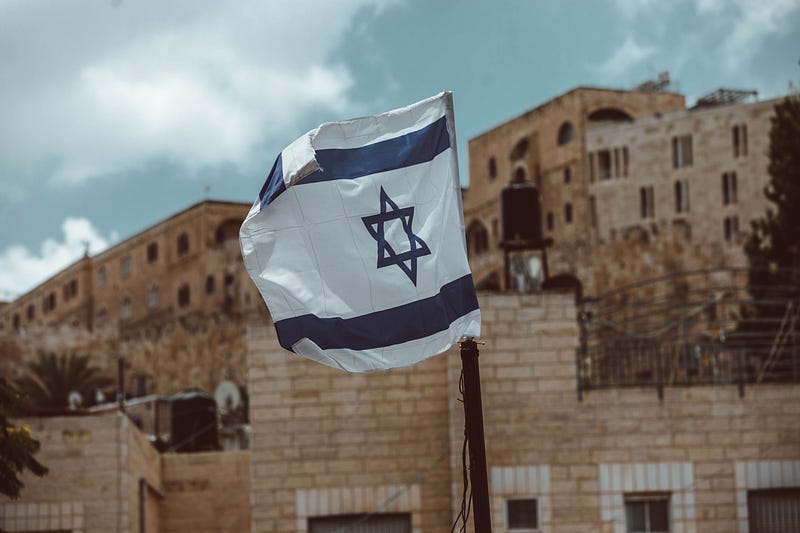
There was an attack on Israel, reported on Saturday, 7 October, which has been attributed to gunmen representing Hamas.
According to a Reuters report about latest attack on Israel, chief economist at Annex Wealth Management Brian Jacobsen believes that global commodities markets are going to react to these attacks. Here’s what Jacobsen said for global oil markets:
“Iranian oil production has been increasing, but any progress they’ve been making behind the scenes with the U.S. will be dramatically undermined by Iran’s celebrating Hamas’s actions…It’s most critical to see how Saudi Arabia reacts.”
More on the implications for global commodities in a moment. But firstly, it’s critical to point out that attacks between Israel and Syria earlier this summer set the stage for this moment.
It was reported on 3 July 2023 that the military forces of Israel Defense Forces (IDF) launced a large-scale operation in the West Bank, illustrated by airstrikes on the city of Jenin. CNN
This development was most likely part of the wider military campaign in the region, as elevated airstrikes against Syria are targeting Iran for its nuclear enrichment program.
According to The Guardian, this is biggest military attack by Israel on the West Bank in 20 years. Watch the footage of attacks provided by the link to that article in the Guardian.
BBC indicated that eight deaths and 50 injuries resulted from the military operation in West Bank’s city of Jenin and that Palestinian authorities are calling these attacks by Israel a war crime. In the words of a spokesperson for Palestinian President Mahmoud Abbas, the attacks are “a new war crime against our defenceless people”.
The attacks on the West Bank came after Syria informed the public it had stopped missiles from Israel by using anti-aircraft missiles.
On 2 July 2023, AP News released an update that the anti-aircraft missiles exploded over Rahat, Israel. Photos provided by AP show people cleaning up the debris in Rahat from what looks like some buildings destroyed.

The Jerusalem Post labeled the debris from the anti-aircraft missles as “shrapnel” indicating that the missiles from Syria were indeed shot down over Israeli territory. It was also noted in the report that the rocket sirens had not been activated due to this air defense missile.
One of the in-depth reports I could find on this developing story is from PBS News Hour on 5 April 2023 — “Israeli airstrikes on Syria intensify, raise tensions with Iran.”
The PBS report quickly calls attention to this “shadow war” between Israel and Iran as evidence of the recent airstrikes targeting areas of Syria. However, before going into the details of this history and how it relates to the present-day circumstances in the Middle East, it is made clear that tensions in the region are also related to Israel’s closer ties with Saudi Arabia.
And that’s the rabbit-hole where I would like to take you now, so that the global commodities can be put back into perspective here.
Iraq has been inviting foreign investors to explore and develop the country’s vast pertoleum reserves and gas blocks.
For instance, foreign investors have been very active in the oil and gas rich Persian Gulf as of late. Reporting on 18 June 2023 revealed that Iraq’s oil ministry is seeking foreign investment into the country’s natural gas production.
According to an article by The Arab Weekly requests to bid on investments in Iraqi gas production were to be finished by 15 June 2023, while the latest figures showed that Iraq’s crude oil and natural gas reserves has increased to 155 billion barrels and 140 billion cubic feet, respectively.
Although this might sound like good news for foreign investors and Iraq’s economy, the nature of this bidding smacks with domestic political issues surrounding the semiautonmous Kurdistan region of Iraq, for which a new oil and gas law has been promoted by Iraq’s government to the dismay of Kurdistan leaders. S&P Global
Additionally, Saudi Aramco intends to invest in the development of Iraq’s Akkas gas field. It was reportedly discussed at the Saudi-Iraqi Coordination Council, along with an agreement with China’s Offshore Oil Engineering Company (COOEC) for an engineering, procurement, construction and installation (EPCI) contract at the Safaniyah oilfield in Kingdom of Saudi Arabia.

Moreover, in a news story about global energy markets that got swept under the rug, Saudi Aramco signed a cooperation framework agreement with Jiangsu Eastern Shenghong Co., Ltd., on 27 September 2023.
According to the agreement, Saudi Aramco will supply Shenghong Petrochemical with crude oil and other feedstocks, while the two companies discuss a potentinal strategic partnership that would allow for a large expansion project at the petrochemical and refinery compex in Jiangsu.
As part of this strategic partnership, Saudi Aramco seeks to acquire a 10% stake in Shenghong Petrochemical’s integrated refinery and petrochemical complex. Yet, the agreement stopped short of this potential expansion deal.
This didn’t deter Saudi Aramco from speaking out about the importance of China to the company’s global market strategy. Aramco Downstream President Mohammed Al Qahtani, said:
“The signing of this cooperation framework agreement is another significant milestone in Aramco’s Downstream strategy to increase conversion of Arabian crude oil to chemicals and to expand into the critically important Chinese market. We see China as an important partner not only for today but for decades to come.”
China, through companies like COOEC, is becoming a leading EPC or EPCI player in the global oilfield services industry. According to the news agency Oil & Gas Middle East the contract will be worth $1 billion as it is “the world’s biggest conventional offshore oil field…”
From a geo-political point of view, the First Arab-Chinese Summit signals a change in the thinking on Saudi Arabia’s control over oil production, and how they wish to court China as a major oil importer. That’s why it is important to understand how global energy markets are responding to geopolitical shifts.
The attacks on Israel are relevant to global oil supplies in a number of ways. For example, the countries with increased leverage over oil markets are more likely to use this advantage to achieve political ends, which is a big factor in the overall security dilemmas between Israel and Palestine.
I have extensively covered global energy markets in the publication Areas & Producers. Go the publication and check out all of the latest content about oil and gas industry news, as well as how geopolitical shifts are changing the dynamics of future industrial policies. This is the main purpose of the pub’s methodology and mission.
This is part of The Weekend Brief newsletter by Areas & Producers.
The Weekend Brief is a weekend guide to international issues and global markets.
By signing up, readers would receive all of the weekly content and updates from Areas & Producers on the subjects of investing, tech, mining, energy, EVs, AI and world. Sign up for the newsletter and instantly receive the content, to the e-mail inbox provided, every Saturday and Sunday!