[World Spotlight] About US-Africa Relations & Global Construction Market Trends
Read more about the impact of US-Africa Relations & Global Construction Market Trends on World Affairs in Areas & Producers

The priority shifts in current affairs will generally never give Africa a seat at the table. But this is not right. The media and experts alike are constantly devouring information and demanding for more and more insights on the Russia-Ukraine war and Israel-Hamas war. And yet, wars or conflicts are on the brink of happening all of the time in the context of Africa’s politics.
Why is the world showing less and less interest in the current affairs of Africa? I mean, just this week, there was a big story about Senegal’s President Mackay Sall who has publicly refused to set a new election date for the democratic country in West Africa. According to some people, Senegal’s political stability has been a key tailwind for the democratic push across Africa’s political systems.
Well, that now appears to be on the wane. Headlines aside, I doubt that very many people actually care about the renewed focus of US engagement in Africa since 2022. Please tell me, if you’re reading this, do you even care?
Explore more news stories and research updates about US-Africa Relations & Global Construction Market Trends from the publication Areas & Producers below.

Is the Lobito Corridor a risky investment for US-Africa relations going forward? (click this link for the full story)
For this week I want to cover an article by one of the writers from Geopolitical Futures, Ronan Wordsworth. Wordsworth’s article about the current circumstances of US-Africa diplomatic engagement is insightful and a little controversial. Have a look at it here.
Now, here are my thoughts about the article.
“To contain Soviet influence and communist ideology, the U.S. formed partnerships and provided financial and security aid to friendly African governments as well as groups opposed to pro-Soviet regimes. When the Cold War ended, Africa tumbled down the list of U.S. foreign policy priorities.”
Ah, this was the US containment strategy at its finest. Formed as the main strategy for the US government after World War Two, this containment strategy set the course for US engagement with other countries under the backdrop of the Cold War era. It is also likely that this strategy of containment has been carried over to today’s International Relations, in the same way that people often describe post-colonialism, or neo-colonialist ties between Europe and Africa. But I would offer that it is not solely the US who is practicing a containment strategy, since the People’s Republic of China (PRC) is basically carrying out its own version of containment by bolstering its military presence in the South China Sea — i.e. to contain its economic imperatives by coercing Southeast Asian countries through political leverage. In other words, we should completely rethink what “containment” means in the context of today’s International Relations.
“Initially through the mercenary Wagner Group, Russian forces spread in and around the Sahel — in Mali, Burkina Faso, Libya, the Central African Republic and Sudan — and entrenched themselves in the national security infrastructure (not to mention lucrative mining concerns).”
As far as I can remember this is when we first learned about the presence and existence of Russian private security group, called the Wagner Group, which has been the initiator of several domestic conflicts and political transitions throughout Africa — particularly in the Sahel region. The Sahel region provides a security buffer between Europe’s interests in North Africa and Sub-Saharan Africa. It’s no wonder that Russia decided to push so hard into this region with a focus on defense and security imperatives. Whatever is in Europe’s defense and security interests, inevitably goes against the same interests of the Russian Federation, thanks to NATO.

Holcim CEO Talks Construction Market Leadership for North American Business (click this link for the full story)
Holcim is a global building and materials company based in Switzerland. It merged with a company based in France called Lafarge, which was primarily a producer and distributor of cement products. But through the merger with Holcim, not only is the company an industry leader in cement, the company has also transformed itself into a full-on buildings and materials company focused on sustainability solutions.
Holcim’s current CEO Jan Jenisch spoke to both CNBC and Bloomberg about the prospects for the company’s separate listing in North America. He got the media’s attention with this comment to Bloomberg reporters:
“This is foremost a very strategic decision. We have developed the most successful company in the buildings space over the last years. And especially in North America we doubled the company in the past four years to over $11 billion, with leading margins, and now our plan is to take that to $20 billion.”
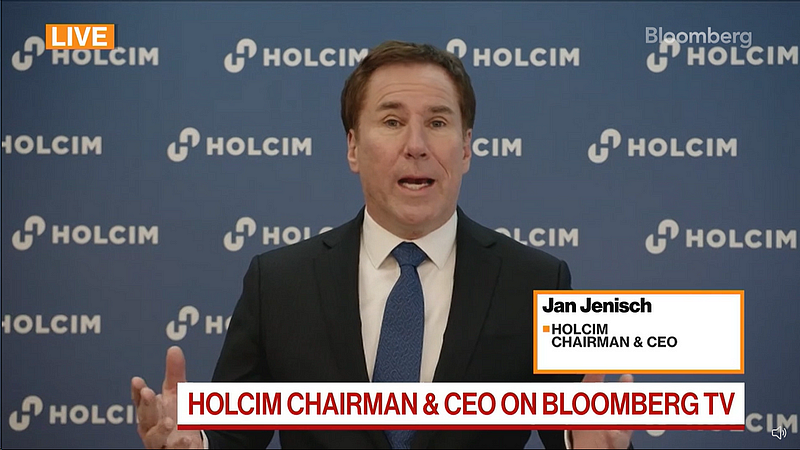
The big numbers are what investors like to hear about — and $20 billion in market cap is quite big! — but I was more intrigued by the CEO’s comments about why the company is taking such a big part of its portfolio exposure into the US market, particularly the opportunities from the Biden Administration’s Inflation Reduction Act (IRA).
This [World Spotlight] is part of [The Weekend Brief] newsletter by Areas & Producers: A weekend guide to international issues and global markets.
By signing up for [The Weekend Brief], readers would receive all of the weekly content and updates from Areas & Producers on the subjects of World, Tech, Business, Energy, Mining, EVs, Food and Trends. Sign up for the newsletter and instantly receive the content, to the e-mail inbox provided, every Saturday and Sunday.