
Hong Kong English/Cantonese (XLII)
Don’t Cry for Me, Argent-tina
World Cup Special
Even though I’m not a football fan, with the bombardment of football news every now and then, I know that this year’s World Cup is still something to look at.
In this past few days after it kicked off, we are all here to look at Messi and Ronaldo’s last tango, whether Argentina will be triumphant after a wait of more than three decades, the politics about the World Cup and many more.
However, this is an article about languages, and I am no expert to football (and any other sports). All I can do is to write some about Hong Kong people talking about this big event.
If you understand Cantonese,
you should have known that
I became a fan of the Argentine men's volleyball team
when watching their Olympic bronze medal match.
But hey,
I'm still a total novice in that sport.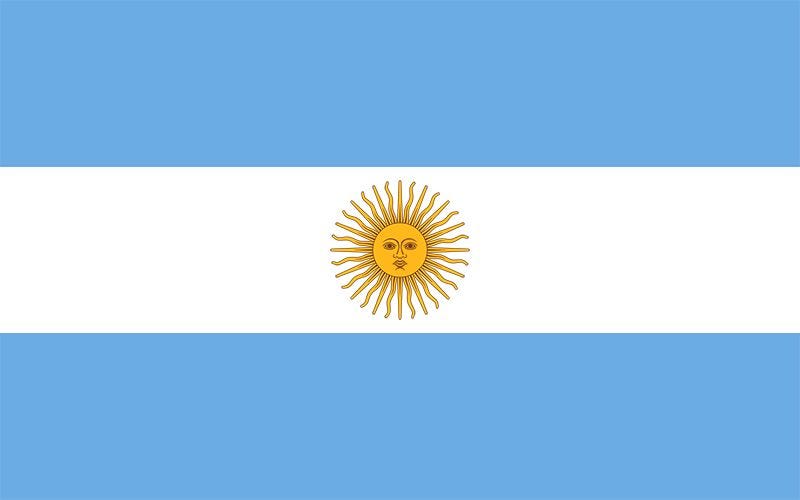
Argent-tina
Their name is a mockery of themselves
For localising names, the Chinese languages use one simple method: transliteration. The country name of Argentina is one of them. Not knowing where the final syllable goes, the Chinese name of Argentina is 阿根廷 (Jyutping: aa3 gan1 ting4). I think this is pretty close to how the local people actually pronounce their country’s name.
But some fans call them 亞軍廷 (Jyutping: aa3 gwan1 ting4). By just adding a [w] sound (pedantry: It’s a labialisation of the consonant) in the Chinese name, the name becomes “Second-place-tina”. This is to laugh at the Albiceleste for not being able to win many championships despite being famously one of the strongest teams in the world.
Look, in nearly every aspect, Argentina is outshone by someone else, most notably their neighbour Brazil. Here is some quick facts about the country:
- 8th in land area in the world; 2nd in South America
- 31st or 32nd in population in the world; 3rd in South America
- Their men’s (e.g. football and volleyball) teams are usually the second in their continent. The only exception I can think of is the basketball team where Argentina is world no.4 and first in South America.
Of course, when putting the country names in alphabetical order, Argentina should be the first in South America. But it is still pretty pitiful that a beautiful country with passionate people doesn’t get a spot big enough to shine. It feels like they are the second forever. This shouldn’t be the case.
But Argentina’s name comes from silver. And silver is related to being second, like a silver medal. The country name itself is already so fitting to Hongkonger’s nickname to them.
With “argent” meaning silver in French, spelling it Argent-tina may be a better way to say that it’s a mockery.
Translated names can be a shocker
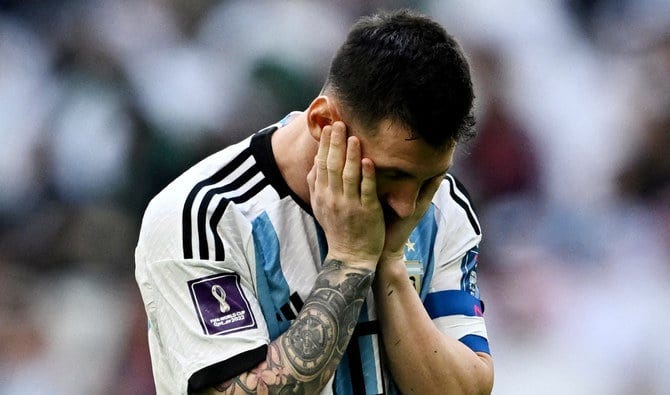
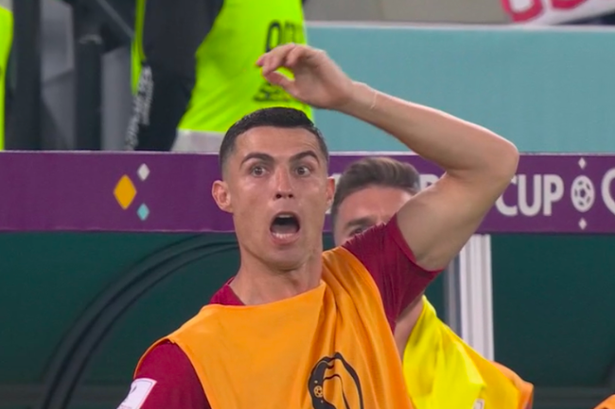
Messi’s the beauty and Ronaldo the light
Having a big tournament like the World Cup, it means that there is a sea of names to notice. And this would be a whole new universe for someone like me who doesn’t usually watch football.
To make things more convenient to us, media would already have the player names translated into Chinese to the local people. With three main groups of Chinese-speaking people in the world (Hong Kong, Taiwan and China), it wouldn’t be weird if you somehow find three names that refer to the same person.
Well, for some players, they even have multiple translations in one place.
e.g. Kylian Mbappé has at least 2 names in Hong Kong.
But which is a better translation? All the places would claim themselves. So here I just don’t care and use the common Hong Kong translations.
Usually the names translated are those on the jerseys, except you are a Martinez, Fernandez, Rodriguez or any other very common surnames; or that your father is also a famous footballer, like the Schmeichels. In these cases, your first name would also get translated.
Perhaps we can take a look at the names of the two greatest players in this era, if not ever.
First, the Argentine’s name is 美斯 (Jyutping: mei5 si1) in Hong Kong. This is the closest we can get and luckily his surname is short so this name can give some meaning. While 美 is the Chinese word for beauty/beautiful, 斯 is a function word that can bear no meaning, or just this/here.
So Messi’s the “Beauty Here”.
But Cristiano Ronaldo’s case was way more complicated.
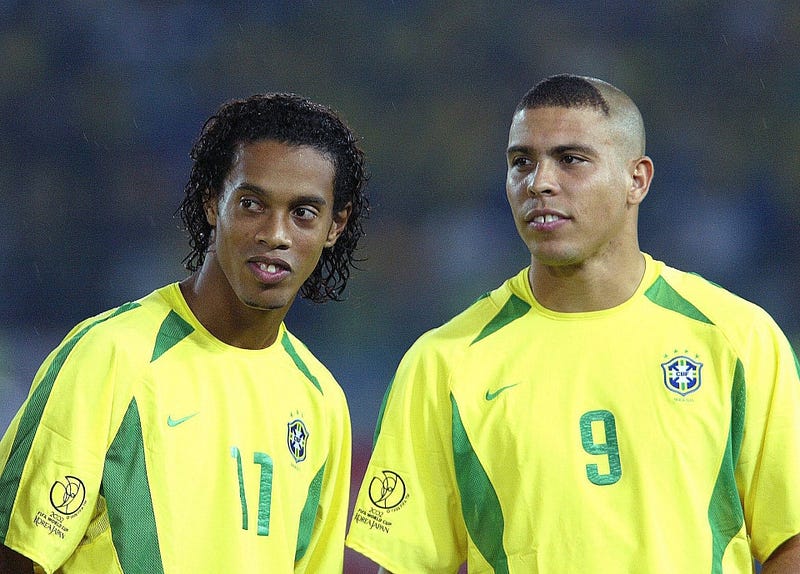
The Portuguese football star rose into fame in a time of Ronaldos. There were already two Ronaldo from Brazil. One thing was easier for the Brazilians was that one of them became Ronaldinho on his jersey. This could make two different names for the Brazilians (朗拿度 and 朗拿甸奴 respectively).
So Cristiano Ronaldo became the third Ronaldo to be named.
So, being Ronaldo, it is completely logical that the translated name should share with the Brazilian. But having two Ronaldo would be confusing for the sports commentators and the audience, especially if there was a match between Portugal and Brazil.
We should find a way to avoid confusion, and we found it.
Luckily, Ronaldo isn’t Cristiano Ronaldo’s first given name although just “Ronaldo” is on his jersey, especially now when the two Brazilians retired. And to emphasise that he is also a Ronaldo, Hong Kong’s media also uses 朗拿度 (Jyutping: long5 naa4 dou6) as his name, but with a twist: Cristiano is also used for the name, but with only the initial.
Therefore, the Portuguese becomes C朗拿度. But with him being one of the greatest players and being constantly mentioned, C朗拿度 is still too long. And people started to shorten it and fans finally settled on calling him C朗.
One TV channel tried to avoid the confusion of too many Ronaldos and used Cristiano for the Chinese name, but somehow it didn’t work out. They later used C朗 back again.
So Hongkongers actually call CR7 “C. Ron” which may seem totally absurd, but it’s a reasonable solution. Talking about 朗, it means “bright, cheerful”. I think it suits the players?
To be honest, if I’m not writing this, I would never realise that Ronaldo isn’t C. Ronaldo’s surname. Our translation makes it look like a genuine surname.
If we talk about Hongkongese nicknames for international players, it’ll be more fun as we have Ukrainian Nuclear Warhead, Overbite Sr. and Jr., Argentine Nick Cheung, Mexican Francis Ng and lots more.

The forbidden question
Heard that even VAR can’t answer it
For such a global event that draws attention from lots of uninitiated like me, it would be normal that most of the people don’t know much of the game rules while watching the games.
You know, some of them want to look at handsome guys instead of great players.There is one fault that is so frequently mentioned in a game, and that fault is so infamous as a question for football fans in Hong Kong. And the question is:
What’s an offside offence? (咩係越位?)
It feels so complicated looking at the Wikipedia page. But my brief understanding after trying to read that long article (but no, I can’t read them all) is like this:
If you are sandwiched between two opposite players closest to their goal (including the goalie), and your teammates pass the ball to you to hit to the goal, then you’ll be having the offside offence.
But I don’t watch football much. I don’t know if what I understand is correct.
Anyway, explaining offside offence is deemed too difficult, even for football fans. Rumour has it that this question lead to many break-ups because the football fan couldn’t explain it properly and the partner thought this is too bad and/or they felt ignored.
Stereotypically, this rumour involves
a male football fan and his uninitiated girlfriend.
But you know, a relationship isn't necessarily like this.
Therefore, before the World Cup even began, netizens/football fans was already warning people not to ask this question when watching the tournament because they will not get an answer.
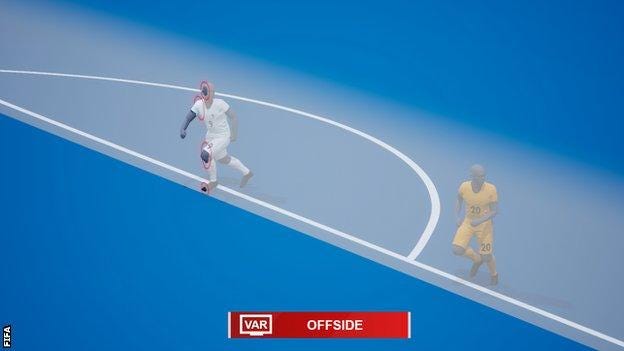
I also heard that the VAR judgements of offside offence looks so confusing this year in Qatar, so just don’t ask about it.
Well, the group stage is coming to an end. Maybe the team you support is already eliminated. But still I hope you enjoy the rest of the World Cup.
References: