
Autism Acceptance Day | Autism Awareness | Disability Rights
World Autism Awareness Day: I Prefer Acceptance Instead
We don’t need you to be an expert, we need you to accept us as we are.
There are a lot of designated special holidays recognized by the United Nations. Autism Awareness Day is one of them.
I might be stating an unpopular opinion here, but as an autistic woman, I don’t really care about having a day assigned to us. I’d rather autistic people just be folded into society rather than making it all about the one day.
When you make a day to raise ‘awareness’ about a community of people, you tell people they have one day to make a big fuss about us. And that’s often what happens.
People post a few “Happy AAD!” memes on social media, a couple of speeches might be made by a public figure or two, they get shared around…and then on April 3rd, we’re back in the bin where we hang out for the other 364 days of the year.
On AAD, some people go out of their way to be kind to us. Some organizations put out flyers and pamphlets with information to their employees. Some especially empathetic people might seek out autistic creators and help support them.
But this rush of attention is, more often than not, a flash in the pan.
The Judge Rotenberg Center still exists, y’know? And if you’ve never heard of it…well. Click that link and read the first couple of paragraphs. Then tell me how you feel in the comments. Become aware of a real issue autistic and disabled people face.
On the special day assigned to you, you get celebrated…for a little while. But real change, real lasting change, doesn’t tend to happen. I’d love for people to become more educated on autism and what it means and how autistic people interact with the world!
But you don’t get that by wearing a ribbon.
And you also don’t get it by memorizing passages in books and assuming you know all there is to know, as I saw one mother of an autistic child say. As his mom, she proudly stated that there wasn’t much she doesn’t know about autism!
And then proceeded to ignore her kid’s feelings and posit her own theories for why her child was claiming a different gender identity than she thought they should.
She had decided her kid’s gender identity was due to sensory overload and preferring girls’ clothes for physical comfort, and that her autistic kid was ‘easily manipulated’ because of their disability. She’s a Gender Critical woman and refused to accept her kid’s own words.
Her ‘kid’ is in their 20s.
I assure you, they’re pretty well aware of their own mind and how it works. I’d rather not give this person’s name here, for the sake of their privacy.
But if they happen to read this, ignore the nonsense. You’re valid and wonderful as you are, as you know yourself to be.
It’s common for autistic people to be used in the Gender Critical narrative- how many times has ‘protecting autistic girls’ been brought up by these people as if women like me can’t possibly advocate for themselves? We have voices, people. You just choose not to listen to us.
I see it all the time; autistic people are used as a cudgel for all kinds of awful rhetoric. It’s not just the Gender Critical TERFs who use it, it’s the anti-vaccine movement as well.
Spoiler alert, no. Getting vaccinated did not give your child autism. Your child’s brain just developed a little differently in the womb, that’s all. The more you people rant and froth at the mouth about vaccines causing autism and that’s why you won’t vaccinate your kid…
Do you realize what you’re saying to autistic people? You would rather your child DIE of an easily preventable disease than for them to LIVE as someone like us.
Autism is a spectrum, and every single individual person has their own range of symptoms and traits.
If you’ve met one autistic person, you have met one autistic person.
You don’t know all of us.
We’re not all Sheldon. We’re not all Bones. We’re not all Data- although, I will say I definitely have a lot of empathy for Data’s struggles dealing with people and fixations. I feel you, man.
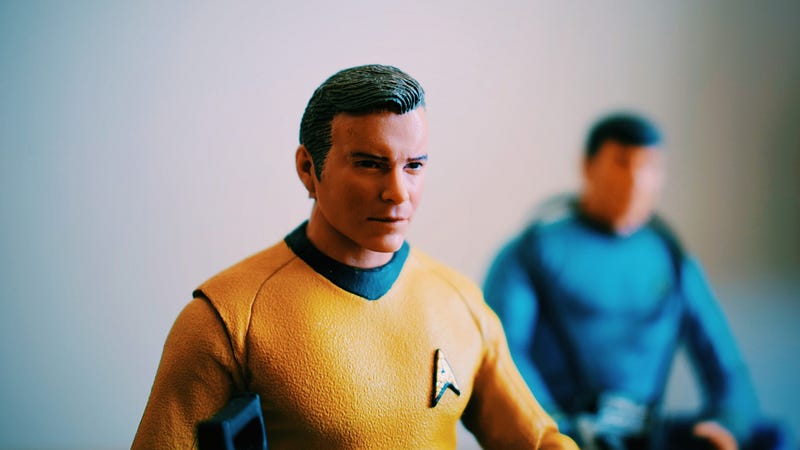
You can’t read a few books about autism, take part in Autism Awareness Day, and then declare yourself to be an ally or an expert. We don’t need you to decide you know exactly what we need when you find out that we’re on the spectrum.
To be an ally, what we need is an entirely different, and much more helpful response.
“Okay, cool. Can I do anything to make you feel more comfortable?”
And then listen to what they say in response. Or if they’re non-verbal, pay attention to whatever method they use to communicate.
Every individual is an individual, with their own mind and their own identities and their own thoughts and feelings and experiences. And unfortunately, due to stigma and lack of real education, those experiences are often pretty bad.
I often get a surreal feeling when I read comments about autism written by neurotypical people. It’s very odd to read things that you intuitively register as ‘common sense’ and have it be presented like a new revelation.
For example, there’s a lot more to autism than quirky social awkwardness. There are a lot more symptoms than most people are aware of, and everyone gets their own unique cocktail to contend with and try to treat.
Worst of all, most people only see the outward expression of those symptoms and don’t have a clue what they actually are. For example, the jerky motions and body tremors that some autistic people present with. The seeming lack of motor control, especially when paired with difficulty or inability to speak, often leads to infantilization.
People assume that an autistic person who can’t follow the simple command of ‘wave goodbye’ doesn’t understand the request.
Would it blow your mind to know that they actually do?
A huge proportion of autistic people present with comorbid disorders, meaning we have a blend of different challenges alongside the basic diagnosis of autism.
Clumsiness, difficulty with movement and coordination, trouble performing physical gestures- these fall under the umbrella of something called dyspraxia. Basically, the brain isn’t able to fully plan and execute all of the steps needed to complete an action.
Like autism, it occurs on a spectrum. Most people with autism experience some level of dyspraxia to widely varying degrees.
I haven’t been formally diagnosed with it, but I strongly suspect I would be if someone looked at the evidence. My handwriting is awful and always has been. I often drop small items like pencils or coins because my fingers have trouble with delicate fine motor skills.
I’m clumsy as hell, liable to walk into a corner rather than around it or fall over my own feet in incredibly majestic and not at all humiliating ways. I’ve learned to laugh about it, and I’ll happily share the funniest stories with anyone who asks!
Understand; dyspraxia alters one’s body movements, and often makes it difficult for people to perform simple tasks or even speak out loud…but it has no effect on intelligence.
And here’s the kicker- dyspraxia is a comorbid disorder. It occurs in the neurotypical population too. You know who else has dyspraxia? Daniel Radcliffe. He’s got the mild form, with a similar presentation to my (suspected) case.
That autistic person fully understands what you’re asking them to do. Their body just won’t do it the way you want, and because they can’t tell you that, you’re assuming they don’t understand you.
Imagine being stuck in a situation where everybody around you treats you like an infant, or like an object that doesn’t have a functioning mind of its own. Imagine that being your entire life, while being fully aware of what’s going on around you.
Now imagine having sensory overload, experiencing intense pain and distress, and not having any way to communicate it and make it stop except to scream and try to get a caregiver’s attention.
Imagine everyone treating you like a problem and an embarrassing burden because you had a ‘tantrum’ or a ‘meltdown’ in public. And that is your entire life, forever.
There’s no cure for your neurology. It’s just the way you are.
Since I’ve already pointed out the dyspraxia I might have, I may as well tell you a bit about my particular cocktail of symptoms.
Another disorder I’ve not been formally diagnosed with but every single teacher I’ve ever had has pointed out, is something called dyscalculia. This is a difficulty in processing numbers. Think dyslexia, but for numbers. Both dyslexia and dyscalculia commonly occur alongside autism.
I have sensory processing problems. Noise, movement, lights, physical sensations- I can’t keep track of it all. Busy public places with fluorescent lights can put me into overload lickety-split.
If you don’t know what overload is, I write about it in other articles. This is what it’s like for me.
I do have special interests, those fixations that a lot of autistic people have.
For me, it runs in cycles. I’m obsessed and locked on to one thing this month, and two weeks into the next month a new thing catches me, and I’ll spend the next couple of weeks learning everything there is to know about it.
As a result, I have a lot of hobbies, and I know a lot of random trivia. And I can quote the heck out of any show or movie or song that I like because I promise you, I’ve watched or listened to it about a thousand times in a row.
I also struggle with insomnia. That’s another comorbid disorder that’s ridiculously common for autistic people.
I have a heck of a time with eye contact and reading social cues, I had to be trained to interact with people in the way you train people in programming skills. “If X, do this”, that kind of thing.
I’m still not good at it, but I’ve been told I do a good job of trying.
And then I get the classic “Don’t worry, I couldn’t tell you’re autistic!” as if that’s supposed to be a compliment. Stop that. Being autistic isn’t something we’re trying to hide, you shouldn’t treat it like it’s a secret you sympathize with us about.
That’s a tangent, but it grinds my gears something awful.
Bottom line, I have unique challenges and strengths, just like anyone else. I’m not ‘slow’, or easily manipulated.
I’m a college graduate who helped found a business and is also self-employed as an editor, writer, and jeweler. I have a loving and healthy relationship. I have friends, I go to social events, and I’m fully capable of taking care of myself.
In other words, I’m a grown-ass adult with a caffeine addiction, just like every other working-class person in my country.
Autism Awareness Day doesn’t help me, not in the long run. And it doesn’t really help the millions of other autistic people, kids or adults. Not if all people do is post memes and statements on Twitter and give little speeches at the podium.
If you really do care about autistic people, and you really do want to help us, it’s as simple as making an effort to reach out. Talk to the autistic people you know, and ask if there are ways you can help adjust the environment to make them more comfortable hanging out with you.
If you work somewhere like a big chain grocery or department store, try suggesting a sensory shopping hour. Dim lights, no music, and minimal announcements encourage shoppers to whisper.
A grocery chain where I live started doing that for a few hours right after opening, and even just doing it for one day a week had neurodivergent people flocking to do their shopping there. It’s insane how easy it is to accommodate us, and we appreciate it so much!
Learn about things like ABA, both the beneficial aspects and the controversies. Listen to autistic people when we describe our experiences and don’t assume you know us better than we know ourselves.
Learn about instances of abuse and trauma that autistic people contend with. Learn about the higher risk of suicide that’s associated with the autistic community, and how autistic burnout connects to it.
Listen to the autistic community when we tell you about harmful organizations like The Judge Rotenberg Center and Autism Speaks, and how they contribute to the dehumanization and stigmatization of people with disabilities.
You can’t separate autism from an autistic person, it’s how our brains develop. But nice job making every autistic kid feel like they’re a burden and humiliating intrusion in their parents’ lives, ruining their marriage and embarrassing them in public.
Real nice.
This is the kind of crap we deal with hearing about ourselves, day in, and day out. This is from an organization that’s supposedly advocating for us. They don’t even have autistic people on their board, last time I checked. They used to, but the one guy quit because he was horrified at how he was being treated and used as a token.
If you’re really serious about becoming more aware of autism and how you can help us, then, please. Talk to us. Work with us, don’t try and take the reins out of our hands.
Nothing about us without us.
Happy Autism Acceptance Day.
I hope you enjoyed this article. If you’re new here and looking to read more great blogs and posts, consider signing up for Medium’s membership. It only costs $5 a month, and it grants you access to everything behind the paywall instead of waiting for the monthly free reads to refresh.
If you sign up through my referral link below, I’ll receive a small commission at no extra cost to you! Next to leaving a tip, it’s the best way to support my work. You can also visit my website, World-Weary, to read more of my writing on the subject of human rights, justice, and activism.


