
Workplace Stress Is Costing You. Here Are 5 Strategies To Reduce It
Lack of control over how you get to spend your time is one of the hidden sources of stress and anxiety at work.
Work is a big part of our life. Done well, it can be a source of joy. But when managed poorly, it can often lead to stress, anxiety, and dissatisfaction.
There’s no getting away with some stress at work, and we shouldn’t try to either. After all, all stress is not bad. Often, it signals you are doing worthwhile work. It shows that you care about adding value and creating an impact. Stress can also energize you, enabling you to put in the effort required to make something happen.
But what if your stress is debilitating?
What if it gets in the way of making meaningful contributions?
What if, instead of energizing you, workplace stress sucks into your energy and hurts your motivation?
There can be many reasons for feeling stressed at work.
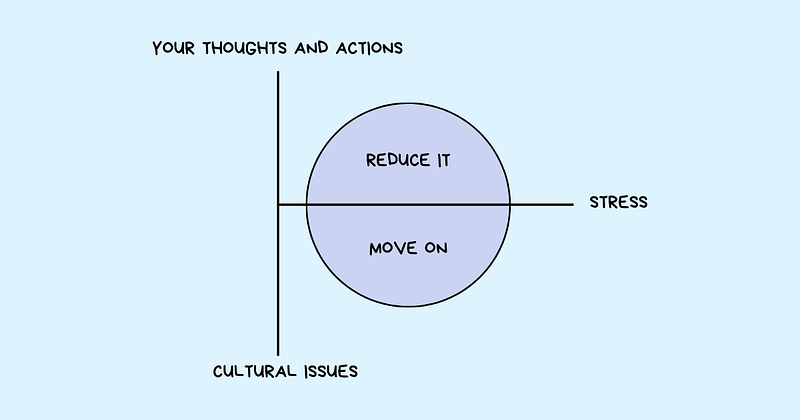
Some stress may be completely outside your control, like stress resulting from bad people or a toxic organizational culture.
- Power dynamics
- Mean coworkers
- Micromanaging boss
- Excessive work overload
Your other source of stress is mainly within your control, as it relates to your quirks in managing and responding to various work events.
- How do you manage interpersonal conflict?
- What do you do when faced with difficult or otherwise unexpected situations?
- How do you handle aggressive deadlines?
- Is your stress often a result of your procrastination and last-minute scrambling to try and meet an upcoming deadline?
- How do you perform under pressure?
- Are you a perfectionist who sets high standards for yourself and others and feels stressed about not achieving those standards?
- Do you find it hard to focus, often distracted by the things in your environment, and later feel stressed about putting too much time and effort into work but failing to achieve the desired outcomes?
- Do you feel like an imposter, worried that others will find out you are a fraud, which causes you to overwork to avoid being discovered?
- Are you disorganized to the extent that it hurts your productivity, causing you to worry and feel stressed about your performance?
- Do you have a habit of multitasking between many things often left, and you need to be more focused and calm?
Whatever the reason, research shows that, left unhandled, stress can lead to physical and mental health issues. It can impact your productivity and performance at work. It can even affect those around you.
5 Strategies To Manage Workplace Stress
I will not discuss the stress caused by things outside your control, such as a lousy boss, office politics, or other harmful cultural elements. I don't think you have another option other than moving on to a better workplace that doesn’t cause you day-to-day stress. You can crib about these issues all you want, but if your stress results from a more significant cultural issue within your organization, it won’t get better with time. You need to take a hard stance, overcome your fear of not finding another job, and put your time and energy into making the switch.
“One of the mistakes many of us make is that we feel sorry for ourselves, or for others, thinking that life should be fair, or that someday it will be. It’s not, and it won’t. When we make this mistake, we tend to spend a lot of time wallowing and/or complaining about what’s wrong with life. “It’s not fair,” we complain, not realizing that, perhaps, it was never intended to be .”— Richard Carlson
Now, let’s talk about things that are within your control. Here are some strategies that have worked for me over the years to manage stress on the job.
1. Rid Yourself of Trivialities
Often, workplace stress results from paying too much attention to little things in life—things that, in the long run, don’t really matter much. You don’t care about these things, but in the heat of the moment, they may feel like life-and-death decisions.
Sometimes, your ego gets in the way. Other times, you lack the perspective to understand that whatever the issue at hand doesn’t deserve your time and attention. You have many opportunities to isolate yourself from such trivial nuances but become increasingly trapped by such situations.
To save yourself the mental agony that comes with falling for inconsequential events in your life, ask yourself these questions:
- What’s causing me to feel this way?
- Is this situation within my control?
- Why is it important to me?
- What will happen if I stop caring about it?
- Looking at one year down the line, why does it matter to me right now?
Knowing what’s causing you stress can enable you to rid yourself of the trivialities that don’t deserve your time and attention.
2. Take Control of Your Time and Schedule
Lack of control over how you spend your time at work is one of the hidden sources of anxiety and stress at work.
A busy schedule with too many meetings and a packed calendar can make you feel important, but it does nothing to advance you toward your goals. Instead, having a hectic day without achieving anything significant leaves you feeling efficient and adequate.
A stressful morning at home may also get carried to work. Not having enough time for a healthy breakfast and struggling to drop your kids at school while making it to your meeting on time can be quite stressful. This lack of planning also impacts how you react to various events at work. If you start your day with a stressful morning, even a slight expectation mismatch or discomfort at work may put you off. You may get the feeling that everything around you is falling apart, further adding to your feelings of stress and anxiety.
This often happens when you don’t consciously plan and prioritize your day. I am not saying that things can’t go wrong despite planning. However, having a plan in place leaves less to chance and gives you the mental space needed to choose your response.
With better control over your schedule, you can choose and do work that moves you forward, leaving less opportunity for stress to creep in.
3. Push for Clarity
Feeling ineffective at work is one of the significant sources of burnout. If you don’t know what’s expected of you or how your work fits within your team's goals, it may be hard to achieve anything significant.
Lack of progress, purpose, and meaning often stems from the need for more clarity on goals and the opportunity to achieve those goals. It causes feelings of inadequacy, a loss of sense of belonging, and cynicism and negativity toward the job, which may lead to stress.
Instead of waiting for others to give you the clarity you need and expect them to make things better for you, actively seek clarity. Your feelings aren’t transparent to others, and honestly, everyone is so busy with their agenda at work that it’s tough for them to notice what you need or don’t understand.
To avoid stress, push for clarity. Ask questions better to understand your role, job expectations, and goals—schedule time with your manager to get regular feedback.
“Shifting your focus to something that your mind perceives as a doable, completable task will create a real increase in positive energy, direction, and motivation.” — Jake Knapp
Clarity at work enables that positive shift, leaving less room for negativity and stress.
4. Face Difficult Conversations Head-on
A lot of work in organizations requires collaborating across different teams and functions. Collaborating with others creates excellent opportunities to learn and grow, but it may also be stressful.
Differences of opinion may lead to disagreements. Conflicting priorities, schedule clashes, and expectation mismatches can cause people to spend more time arguing and less time implementing their ideas.
The negative emotions that such conflicts tend to evoke may cause you to bury your head in the sand — you may try to avoid dealing with them or delay them with the hope that they will disappear. However, avoidance and inaction only worsen things—minor issues become significant problems, making it extremely difficult to seek alignment. And without alignment, nothing important ever gets done.
“The opposite of recognizing that we’re feeling something is denying our emotions. The opposite of being curious is disengaging. When we deny our stories and disengage from tough emotions, they don’t go away; instead, they own us, they define us. Our job is not to deny the story, but to defy the ending — to rise strong, recognize our story, and rumble with the truth until we get to a place where we think, Yes. This is what happened. This is my truth. And I will choose how this story ends.” — Brene Brown
So, if you tend to avoid conflicts, don’t. Face them head-on. Have the conversation. Try to understand another person’s point of view. Asking these questions can help you deal with your situation and avoid the stress that comes from ignoring them:
- What do I feel — anger, sadness, disgust, fear…
- Why do I feel this way?
- Am I dealing with a conflict?
- How does this feeling affect me at the moment?
- What triggered this conflict?
- What am I trying to achieve, or am I afraid of losing?
- What can make me change my mind?
- What if I am wrong?
- What makes the other person think this way, or what am I missing?
5. Reappraise Negative Thoughts
What happens when things don’t go your way? Isn’t your instant reaction to assume the worst possible outcome? To blow things out of proportion?
Not being mentally prepared to handle the unexpected can be a challenge. Even a small deviation from normal or a slight change in your circumstances can make you highly anxious and stressed, thereby distorting your ability to think clearly.
Negativity also causes you to repeat destructive behaviour patterns (procrastination, blame, distraction), which hurts your outcomes and leads to more negative thoughts. This, in turn, reinforces your negative beliefs and convinces you that you were right in feeling a certain way—sort of a self-fulfilling prophecy.
To keep stress in check, whenever you find yourself overwhelmed with negative emotions, do this:
- Let those feelings in. Please don’t ignore them.
- Acknowledge that they are just the creation of your mind and may not always be correct.
- Question and try to understand what’s making you feel this way. Why do you think you are right in feeling this way? How might you be wrong?
- Reevaluate the situation. Is it as bad as it seems? Use other plausible alternatives or explanations to evaluate your situation.
“We don’t know what’s going to happen — we just think we do. Often we make a big deal out of something. We blow up scenarios in our minds about all the terrible things that are going to happen. Most of the time we are wrong. If we keep our cool and stay open to possibilities, we can be reasonably certain that, eventually, all will be well.” — Richard Carlson
Summary
- If you don’t understand what causes you stress at work and actively implement measures to keep it in check, it can impact your physical as well as mental well-being thereby hurting your productivity and performance at work.
- Things that lead to stress could be beyond your control, such as an organization's toxic work culture. Instead of spending time wallowing in self-pity, make a move.
- Know that a large part of stress stems from things within your control. Acknowledging this fact is the only way to take responsibility for your situation and proactively take steps to reduce it.
- A lot of stress comes from paying too much attention to trivialities—things that don't matter much in the long run. Recognize and separate what’s essential from what’s not, and stop bothering about petty issues.
- Have a plan in place to consciously spend your time and energy. More control over your schedule leaves less room for stress.
- You will undoubtedly be stressed if you don’t feel progress, purpose, and belonging at work. Actively push for clarity. It allows you to bridge that gap, enabling happiness, satisfaction, and a sense of achievement.
- Instead of avoiding conflicts that worsen the situation, practice the courage to have difficult conversations. You can save yourself and others a lot of stress from unresolved emotions.
- Finally, when things don’t go your way, instead of jumping to negative conclusions, pause and reevaluate your situation. Most of the time, things aren’t as bad as they may seem initially.
Follow me here and on LinkedIn for more stories. This story was originally published at https://www.techtello.com.


