
Working on a First Draft
Pitfalls and Solutions
For many writers, the first draft of a novel can be daunting, exciting, frustrating and magical all at the same time. There are as many ways to get through to the end of a first draft as there are writers, and there is no single right way to do it.
Some writers prefer to power through, getting the story down without worrying about spelling, punctuation or grammar, structure or sentence construction. They might know they’ll have to go back over their story when done to correct all the errors that have crept in, but the flow of the story is the most important thing.
Some writers prefer to work up an outline, detailed or rough, before starting, to keep themselves on track through the progression of plot and subplots and character arcs. Some begin each day’s new writing with a return to the previous chapter and editing as they go. The processes are many and most writers find a way to work that suits the way they write and edit.
As a developmental editor, the most common things I see that require fixing in a first draft are the following:
Structure
This can include how and where events in the story are placed, how they are revealed, how they affect and impact the characters. It can also include information given in world-building and characterisation.
Writers often include far too much information about their world and characters in dense expository clumps during the first draft. It’s completely normal. As we’re writing, we’re also discovering and creating more detail about the world in which the story is set and the characters who inhabit it, and that information needs to be put somewhere. Usually, it gets explained in the manuscript where it occurs to the writer.
What to do about it?
Developing an objective eye for what is needed for a scene and what is extraneous information, or information in the wrong place, requires practice. When reading back work for revision, asking yourself — does this belong here? Is there a more natural/compelling place for the reader to absorb this information? — helps to move needful information to where it belongs.
For example, on introducing a character, it’s not necessary to give a full and detailed physical description from the outset. As seen through the main character’s eyes, what are the things that are instantly obvious and noticeable? What draws the main character’s interest and attention? What are the details that the main character might come to notice after time? After getting to know the other character or seeing them in interaction?
Think about how you notice details about people on meeting them — while the eyes might take a snapshot, sufficient for recognition, many details won’t be noticed at first.
The same applies to setting of any scene and to descriptions given about the world. Ideally, information is introduced to the reader well before the scene that utilizes it is presented. That enables the reader to (a) understand what they are reading without requiring explanations and asides that slow pace, and (b) it makes the world seem more real — not filled with “coincidental” elements that pop up just as needed.
Choosing and Sticking to the Perspective for the Story
Perspective, also known as point of view, describes the focal attention of the narrative from one or more characters in the story. The reader, in general, sees what the character(s) see, through the filters of the character’s experiences, attitudes, opinions and history, and their observations, reactions and actions reveal much about that character’s personality, their history, what has shaped them and so on.
A common problem in first drafts is a shifting perspective, from distant to close in a single character or from one character to another in quick and sometimes confusing succession. While this has come to be known as “head hopping” and generally condemned, it is not actually a problem and has been used successfully by many writers, provided care is taken to ensure the reader can follow the changes easily.
What to do about it?
Read each scene through carefully. Is the character describing what they are experiencing or have you slipped into an omniscient point of view, showing the reader the scene as from a distance? Does the character react to what’s happening or are they just there, like extras without direction?
Our reader needs to be able to follow changes in perspective (Point of view) and feel connected to the characters (focalization) as they read. One way of ensuring this is by giving clear transitions when changing perspective — you might change the perspective by alternating chapters, for example, or by giving a scene a single point of view. In a narrative where you want to shift the perspective from character to character within scenes, you need to introduce each character clearly when changing the perspective, almost like passing a baton in a relay race, so the reader can follow along and know whose perspective they are seeing the story through.
When we write and try to read back as a reader might, it’s easy to skim over the words because we’re so familiar with them. We need to read more carefully to pick up changes in focus, in distance to the perspectives of the characters. We need to think about what’s written and see if it conveys the meanings we want to convey to the reader.
Fill
Also known as fluff or clutter, fill is what writers write when they’re working their way towards the point of a scene — description that doesn’t add to the reveal of character, or to the mood of the scene, or to the storyline; meaningless chit-chat dialogue; action that doesn’t relate to the story.
In a first draft, fill is the usual result of not being quite sure what’s going to happen in the scene, or warming up to the writing. It might be perfectly well-written, even quite interesting, but it doesn’t connect anything to the story or character.
In romances, it often takes the form of the character doing something that might be typical but unneeded, like a sudden decision to shop. In thrillers, it often appears as unnecessarily complicated backstory. In fantasy and science fiction works, it’s usually obvious when a scene is described with lavish detail of a town or room or person who never appears again.
What to do about it?
Fill can and should be cut. One of the easiest ways to determine what is fill in a manuscript is to cut it and see if it changes the meaning in any way. Professional editors will cut fill ruthlessly from manuscripts, so it’s a good idea to check for passages and scenes that aren’t adding anything to the story on your revision passes and remove them first.
That saved word count can be then utilized to expand scenes that do need expanding, characterization that does need more detail, descriptions that add foreshadowing or clue content to the overall story.
From First Draft to Second, Review and Revise
After the first draft is finished and the typing of ‘The End’ celebrated, one of the most effective ways to edit a work is to give the work a rest period. It might be a short period, a few days or weeks, or a longer one of months, but it will help the writer to view the draft with more objectivity.
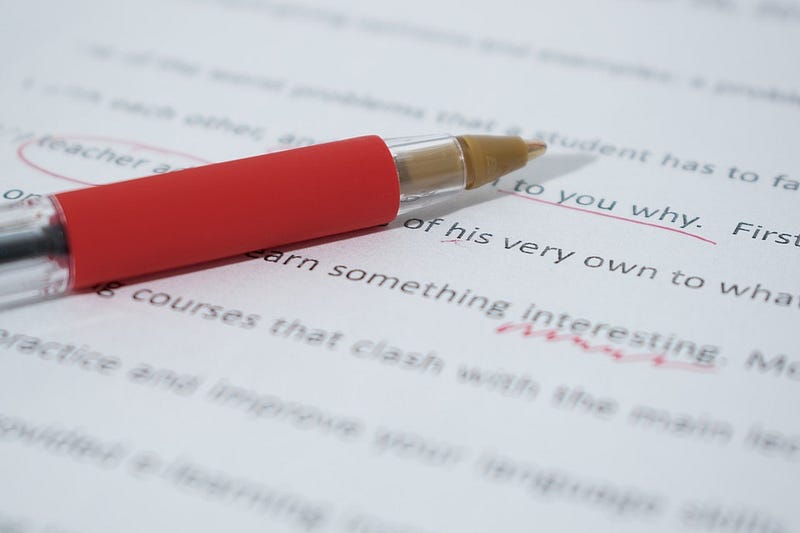
Printing the manuscript out and reading it in hard copy is another way to get some distance from the writing, as it forces an editorial read (complete with red pen notes!) rather than getting too finely focused on minute details.
Getting someone else to read it is the best possible way to catch spelling, punctuation, grammatical errors, missing words, inconsistency in characterization and logic holes in plots.
The more work you can do to polish the story, the more likely it will be to be accepted by an agent or publisher, or to attract readers as a self-published work, and the good news is with each completed work, there is less to do, as the writer begins to learn their habitual issues and correct them.