
Not Living Their Best Life
Working Hard and Doing the Right Thing Will No Longer Get You the American Dream
How did we let this happen?

Growing up, my mother told me a bit of luck, hard work, and doing the right thing would make me successful. It is a sad fact that is no longer true in today’s America. I know this because millions of Americans are working hard and have done the right things, yet the American Dream remains out of their reach.
The second component of the American Dream is that once you do better, future generations of your family also do better. If you can pull yourself up, then you have pulled up not only yourself but the generations of your family who come after you.
Everyone in your orbit — your siblings, aunts, uncles, and cousins — all benefit from the success of the family hero. In my family, there is an obvious trail to the American dream, with each of us benefiting from the actions of our predecessors.
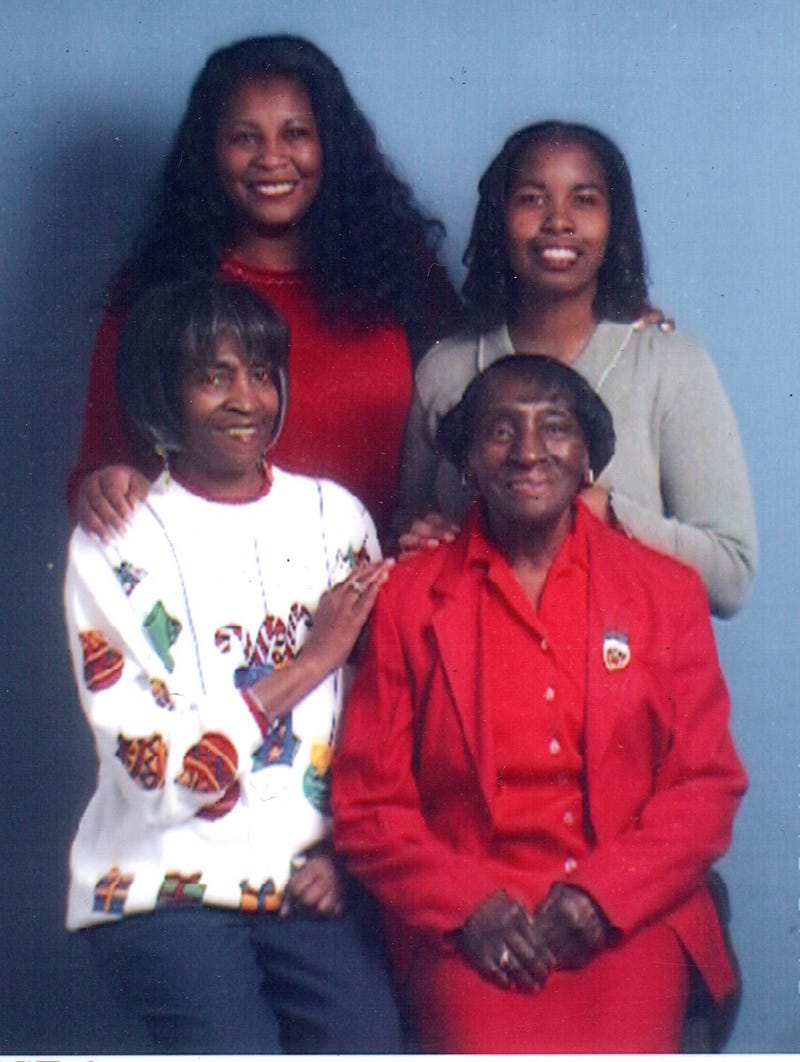
My grandmother, a Greatest Generation member, successfully snuck out of Alabama as a young woman. Her family, who were trapped in indentured servitude as leasing sharecroppers, assisted her in slipping out of Alabama as a young woman.
The game was that the sharecroppers never made enough money to do anything but sharecrop the next year. After working hard by planting, growing, and harvesting the crop, they owed the owners money. Many people didn’t realize once the Black migration to the North started, the white landowners, who were dependent on cheap labor, responded by making laws to keep their Black labor force in the South.
“When more than six million African Americans left the South for better opportunities in the North and West, between 1916 and 1970, their relocation changed the demographic landscape of the United States and much of the labor force in the South. This decades-long, multi-generational movement of Black Americans, known as the Great Migration, impacted southern labor to such a degree that white landowners resorted to coercive tactics to keep African Americans from leaving.” History.com
My grandmother would tell us the story of how she planned her escape. They made the mistake of teaching her reading, writing, and arithmetic. She used that knowledge to escape to Chicago. One day, she was in Alabama; the next, she was in Chicago, Illinois.
The geographic change freed her from the racist South and the unending economic trap of poverty and debt, which was sharecropping. Once she was in Chicago, my grandmother had one child, my mom. Grandmother worked as a maid her entire life until she retired at 76. She passed on to everyone in the family that her education enabled her to leave the South for a better life. Her skills also helped others make it North.
My mother was in what was known as the Silent Generation. My mother’s contribution, although she did not graduate high school because she had me at 15, was she got our family’s first retail job at a big white person-owned store. She learned the ins and outs of working for the man at a 9 to 5 paid job, knowledge she spread to all her family.
Everyone understood there was a way to work as something other than a domestic servant. I remember my mom, who considered herself a stay-at-home parent, worked 10 hours a day until my dad became a police officer. Only then could she afford to work only part-time.
My mother would walk the two miles to her job and back to save money. My mother learned from my grandmother the importance of education. Although we lived a hard life on the South Side of Chicago, woe be to any of my mother’s six children who brought home less than an E. An ass whipping awaited that child, no matter the excuse. Ma did not want to hear it. Her children were brilliant.
We were expected to bring home good grades, no matter what it took. That was in addition to our chores and our part-time jobs once we were of age. Oh yeah, having a job did not exempt you from doing your chores at home. And make sure you don’t get caught up in any of the gang stuff going on in South Side Chicago. Overall, my mom did better than her mom.
My Boomer generational contribution — after a rocky start — was to graduate high school, then college with an electrical engineering degree- and then get a master’s degree in Management. The rocky start was having a baby at 15, just as my mom had me at 15.
I leveraged my degrees to earn money and stop the craziness affecting many low-income families. My spouse and I protected the rest of the family with our hard-earned cash. We provided the little needed when people needed just a bit of money to make it. In cases of insufficient house down payments, we filled in the gap. We kept people afloat when jobs laid them off.
The police picked up my nephew in a sweep. When we went to court the next morning, he was the only one with a lawyer. We posted bail. He was also the only one of the young Black men who did not go to jail. His charges were eventually dismissed. That was the power of money. My siblings took note, and every one of us has graduated college, has a trade, or is an entrepreneur. Because of her hard work, my mom’s children did better than she did.
My grandmother’s education bias passed to my mom, who passed it to me and my siblings, who have passed it on to our children. Both of my Generation X children went to university and picked up bachelor’s degrees, master’s degrees, and one doctorate. With hard work and being decent people, they both own their businesses. They are doing better than me.
But now there is a problem. My Generation Z grandchildren and my Alpha granddaughter appear headed to do worse than me or their parents. When I went to college, I worked part-time during the year and full-time during the summers to earn my college tuition. With a bit of help from the school, my tuition was covered.
Now, the cost of college is so egregious that there is no way a young adult or their parents can pay for their education by working. Instead, they must borrow money to cover the cost.
“Between 1980 and 2020, the average price of tuition, fees, and room and board for an undergraduate degree increased 169%, according to a recent report from the Georgetown University Center on Education and the Workforce.” Forbes
They come out of school with a heavy debt sucking up a large portion of their new higher education salary. This burden makes them unable to enjoy the fruits of their labor. Understand that they are working just as hard as we did at their age, but they are not enjoying life.
Add to that the high rents combined with the insidious inflation rate for everyday products, and their ability to save for a home is greatly diminished. If they manage to save enough by working a full-time job and taking part in the gig economy on the side, then the high interest rate and down payment requirements on starter homes stop them from going forward. Even with the family giving them a hand, they cannot sustain the cost of buying and maintaining a house.
Millions of these young people have done everything we asked of them, yet they are struggling in life. Upon completing high school, they could either undergo additional employment training, enroll in college, or find a job.
They go to work every day and do their best, yet…the two-pronged American dream that they will do well and so will their prodigy- is not within their reach. No matter how hard they work, they cannot make the dream a reality. Their children are not expected to have it any better if things do not change.
Worst, some people who had the dream within their grasp are losing it to continuous pressure from the economic environment. Some older people who had a good life are finding it slipping away.
It is neither fair nor reasonable that circumstances beyond their control hold back this group of people. I ask, what kind of place will this be in ten years or twenty years if this group cannot achieve all that they deserve?
What can you do to make sure your family has the best chance of climbing the ladder of success? There is one thing that makes a significant difference no matter where you start. That is your family.
When I had a child at fifteen, I should have turned into a dropout. I did not because of my family. During the day, while I went to high school, my mother and my cousin watched my son…for free.
I was not a working mother. I lived in my mom’s home. My mom took care of me and my child. She took care of my son until 6 p.m. every day except Sunday. This allowed me to ride public transportation the 90 minutes to my school, go to school and come back, do my homework, and then take over the care of the baby.
Even then, after six, I was not caring for the baby alone. Until they went to bed, my five brothers and sisters would compete to see who could play with the baby. They were 10, 9, 8, and the twins were five years old.
All of them thought the baby was the coolest thing. When I put the boy down to sleep, the five-year-old twins insisted that they go to bed at the same time. There was no problem with bedtime fussing, as the baby had both in the room with him.
The same thing happened when it was time to feed the baby; there were five other children at the table, all of them eager to play spoon airplane or spoon hide and seek. They loved to make the baby laugh and carried him around on their hips for fun. In return, I did everything I could to take care of the younger children. I loved we were working together.
This beneficial behavior continued when I finally went to college at 22. By then, my siblings were older, but I never had a problem either dropping my child at my mom’s or having one or two of them come to my house for childcare. There was little to no money exchanging hands; what was passing between us was care. I covered their school fees and trip fees, brought them clothing, and helped my mom care for them.
Once I battled my way to a better life, I made sure that I helped my family whenever I could — with money, recommendations, jobs, or anything else I could provide. The American dream would not be within my reach if it were not for my family. As each of us did better, we helped each other.
It is a self-fulfilling legacy that continues to this day. What may seem like a burden in the short term (giving away time and money) became beneficial to the entire family in the long term. It was never a deal for me to help my relatives with whatever they needed when they stumbled, as young families sometimes do.
Many are never taught to help anyone else in America, as we truly believe in rugged individualism. I believe it is up to those of us in the preceding generations to figure out how to make the American Dream achievable for the generations behind us. I apply my attitude of cooperation to my life. I help people where I can. If I can provide an advantage, I do. Why? We would not be how we are without the help of others.
We make the world a better place if enough of us step up to the plate. Now, we must make the world a better place for all of us.
We can do it. Step up and do what you can.
More Family Drama From Toni
Toni’s struggles in university are detailed in her book Zero to Family Hero. She received her Electrical Engineering degree despite being the first to attend college. Priceless for the first person to go to college in a family. Your Kids Don’t Want Your Sh*t When You Die
| Toni Crowe The Writer | LinkedIn | Twitter/X | Medium | Facebook | AmazonAuthorPage | Mastodon | Threads |
