
THE TESTING GROUNDS SERIES
Working At The Big Store With the Big Guys
The first big job I ever had
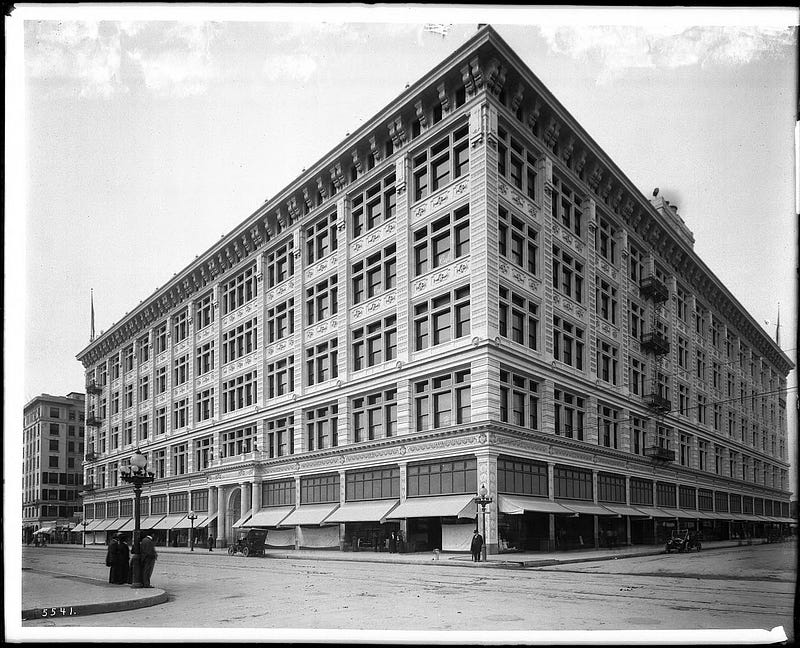
The year was 1971.
My first year of marriage.
I was 21 years old.
Now I needed a real job, for real money, for my real life in the real world.
The laundry, the restaurant, the root beer joint — those were just simple appetizers before feasting on the big bad world.
A world where those who came long before held both experiential and institutional authority.
I may never understand why the employment agency sent me to a local department store interview.
I do know how stumped I was when the Personnel Manager politely asked, “So, why do you want to get into retail?”
I must have come up with something off the cuff, but I guarantee you — nothing I could have said would ever have justified this move.
I was not what you might call a people person.
You might say I was introverted, or a little shy.
Okay, borderline autistic.
But I had a college education and a Bachelor’s degree, so I was gold.
They signed me up for their Executive Training program, something new and experimental that paid more than Management Trainees, something meant for smug, naïve young adults like me, which put me on the fast track to quick promotion.
Hindsight Warning: Never get on the fast track for anything.

I was enthusiastic.
Young and eager.
In an introverted, autistic kind of way.
You know, pretty serious.
Bottom line, however: I really wasn’t ready for the real world.
Nor for the ultra-autocratic ways of bosses way back then.
I got in a bit of trouble.
Not due to attitude; due to cluelessness.
But we’ll get to that.
To get my feet wet, they assigned me to Women’s Sportswear.
You know how military boot camp wants to confuse your sense of self-identity to the point of voidness? Leaving you subservient, pliable, and open to total brainwashing or learning real-life skills, depending on your point of view.
That’s how I felt selling clothes to women.
Especially when they’d model their new clothes for me.
Most especially, when such modeling included leers I didn’t comprehend.
Fortunately, the Quick Track Program saved my soul, if not my self-confidence.

They made me Assistant Department Manager for Domestics.
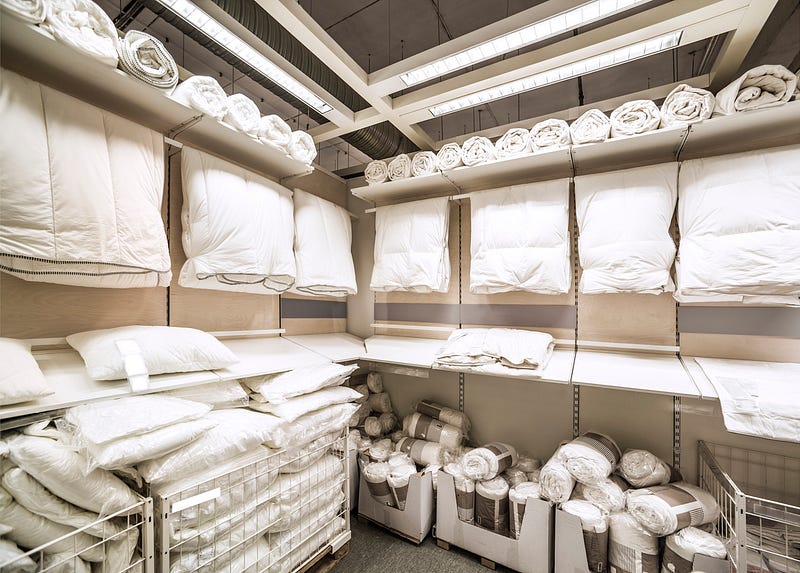
Towels, sheets, linens … that sort of thing.
Perhaps I should remind you: This was 1971. I was a young male. I didn’t know extra-long fitted double sheets were even a thing.
First time I was asked, I stuttered, “Yes, we have sheets. Over there.”
Percale? What the hell?
Time served so far was not serving my sense of manhood well.
As if to accentuate that specific vulnerability, the Buyers came to town.
We were a centralized operation. Our store was just one branch in a statewide chain of many. I think we were number 8. Anyway, the Buyers (not our customers but the wizened folks responsible for purchasing all our merchandise) were stationed in the downtown LA store and would make frequent visits to the far-flung outer branches in order to aid and berate the Department Managers responsible for their wares.
As Assistant Manager, I was mostly off the hook. I was allowed simply to watch and learn.
And to watch one strange Buyer watching me.
Leering more than women modeling clothes in Sportswear.
I’d never been looked at like that before, and I was simply too young to understand.
Fortunately, the Quick Track Program struck again.
Promoted to full Department Manager, I was thrown into the Basement to manage Budget Domestics, including rugs.
I point out the rugs thing because that’s where I got in trouble.
First, however, there was an incident with our automatic hanging stock cage system.
The one that moved big steel cages filled with goods on overhead tracks.
You remember that moment, usually as a kid, when you could just tell how much trouble you were in by the looks you got on coming into the room?
Yeah, like that.
I came to work late one day. It was my turn on the night shift. So everything was pretty much in motion by that time.
Nobody would talk to me.
They kept averting their wary glances.
I first checked my zipper of course, but my trouble alarm was pinging loudly.
On entering the department, my assistant said, “Operations Manager wants to see you.”
This guy was the company disciplinarian. The General Manager by nature was a people person and friendly if insincere to all. The Personnel Manager was a little Nazi, but she had her own rules to live by. All bets were off with the Operations Man. This guy existed just to cut off heads.
And mine was next up on the block.
It kinda went like this, if I remember correctly.
“You on shift last night, son?”
“Yes sir.”
“You check everything before you left?”
“Umm …”
“In your stock room?”
“Umm …”
“Did you clear the aisles of all your cages?”
“Umm … oh shit.”
“What the hell were you thinking!”
After that, it was all cursing and horrid threats. Turns out I’d crashed the entire automated system. In other words, I’d crashed all the cages.

How I survived that episode, I’ll never know.
But it certainly didn’t help my attitude when that damned rug Buyer showed up.
I was already having issues, as you can imagine, but that loud-mouthed, arrogant, accusatory bastard was the last straw.
Oh heck, you get the idea.
You don’t need details.
Suffice it to say, his rant was that I had failed to put his newest, greatest, most wonderful rug acquisition into the most advantageous spot to be seen by customers.
In turn, I basically told him to fuck off.
They promoted me to Department Manager at a brand-new store next city over.
Got to love that Quick Track Program!
… to be continued.


