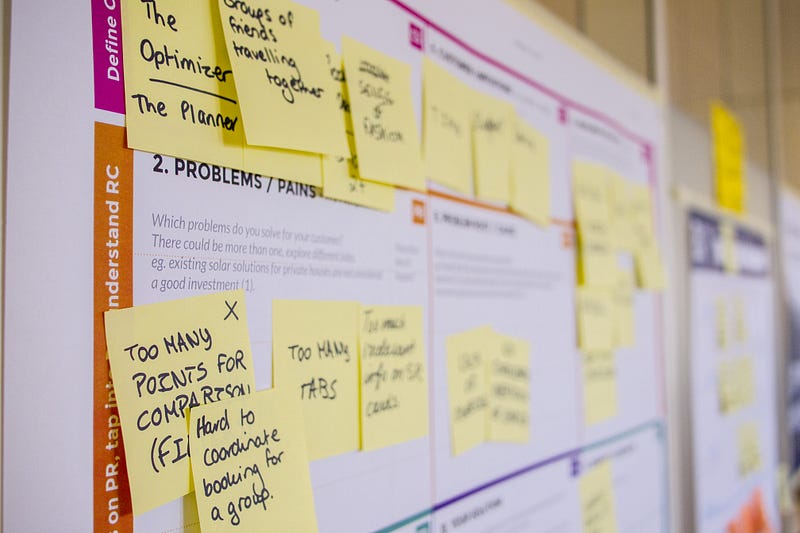
Work space Complexity and dealing it with AGILE.
Agile can help you deal with today’s business complexities.

Work space complexity and agility:
Work environment and work spaces in today’s world are not like the ones which our fathers and forefathers had. A lot has changed and it has been consistently changing throughout the years. However, Covid-19 has changed it radically, resulting in most of the jobs being done remotely, if not all.
All these changes together with the advancements in technology landscape result in altering and in fact ever increasing complexity of workspace for many of us. We will discuss some of those changes and challenges in this blog and will preesent a way to deal with them.
There are many challenges that arose in work environment over time, some of them which are relevant for our discussion include:
- Continuous Learning
- Solving business problems and proving business value
- Innovation
You work environment can be as simple as eating a chocolate and at the same time it can be as challenging as eating a Spaghetti. For chocolate, you have to just take the wrapper off and start eating it. Which means that you just need to go through the guiding principles, instructions once and then all you have to do is to consume them in your daily work routine.

On the contrary, eating spaghetti is really like an agile environment in which you may have the guidelines, some reading materials to start with your work but as soon as you start, you discover that there is more spaghetti to consume, which is all tied together and your job is to separate it, break it in chunks, and consume it in different iterations. Remember that, you will have more meat on the table, along the way, as you are eating your spaghetti.

Previous generations (most of them) did not had this challenge; why because there was mainly manual work, which had to be carried out in the same way ever day, computing and technologies were not that advance. It had its own challenges which were related to work dynamics but not related to work as we have them today.
In today’s ever changing world, the technology is changing fast, so does their implementation details, as well as the scientific knowledge which is created around the world is accessible to everyone right there and then. Therefore it has good news and a bad news:
- Good News is that now we all have access to same information and knowledge almost instantly. All countries can progress by leveraging such advanced knowledge.
- Bad News is that there is so much to consume and not everyone in the world has the same infrastructure.
If you consider the 3rd world countries, they face many challenges. For example, during covid-19 when educational institutions had to shift to online mode of education, they were not ready for this.
If teachers were able to teach online, students were not able to connect to those classes when they were in their country side homes. Many students did not ahd a laptop, they were only using lab computers for experiments. Additionally, if someone managed to get the amount required to buy a laptop, they did not had shops open (which was logical during covid-19 outbreak), but surprisingly online services do not offer delivery services for them. I think you got the idea about the range of issues that people face in the third world.

Let’s get back to our original topic of the blog which was more about workspace related challenges (I had to cover the above things as they are related to third world people’s workspaces)
- Continuous Learning: Jobs today demand you to keep yourself regularly up-to-date and trained with the latest knowledge in the field. Which is very cool thing; I mean who would not like to learn new things. However, it becomes challenging when there is so much on the same topic and you have to spend a lot of time to filter it let alone learn it.
- Solving business problems and proving business value. In addition you have to solve business problems, serve customers needs and get the business going. This becomes challenging when you have to deal with latest technologies, changing requirements and multiple stakeholders satisfaction.
- Innovation. To stay competitive, you need to innovate and bring about new and unique perspectives to work.
Personally, I found these challenges very interesting and joyful as they keep pushing me for the next best thing, keep me energised, motivated and thrilled to not only learn new things but leverage them to address needs and issues of our society.
I think in addition to leveraging the Agile approach, its principles what helps most is the Agility to act, redefine and change your approach and priorities helps in staying relevant, valuable and achieving your goals timely.
However, there is a price tag to these; and that is in addition to spending additional time, you have to manage the priorities in an agile way. Personally, what I have found helpful is to avoid multi-tasking as much as you can, leverage the Agile approach to get your things done.
I think in addition to leveraging the Agile approach, its principles what helps most is the Agility to act, redefine and change your approach and priorities helps in staying relevant, valuable and achieving your goals timely.
I would love to hear your perspective on this, How do you go about handling workspace complexity, what learnings would you share with others?