
Work-Life Balance: Has Quarantine Annihilated The Balance?

With COVID-19 completely upending all facets of daily life, one thing that seemed poised to bring positive, and lasting, change beyond the pandemic was working from home. As countries went into lockdown and mandated people work remotely, experts wrote about how this would bring about change in the way we approach work.
It would bring about more flexible work arrangements they said, an increase in productivity, and some even claimed better work-life balance. Depending on where you are, you would be at least a month into this new normal, and in that time it seems people have been burning out more.
I have seen colleagues and friends lament on social media about how they are working more than ever before, and articles have popped up about how work-life balance isn’t a thing anymore.
I stumbled onto this Bloomberg article and it made me stop to think about work, was things really any better before? Or has working from home just exposed how little of the balance we truly had?
I don’t think anyone expected the shift to remote working to be easy, it was thrusted onto all of us and companies had very little time to set up plans to make full use of the switch. Many choose instead to just carry on as per usual, just now from home.
This would disadvantage employees with young children who now also had to learn from home. Where older children are able to take part in virtual lessons on Zoom or Google Hangouts, younger children cannot and instead have to rely on their parents to coach them through lesson plans.
Parents who also have full time jobs will have a hard time balancing between the two. As the Intel executive told Bloomberg, “she feels guilty if she neglects her kids and guilty if she neglects her work”.
Things are further exacerbated by bosses who demand that workers be always available. A friend of mine was threatened with her job for not answering her phone while she helped her child through an assignment.
This demanding behaviour is trickled down to all employees who now feel the need to always be available, no matter the time of day. The horrible email reported in the Bloomberg article is just one of many sent out by companies all over the world I’m sure.
I had applied for a single day off during quarantine. When my day off came I received messages from my manager asking me to do some work because I have “nothing to do and nowhere to go”.
This wasn’t the first time I had received such texts of course, when I was on holiday at the start of the year I also received messages from colleagues asking me to do work related things. Putting my foot down undoubtedly caused some discontentment between my colleagues and I.
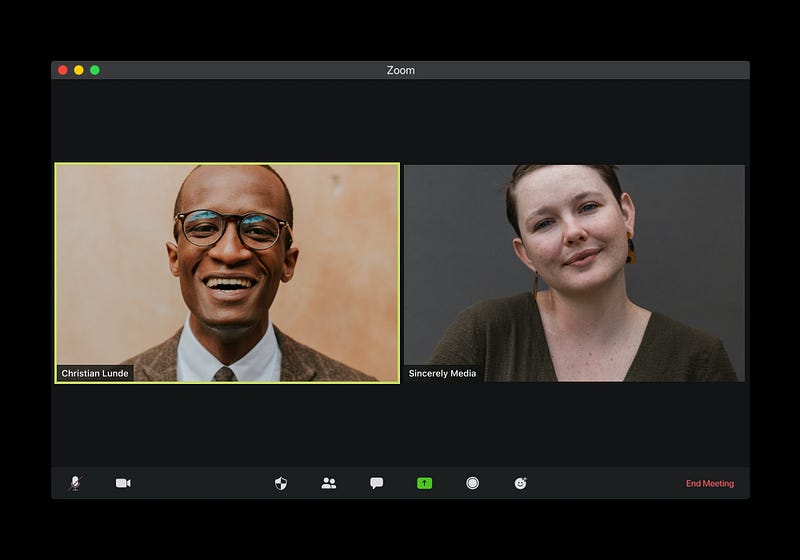
Such intrusions into life by work is not new for anyone, and probably has resulted in stricter processes in place as companies try to control employees remotely. From always having Zoom on in the background to keep watch on you, to mandating you reply messages and emails within 15 minutes, and downloading software that watches what you do on the computer, these are just some of the few work from home measures that have been shared with me.
But I think this speaks more of a company’s work culture than anything else. If you wouldn’t keep such a close watch on your employees in the office, why do so now?
With a looming recession and worries over job security, employees would feel pressured into complying with every measure that comes their way, no matter how intrusive.
And there are those who face the dissonance of having to reconcile a company that has always treated them well suddenly becoming very controlling. Employees might end up putting the blame on themselves for “not performing” hence the stricter measures. But to these employees who put such an emotional strain on themselves, I urge you to take a step back and really look at how things were before.
Away from the distraction of welfare, away from the sleeping pods in the office and well stocked pantries, away from the game consoles in the office, has this sort of work culture actually always been there?
If you were working regularly into the wee hours of the day, if you were burning weekends, and if your employers were always pushing blame, then things have not really changed. If your commute to and from work or dinners with friends was your only downtime, then you never truly had any work-life balance. Working remotely has just made you more aware of the work culture you find yourself in.

There are ways to introduce some balance into your lives as you work remotely. I find that tracking my hours helps me to maintain some sort of balance in my day. Planning my day also has helped, by scheduling a workout session immediately after work, it gives me something to look forward to and to motivate me to log out on time. It also keeps me from feeling “since I have nothing to do, I might as well work”.
It is not all doom and gloom however. Some companies have taken remote working in their stride. A relative who has a 4 year old is given a 3 hour lunch break everyday to help with his child’s learning, a friend has a mass log off session at 6pm everyday. Sometimes it is also as simple as not making employees feel like they would lose their jobs if they aren’t available 24/7.
Achieving work-life balance will always be an uphill battle especially with ever moving deadlines and “urgent” tasks that get passed your way. But working remotely should not mean having to sacrifice life for work.
In a weird twist, perhaps the best advice also comes from that threatening email in the Bloomberg article — “Just think, would I do this in the office? If it’s a no, don’t do it”. If you wouldn’t work till 3am in the office, don’t do it now. If you wouldn’t eat and work at the same time, don’t do it now.
As much as employees are expected to do their part, employers should also do what they can to help make remote work as seamless as possible. Breathing down the neck of your employees is no way to treat them in a time when empathy should be king.
Putting out messages on social media like “we are all in this together” only to treat your employees like robots on a manufacturing line sends a very clear message to your staff. Now more so than ever, how you treat your staff shows how much you value them.
There is no doubt working from home poses a series of challenges, especially in the way we were all forced into it. Certain groups are facing greater challenges in adapting to remote work, while others have the switch be relatively easy. Conversations about work-life balance and remote work will continue to be had, and we will have to continue to adapt and adjust.
I am of the opinion that remote work hasn’t annihilated work-life balance, but rather, it has made it impossible to ignore the toxic work cultures many of us find ourselves in.


