avatarSjoerd Nijland

Free AI web copilot to create summaries, insights and extended knowledge, download it at here

3052

Abstract

g development, even when they grow out-of-synch with the dynamic market (like changing demand). They also grow out of sync with the as-is state of the <i>actual</i> product, yet are still referenced for specification. It results in wasteful misalignment and misconfiguration. They can also lead to increased cost of delay.</p><figure id="74f7"><img src="https://cdn-images-1.readmedium.com/v2/resize:fit:800/0*l_k8kcrkbW6PBXAH.gif"><figcaption></figcaption></figure><p id="1e5c">This is where the Lean part of Lean UX kicks in. Lean UX changes the way we approach designing user experiences. Rather than staging the product and its features through lots of artefacts, with synchronised development designers can <b>build on what works. </b>Learn and adjust; <i>Inspect and Adapt.</i></p><p id="dc3b">Lean UX doesn’t prevent the creation of artefacts, it limits it to doing the minimum needed to validate hypotheses as early as possible. It helps us move away from heavy BIG BANG hand-offs. Lean UX encourage lightweight collaborative activities performed in short time-boxes.</p><figure id="06c1"><img src="https://cdn-images-1.readmedium.com/v2/resize:fit:800/0*9MNByXysOrrHMHeY"><figcaption>Photo by <a href="https://unsplash.com/@gentlestache?utm_source=unsplash&amp;utm_medium=referral&amp;utm_content=creditCopyText">bonneval sebastien</a> on <a href="https://unsplash.com/?utm_source=unsplash&amp;utm_medium=referral&amp;utm_content=creditCopyText">Unsplash</a></figcaption></figure><ul><li>So rather than creating extensive rigid marketing persona’s, Lean UX promotes <a href="https://uxdesign.cc/ux-creating-proto-personas-76a1738401a2"><b>proto-persona’s</b></a> that are lightweight, easily adapted and thrown out.</li><li>Rather than building elaborate interactive wireframes, a team could craft <a href="https://uxplanet.org/the-magic-of-paper-prototyping-51693eac6bc3"><b>paper prototypes</b></a> and run these by users.</li><li>Rather than creating exhaustive digital designs, work through emerging <b>style guides </b>and (atomic) <b>pattern libraries</b>. (examples by <a href="https://rizzo.lonelyplanet.com/styleguide/design-elements/colours">Lonely Planet</a> and <a href="http://ux.mailchimp.com/patterns/color">Mailchimp</a>)</li></ul><h2 id="2299">Environment and Context</h2><p id="62fc">A common pitfall for Development Teams is they they <i>limit</i> their problem solving capabilities to the only those solutions that require their primary skillsets. They (generally) try to solve problems though developing features. They apply the same tools, techniques and processes over and over.</p><p id="695a">What if the problem can be solved with no development at all?</p><p id="271f">With encouraging creativity and exploration to create a larger view of the work beyond features, teams can explore other ways. Customer Interviews, diaries, service safari’s, collaborative design workshop, sprint reviews, customer recordings, feedback surveys are all activities that will enhance the teams ability to solve complex adaptive proble

Options

ms in an adaptive way.</p><p id="4ed7">Team is able to immerse itself into the nature of the problem, they too can better understand what would be the best <i>nature</i> for a <i>solution</i>. This way they can adapt their practices, tools, techniques and processes to suit a possible better, leaner solution. It helps teams address challenges more holistically. It helps teams to not focus solely on the product, but also the team and the <b>working environment</b>. What if the Development Team could change its environment to get closer to the user or the problem?</p><figure id="f396"><img src="https://cdn-images-1.readmedium.com/v2/resize:fit:800/1*tyeWgjz59Gm9AsDXJSE3VA.png"><figcaption>Move out of the cave. Photo by <a href="https://unsplash.com/@ianchen0?utm_source=unsplash&amp;utm_medium=referral&amp;utm_content=creditCopyText">Ian Chen</a> on <a href="https://unsplash.com/search/photos/cave?utm_source=unsplash&amp;utm_medium=referral&amp;utm_content=creditCopyText">Unsplash</a></figcaption></figure><blockquote id="a739"><p>“Scrum makes clear the relative efficacy of your product management and work techniques so that you can continuously improve the product, the team, and the <b>working environment</b>.”<i> — The Scrum Guide (emphasis added)</i></p></blockquote><h2 id="d01b">Conclusion</h2><p id="ff4e">Both Lean UX and Scrum encourages creativity and exploration to create a larger view of the work beyond features. It is a common anti-pattern for Scrum Teams to focus only on product development activities. It is in fact about solving complex adaptive problems. This requires teams to be able to immerse itself into the nature of such problems.</p><p id="a61c">Lean UX provides Scrum Teams with a set of principles and lightweight techniques that prevent waste in the process of solving these problems. It limits waste in the production of by-products and it limits waste in the product itself. It encourages teams to discover smarter ways to solve a problem. It encourages teams to adapt their way of working and work-environment to better suit the nature of the problem.</p><p id="6231"><b>Next up:</b></p><div id="7983" class="link-block"> <a href="https://readmedium.com/valuable-failures-9c9a0b4008d1"> <div> <div> <h2>Valuable failures</h2> <div><h3>SCRUM & LEAN UX | Episode 11</h3></div> <div><p>medium.com</p></div> </div> <div> <div style="background-image: url(https://miro.readmedium.com/v2/resize:fit:320/1*9kBzFqAp7I867nBs-acGMA.jpeg)"></div> </div> </div> </a> </div><figure id="a703"><img src="https://cdn-images-1.readmedium.com/v2/resize:fit:800/1*qsg-zjcnz5A8B1xmBbdIfw.png"><figcaption><a href="https://readmedium.com/your-invitation-to-the-serious-scrum-slack-workspace-f424aeea4093?sk=e8334e6ee505a85ae6b9d2a1ce37219c">Do you want to write for Serious Scrum or seriously discuss Scrum?</a></figcaption></figure></article></body>

Work Beyond Features

SCRUM & LEAN UX | Episode 10

The ‘Scrum and Lean UX’ series discusses the appliance of Lean UX principles and practises in Scrum. All its articles have this theme and can be read on their own.

Encouraging creativity and exploration creates a larger view of the work beyond features.

Photo by Amy Shamblen on Unsplash

Scrum Teams are highly focussed. As a Scrum Master, one could argue that UX Design activities could distract the team from focusing on delivering a “done” increment. UX Design activities will indeed distract the team from delivering the wrong “done” increment. And they will guide the team towards developing the right “done” increment.

“The team model in Scrum is designed to optimize flexibility, creativity, and productivity.” — The Scrum Guide (emphasis added)

Exploration, learning and development are integrated activities in Scrum. They are all integral to a Sprint. They are not side-tracked and neither do they run parallel with separated teams.

“Other sources provide you with patterns, processes, and insights that complement the Scrum framework. These may increase productivity, value, creativity, and satisfaction with the results.” — The Scrum Guide (emphasis added)

The conviction that creative activities are a distraction to development and delivery is found in many development organisations where output is valued over outcome. Creativity in fact promotes better decision making; discovering more effective ways to resolve complex adaptive problems.
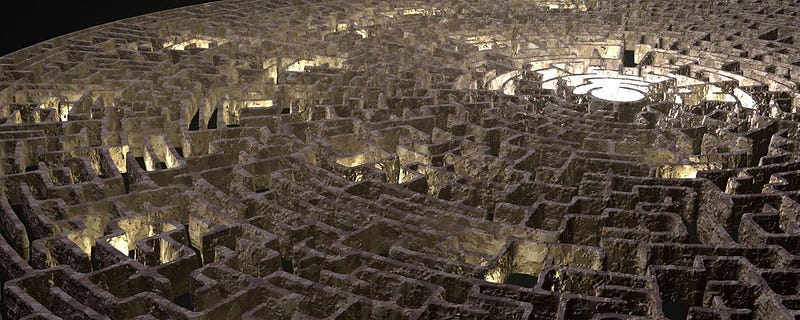
Navigating complexity. Afbeelding van PublicDomainPictures via Pixabay

Artefacts

Now, a downside to creative discovery activities is the creation of by-products: ‘artefacts’. These can be sketches, models/diagrams, test scripts, static designs and design prototypes. They are the source of waste when they are used as a source for ongoing development, even when they grow out-of-synch with the dynamic market (like changing demand). They also grow out of sync with the as-is state of the actual product, yet are still referenced for specification. It results in wasteful misalignment and misconfiguration. They can also lead to increased cost of delay.
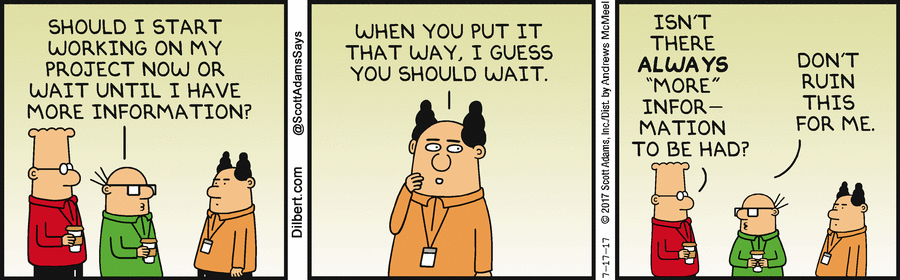
This is where the Lean part of Lean UX kicks in. Lean UX changes the way we approach designing user experiences. Rather than staging the product and its features through lots of artefacts, with synchronised development designers can build on what works. Learn and adjust; Inspect and Adapt.

Lean UX doesn’t prevent the creation of artefacts, it limits it to doing the minimum needed to validate hypotheses as early as possible. It helps us move away from heavy BIG BANG hand-offs. Lean UX encourage lightweight collaborative activities performed in short time-boxes.
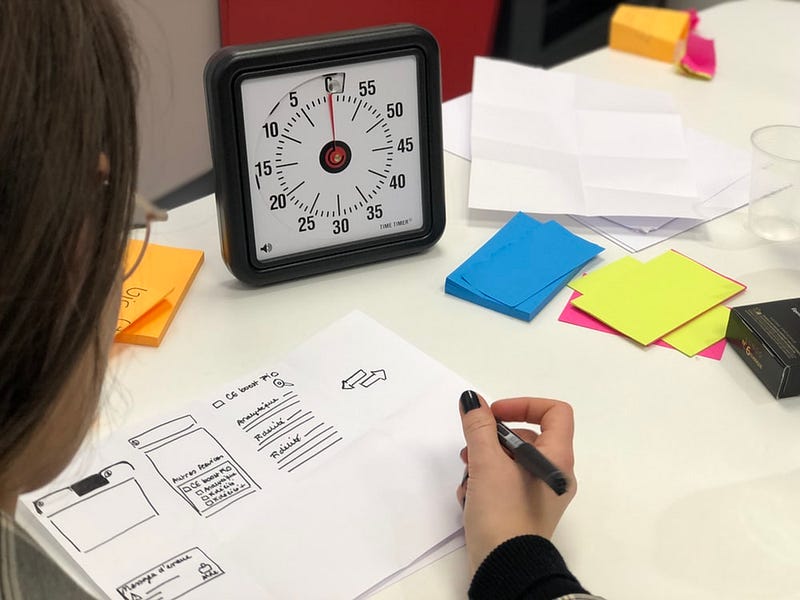
Photo by bonneval sebastien on Unsplash
  • So rather than creating extensive rigid marketing persona’s, Lean UX promotes proto-persona’s that are lightweight, easily adapted and thrown out.
  • Rather than building elaborate interactive wireframes, a team could craft paper prototypes and run these by users.
  • Rather than creating exhaustive digital designs, work through emerging style guides and (atomic) pattern libraries. (examples by Lonely Planet and Mailchimp)

Environment and Context

A common pitfall for Development Teams is they they limit their problem solving capabilities to the only those solutions that require their primary skillsets. They (generally) try to solve problems though developing features. They apply the same tools, techniques and processes over and over.

What if the problem can be solved with no development at all?

With encouraging creativity and exploration to create a larger view of the work beyond features, teams can explore other ways. Customer Interviews, diaries, service safari’s, collaborative design workshop, sprint reviews, customer recordings, feedback surveys are all activities that will enhance the teams ability to solve complex adaptive problems in an adaptive way.

Team is able to immerse itself into the nature of the problem, they too can better understand what would be the best nature for a solution. This way they can adapt their practices, tools, techniques and processes to suit a possible better, leaner solution. It helps teams address challenges more holistically. It helps teams to not focus solely on the product, but also the team and the working environment. What if the Development Team could change its environment to get closer to the user or the problem?
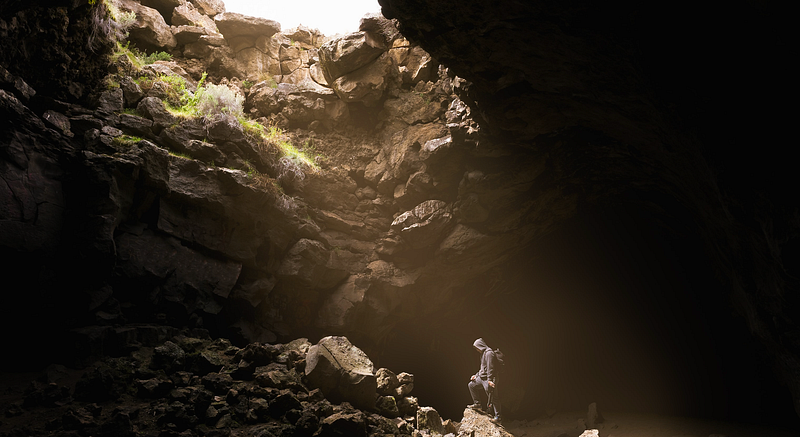
Move out of the cave. Photo by Ian Chen on Unsplash

“Scrum makes clear the relative efficacy of your product management and work techniques so that you can continuously improve the product, the team, and the working environment.” — The Scrum Guide (emphasis added)

Conclusion

Both Lean UX and Scrum encourages creativity and exploration to create a larger view of the work beyond features. It is a common anti-pattern for Scrum Teams to focus only on product development activities. It is in fact about solving complex adaptive problems. This requires teams to be able to immerse itself into the nature of such problems.

Lean UX provides Scrum Teams with a set of principles and lightweight techniques that prevent waste in the process of solving these problems. It limits waste in the production of by-products and it limits waste in the product itself. It encourages teams to discover smarter ways to solve a problem. It encourages teams to adapt their way of working and work-environment to better suit the nature of the problem.

Next up:

Do you want to write for Serious Scrum or seriously discuss Scrum?
UX
Lean UX
Creativity
Serious Scrum
Product Management
Recommended from ReadMedium