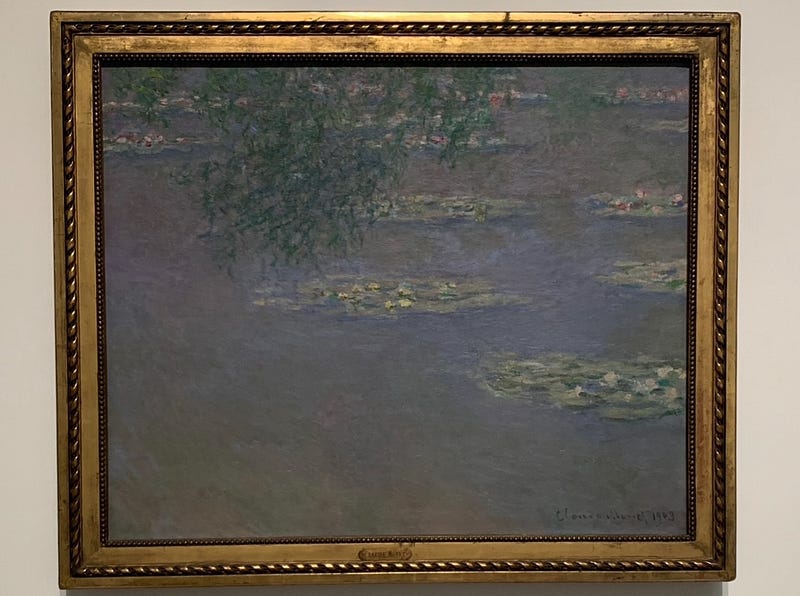
Words are not perfect
The limits of words
We speak and write words every day as a matter of course. Communicating through words is something that many modern people are familiar with. However, as Walt Whitman says “I swear to you, there are divine things more beautiful than words can tell, ” words are not perfect tools for communication. I would like to talk about the limits of words here in this article.
Before I begin, I would like to clarify the difference between “language” and “words.”
What is Language?
According to Britannica, language is
a system of conventional spoken, manual (signed), or written symbols by means of which human beings, as members of a social group and participants in its culture, express themselves. The functions of language include communication, the expression of identity, play, imaginative expression, and emotional release.
Cambridge Dictionary says
language is a system of communication consisting of sounds, words, and grammar.
Modern people today mostly use words and letters to exchange information on a daily basis. Therefore, we tend to associate letters and words with the word “language.” However, language also includes means of communication other than written words. In fact, both in the past and the present, there are people who communicate without writing.
For instance, the Shona people of Zimbabwe originally had no written language. Music was their language. Their music is played on a traditional instrument called the Mbira, and is strongly connected to their faith and culture. The scales they use in their performances are said to be inspired by the sound of bees’ wings. They play using a scale that is completely different from the Western scale “CDEFGAB” that many of us are familiar with.

The limits of words (Ludwig Wittgenstein)
Here, I would like to discuss the limits of words. Words are items that are said or written in order to convey meaning. Ludwig Wittgenstein, an Austrian philosopher who has developed ideas about the limits of language, said the following: (“Language” here refers to the transmission of information in a narrow sense through words.)
“What we cannot speak about we must pass over in silence.”
“ Wovon man nicht sprechen kann, darüber muss man schweigen.”
Since Plato, many Western philosophers have believed that the work of a philosopher is to logically solve a group of problems that seem difficult to solve (such as free will, spirit, good, and beauty, etc.) The dominant idea was to unravel it through analysis. However, Wittgenstein believed that these “problems’’ were actually just spurious problems caused by philosophers using language incorrectly. (“Philosophical Investigations” by Ludwig Wittgenstein 1953)
He also argues that Western philosophers were not as “smart’’ as people had believed, but were simply prone to linguistic confusion because they used language outside of its original context.
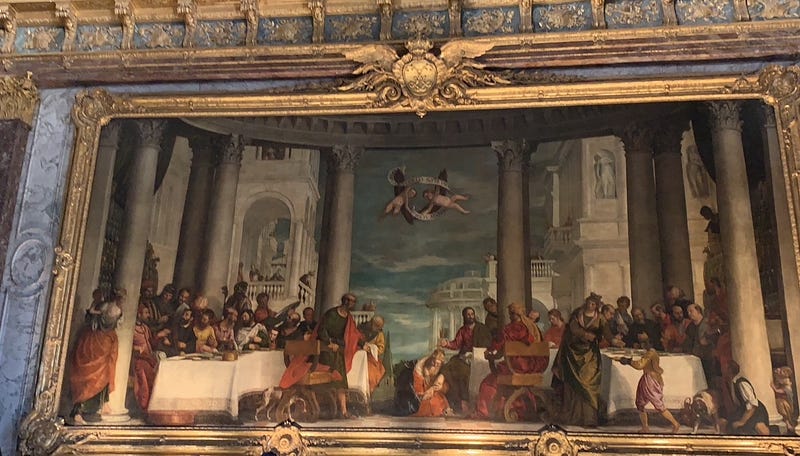
Words about the limits of words
There are other words that describe the limits of words. Let me introduce them here.
1. Haruki Murakami
“Once I put it into words, it’s probably too simplistic. I cannot explain it logically. It is just sensuous.”
— “The Colorless Tsukuru Tazaki and His Years of Pilgrimage’’ by Haruki Murakami
2. Walt Whitman
“I swear to you, there are divine things more beautiful than words can tell.”
— Walt Whitman
3. Claude Monet
“What keeps my heart awake is colorful silence.” — Claude Monet
4. Susan Sontag
“It’s not ‘natural’ to speak well, eloquently, in an interesting, articulate way. People living in groups, families, communes say little…have few verbal means. Eloquence…thinking in words…is a byproduct of solitude, deracination, a heightened painful individuality. In groups, it’s more natural to sing, to dance, to pray: given, rather than invented (individual) speech.”
— Susan Sontag
Things that are difficult to put into words. I believe everyone has had this experience. Things that are difficult to put in a logical manner. Things that are more sensory in nature and closer to the unconscious. I believe it is easier to convey such ideas through stories, drawings, music, dances, and so on. In fact, I believe that some things can only be stated in this manner.
It is likely that Haruki Murakami’s motivation for writing novels is his sense of the limitations of logic and nonfiction. There are things he can only express through writing fiction.
What Monet hoped to communicate through his paintings. It is evident that it could not be described logically in words. What he wished to convey, the sunlight, shadows, flowers, and water surface, could only be expressed by color and the touch of a brush.
The Zimbabwean Shona people had no need for writing. This is most likely due to the fact that some things can only be expressed through the mbira’s melody. When it comes to expressing the sound of bee wings, words clearly have limitations.