
Woodstock Mastermind Michael Lang, Who Died Last Weekend, Said His Aim Was to Bring Out the Best in Humanity. Did He?
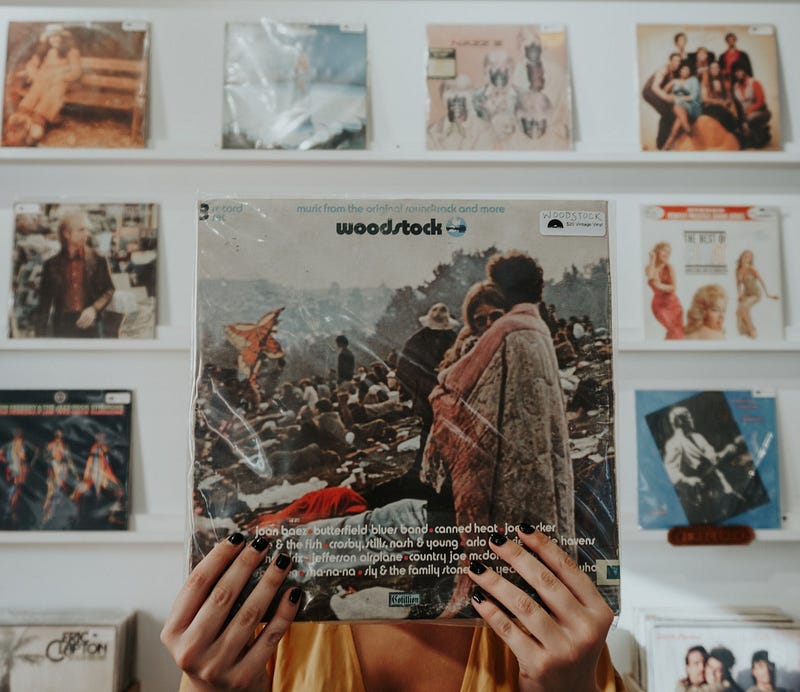
A CNN newsflash across my iPhone screen on Saturday announced that Michael Lang, who was a driving force behind the Woodstock Music & Arts Fair that turned the summer of 1969 into a life-changing experience for me and many in my generation, had died at 77. When I turned to my daily newspaper of record, The New York Times, for details, there were none. When I searched The Times’ obituaries on Sunday, there was nothing. Same for Monday and Tuesday, when I looked up the contact info for the editor of the newspaper’s obituary section, Bill McDonald, and sent him an email asking for a reason for the egregious omission. “No omission here,” he responded almost instantly. “Our obituary will be published online today.”
And so it was. Written by Ben Sisario, who covers the music industry, the obit contains a passage that got me scratching my head, sending me on a trip in my mental time machine to the three-day weekend of Aug. 15–17, 1969, and all the way back again.
“Despite the festival’s inception as a moneymaking endeavor, Sisario wrote, “Mr. Lang always insisted that its aims were to bring out the best in humanity.” He went on to quote from Lang’s 2009 memoir, “The Road to Woodstock”: “From the beginning, I believed that if we did our job right and from the heart, prepared the ground and set the right tone, people would reveal their higher selves and create something amazing.”
Having lived through the incredible highs and rain-drenched, squalid lows of all three days of Woodstock, I view its remarkable peacefulness and rare achievement of human kindness and civility amid over-crowed, disastrous conditions, as more of a divine accident than a consequence of well-intentioned planning. After all, the same Michael Lang orchestrated the 1999 Woodstock anniversary festival in Rome, N.Y., where violence and sexual assault were rampant and three people died.
No one will ever be able to explain the complex interplay of a confluence of factors that came together to create the miracle at Yasgur’s Farm — the perfect natural amphitheater in an alfalfa field in Bethel, N.Y. My guess is it was a combination of (1.) the festival being free because the crowd was already in the field before the fences and ticket booths were built to keep them out until they showed their tickets; (2.) the beautiful, natural setting, surrounded by fields, forests and ponds that provided a kind of safety valve for the pent-up crowd; (3.) the tendency for people sharing a sense of crisis to bond, at least for a while; (4.) the peaceful bearing of most of the audience and performers; and (5.) the compassion and heart-felt pleas of key people who spoke from the stage, especially MC Chip Monk and dairy farm owner Max Yasgur. A final ingredient, and surely one of the most important, I think, was just blind luck.
As unlikely as the uplifting outcome was, the fact is, it happened, and it’s a part of 20th century history. Now, with Michael Lang’s passing, I find myself asking — from a sort of “It’s A Wonderful Life” perspective — if there had been no Woodstock, or if I had not been there, how would my life be different? How would I be different as a person? These thoughts come to mind:
1. The role of music in my life might not be quite as powerful: People of my generation already shared a feeling of ownership in the folk, blues and rock music that gave us own special genre, clearly distinct from the music we heard and even enjoyed with our parents through the 1950s and early 1960s: Frank Sinatra, Dean Martin, Perry Como and the rest. Having an entirely new category of music born in our time and aired on “underground” radio stations gave us something unique and special to share. Witnessing the burgeoning of this music and some of its stars in person under these extraordinary conditions at Woodstock — Richie Havens, Janis Joplin, Joe Cocker, Jimi Hendrix, the Jefferson Airplane, the Who, Carlos Santana, Sly and the Family Stone, Crosby Still Nash & Young — was an unforgettable, life-enriching experience. The influence of this music and these musicians is readily apparent in my iTunes library today.
2. My resistance to rigid rules and norms might be a less prominent part of my character: If you didn’t grow up in the cloistered confines of the 1950s, it may be hard to understand the visceral release, the unbearable lightness of being, promised by the hippy movement of the ’60s. Woodstock was the apotheosis of that ethos. All the rules were broken. All norms were cast off, and yet… Nothing bad happened. I took this feeling with me everywhere, forever after, and especially at work. What’s gained by rigid conformity? Why continue to do something a certain way just because that’s the way it’s always been done? What’s the worst that can happen if you break a rule, and what if it actually makes things better?
3. My willingness to challenge authority might be weaker: Authority figures in government and industry steered us wrong and told a lot of lies back in the 1960s (some things never change). See “All the President’s Men,” The Pentagon Papers and tobacco company public statements guaranteeing that cigarettes were safe. In my career at a Big Pharma company, I encountered colleagues who were too cowed by CEOs and other corporate leaders and too timid to challenge them when they failed to live up to their words or advanced policies that may not have served the greater good. I was always respectful, but rarely afraid to speak up when the circumstances called for it
4. My openness to people of different races, nationalities, gender identities and opinions might be less expansive: Photos of Woodstock show a sea of faces that are predominantly, but not exclusively, white. One ugly aspect of human nature that did NOT exist for even a moment throughout those three days was discrimination. Everyone was welcome. Everyone was accepted as a brother or sister. Everyone was equal. I longed to feel this more before Woodstock. I carried it as a core life value afterward.
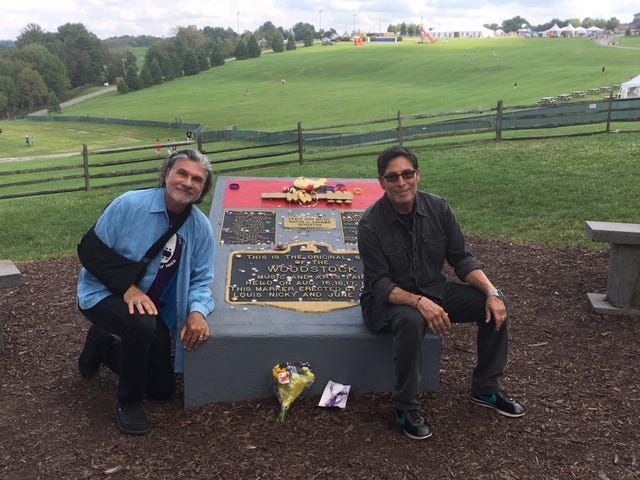
I went to Woodstock with my best friend Phil. We met when we were 10 and were 17 when we drove to Bethel that weekend in 1969. I was fortunate enough to have an aunt and uncle who had a summer home on a lake nearby the historic field. When I visited my aunt a few years ago when she was around 100 and exhibiting memory loss, she did didn’t remember who I was. But she remembered Woodstock. That ought to tell you something.
Did Michael Lang bring out the best in humanity by bucking all the odds to bring Woodstock into the world? Certainly for three or four days, for many, many thousands of people — both those who visited Bethel for the festival, as well as those who lived there — there’s no question that he did. As for now, almost 53 years later, I can only speak for this human and his fellow Woodstock Nation friends. I believe we’ve all been changed, for the better, and for the long haul.
RIP, Michael Lang.