
Wonk Bridge Presents — The Wonk Bridge Holiday Reading Review 2019
This article was originally published on Wonk Bridge

It’s that time of year again.
And yes, we listened, and yes, we heard your cries of consumerism disgruntled when we published last year’s Holiday Reading Review with less than a week to spare before Christmas.
So once again, with considerably greater punctuality, Wonk Bridge presents The Wonk Bridge Holiday Reading Review — 2019 edition, with words from contributors, friends and readers of Wonk Bridge on their essential reading for the festive period.
Founder’s Pick
Down to Earth: Politics in the New Climate Regime, by Bruno Latour
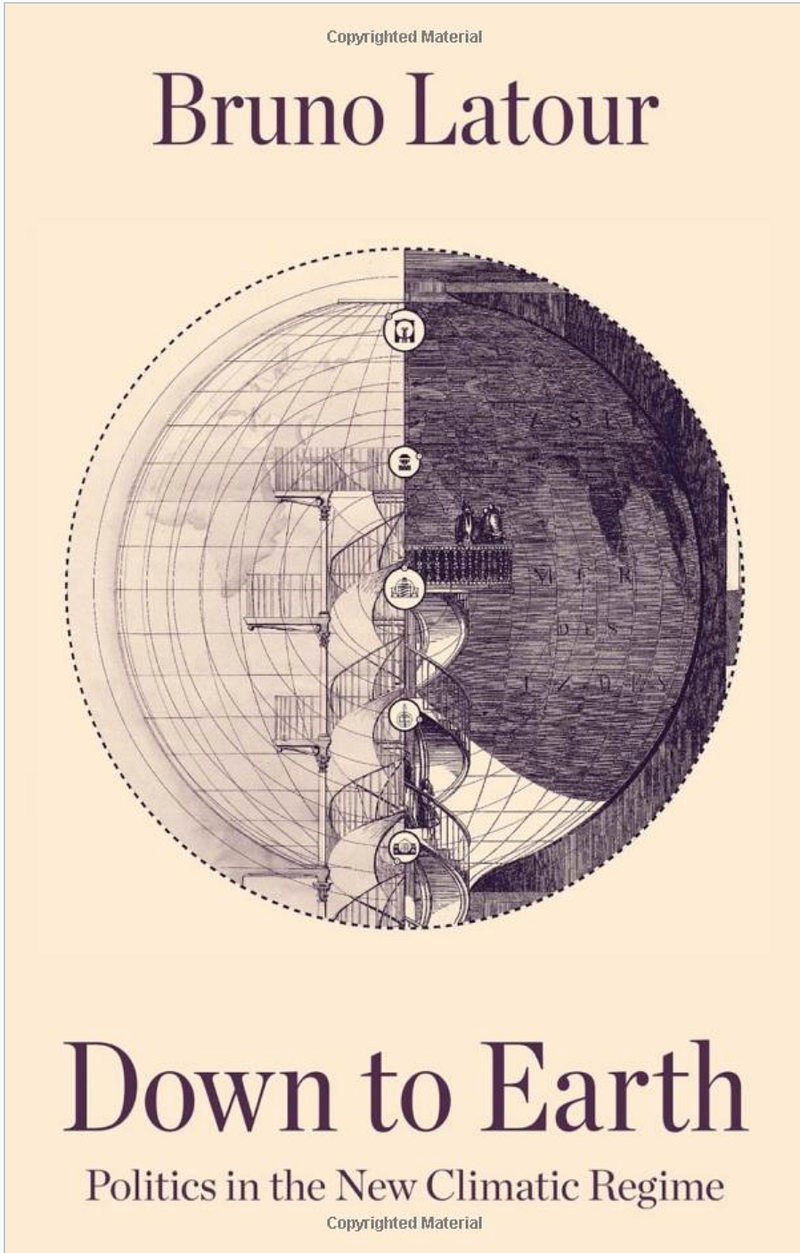
“Legendary French sociologist Bruno Latour makes an ambitious and, in my opinion, successful attempt at crafting a political “Theory of Everything”, a new political compass for our times.
In many ways, the 2010s were a transitory decade — letting go of now outdated 20th century notions and shifting to the 21st century agenda dominated by dramatic environmental change and multi-dimensional political control systems.
Down to Earth will no doubt form part of the pantheon of books reshaping and reprioritising our politics for the next 100 years.
When you’ve read it, let me know what you thought of his four axes. Do you agree with the final recommendation?”
As for the coming Christmas Season, I will be reading Addiction by Design: Machine Gambling in Las Vegas to better understand the ways social media is engineered to maximize user engagement following the example of Las Vegas casinos. Recommended reading by Silicon Valley’s Tristan Harris.”
Yuji Develle, founder of Wonk Bridge
Trick Mirror: Reflections on Self-Delusion, by Jia Tolentino
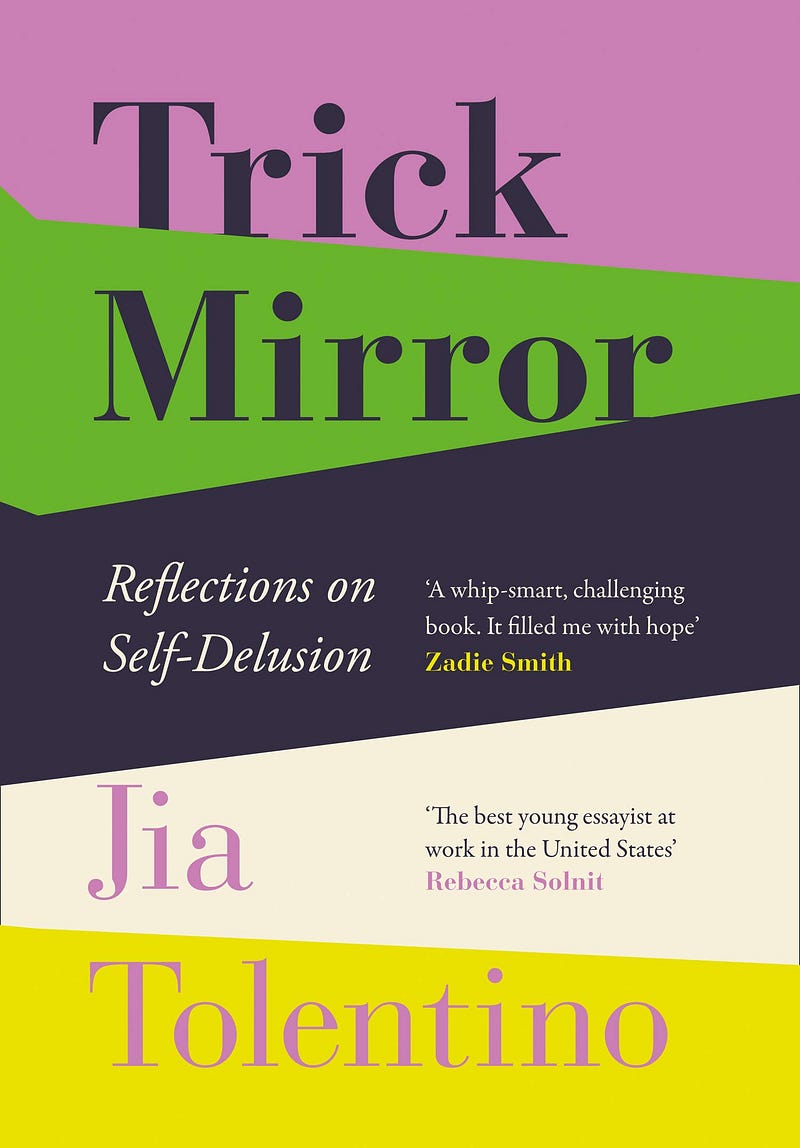
“It’s incredibly inspiring for me, when reading the work of a contemporary essayist, to be acquainted with someone who so evidently has total mastery of their considerable faculties — from this mastery comes a certain calm, and from this calm is mined the most trenchant and brilliant reflections. That’s the precise feeling I got when I read Jia Tolentino’s Trick Mirror — it isn’t a ‘tech book’ per se, but the truth of this decade just gone past is that, during it, we saw the partition between the digital and the actual be decisively negated. Technology is now less a theme than a place, where issues of economics, culture and gender politics mix in with everything else.
Tolentino is, without doubt, so perspicacious an observer of the ensuing tumult and confusion that to call her a kind of Manto for the Digital-Real partition doesn’t seem all that crazy. Or maybe it does. Either way, I’m sticking with it.”
K., Birmingham, United Kingdom
Craphound, by Cory Doctorow
“I think that, generally speaking, our approach to the tech-driven chaos of the world around us is pretty inappropriate — we look at developments in the far West of the world with dread, when really the sage, sane reaction would be to laugh. Craphound is just the kind of high-tech comedy — the Silicomedy if you will — that the world needs right now. It follows the trail of Perry and Lester, two maniacal inventors, whose creations — from seashell toasters to entirely new socioeconomic philosophies — reshape their America. From 3D printed guns to VC justice to tech chauvinism and the singularity, every controversy of the ’10s echoes through it. It’ll make you realize what hilarious times we really do live in, dread of Armageddon aside.”
A., Madison, Wisconsin, United States
Co-Founder’s Pick
Robots, Healthcare, and the Law: Regulating Automation in Personal Care, by Edouard Fosch-Villaronga
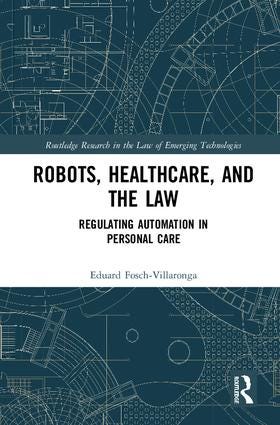
“I was tempted to stand defiant on the mantle of young stuffiness I was awarded following my high-academic selection from last year, and offer you Russell’s A History of Western Philosophy, or maybe hoist the flag for the Digital Humanities and select Jerome McGann’s magnificent Radiant Textuality from a few years back.
In the end I went with “Robots, Healthcare, and the Law.” As surely as linguistics will become the characteristic science of the mid-21st-century as we hunt for the secrets to AGI, as surely as greentech and bringing connectivity to underserved markets will dominate tech news in the 20s, I think the role of private industry and automation in healthcare is one of the watersheds incipient of the decade to come. It will become one of the main battlefields of a much larger war of regulation.
This book is capable of doing something not a lot of other literature on automation and robotics can — making you feel kind of good, and buffered from the apocalypse, about progress in these fields. It will also give you some sense of preparation for the difficulties that always come with such progress. It’s hard, it’s heavy, but it’s worth it.”
Max Gorynski, co-founder of Wonk Bridge
On Fire: The Case for a Green New Deal, by Naomi Klein
“Whether you’re in business management, philosophy, technology, humanitarian architecture, cereal curation or musical theatre, you’re going to find the issue of sustainability becoming less and less negotiable through the ’20s. The biggest challenge facing us in this coming decade is how we can make the radical adjustments required to avert climate catastrophe without dismembering our markets — not because that wouldn’t be fun, but because the main adversary of green initatives are the collective global self-interest. How can what’s green win in the market?
I’m still not sure we have an answer for that — but Naomi Klein’s On Fire is certainly powerfully persuasive of our need to develop one. As the debate around climate change surges, I find it becomes more and more emotionalist, and grows further and further away from the kind of faculties required — smart market planning, a real hard assessment of globalisation — to actually make a difference. Jacob Dahl Rendtorff’s Philosophy of Management and Sustainability is also truly excellent on this subject (I just wish it weren’t so damn expensive).”
D., Lausanne, Switzerland
Ghost Work: How to Stop Silicon Valley from Producing a New Global Underclass, by Mary L. Gray
“I have to say, I might never have been in more passionate agreement with a conservative from the United States than when I was listening to Ben Sasse talk about work — about the idea that waking up in the morning and feeling, knowing, that someone somewhere needs you and the work you’re about to do is one of the surest ways we feel value, and how we have a fundamental dignity imparted upon us.
We’re conditioned by the conveniences around us to the idea that work is something we ought to evolve out of. This is a potential future we are woefully unprepared for, and thank God, there are people like Mary L. Gray to help us understand how in detail. There are millions of hidden workers in the world today, serving mechanisms and digital processes valued much more highly than they are — they deserve their digital rights revolution.
Enough people read this, and they might get one.”
E., Bangkok, Thailand
HackThePress’ Pick
The Coaching Habit, by Michael Bungay Stanier
“Coaching is a more common activity in life than you realise. Since reading this book, my every-day interactions are more productive, and the best is I end up doing less! Rather than teaching techniques, the book encourages you to build positive habits that improve your communication and advice — the easiest and most effective form of behaviour change out there.”
Joseph Reeve, Hack the Press
In-House Firebrand’s Pick(s)
Age of Surveillance Capitalism, by Shoshona Zubov
“This book doesn’t so much reinvent the wheel as lay the groundwork for a new understanding of commerce and privacy in the 21st Century. Zubov argues that the dominant business model of the internet economy is that of Facebook, Amazon and Google. These companies essentially surveil large swathes of the public, using personal data as a raw resource to be exploited for profit the same way energy companies extract gas to generate electricity and heat. This dense work argues that the underlying economics and social implications of this business model make it objectively different from previous periods, and that the shift of the individual’s relationship with these companies from “consumer” to “user” means individuals are explicitly disadvantaged.
Can I have one more? Ok…”
Antisocial, by Andrew Marantz
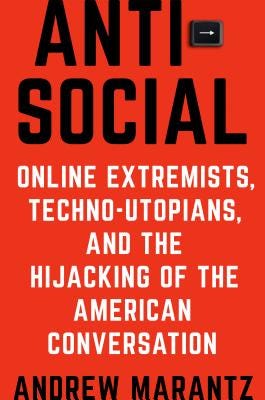
“Marantz embedded himself with some of the internet’s most deplorable characters for three years, from the run-up to the 2016 election to its aftermath. When many were dismissing the effects of online trolls on politics, Marantz could see from being at ground-zero just how widespread the alt-right and far right movements had become. In shadowing propagandist Mike Cernovich, he shows how unfounded conspiracy theories could move from fringe websites, to mainstream media, to the lips of the most powerful people in the country, with no more than an iPad and a Twitter account.”
Jackson Webster, from his Policy Corner
As always, in accordance with Wonk Bridge’s general commitment against monopoly principles, we have endeavoured to give you purchase links throughout this piece that avoid the likes of Amazon and instead support smaller online wholesalers. Wonk Bridge receives no commission whatsoever if you decide to purchase any of the works mentioned here, from the vendors included or elsewhere.