
Women’s Rights: Our Unfinished Business
The Time Is Now -Women Need Equality-Long Time Since 1923
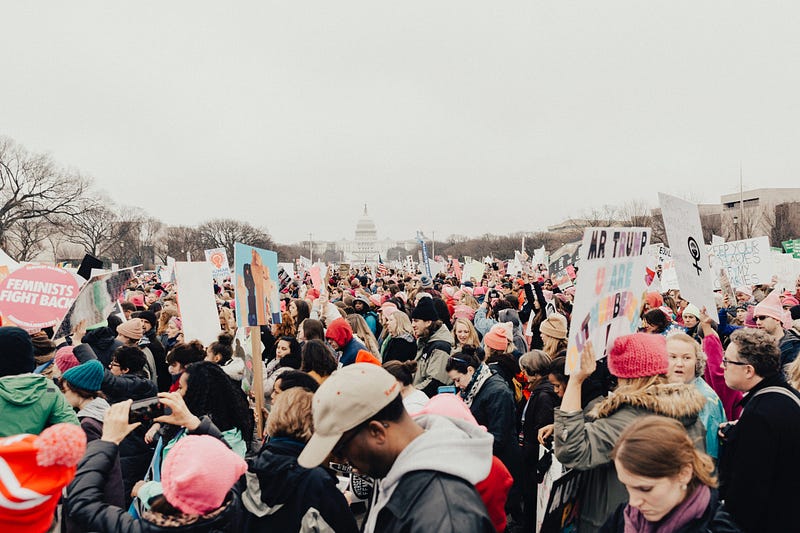
Equality of rights under the law shall not be denied or abridged by the United States or by any state on account of sex. The Equal Rights Amendment, introduced in 1923, passed by Congress in 1972, not ratified.
The United States has made considerable progress in improving human rights policies and guarantees but it is still deficient when it comes to women’s rights. For 95 years American women have been fighting for a guarantee of their rights in the United States Constitution. It is still not there.
This is unfinished business that needs to be finished. Equality between women and men is a basic human right that should be guaranteed in our Constitution.
Some people have argued that the 14th Amendment’s equal protection clause is adequate to ensure women’s rights. However it has never been interpreted to protect against sex discrimination in the same way the Equal Rights Amendment (ERA) would.
The late Supreme Court Justice Antonin Scalia said of the Constitution in 2010: Certainly the Constitution does not require discrimination on the basis of sex. The only issue is whether it prohibits it. It doesn’t.
Having an explicit Constitutional guarantee is important legally, morally and economically. While some laws have improved women’s rights these laws do not have the power and clarity that having the ERA as part of the Constitution would carry. Also, it would serve to create more consistency among the states in their treatment of women and women’s rights.
This amendment would provide a clearer and stricter judicial standard for deciding cases of sex discrimination. It would ensure that sex discrimination gets the same level of strict judicial scrutiny that race discrimination gets now.
Currently the only right the Constitution specifically affirms to be equal for women and men is the right to vote guaranteed by the 19th Amendment ratified in 1920.
The ERA would guarantee that all rights affirmed in the Constitution are held equally by all citizens without regard to sex.
The 24 word Equal Rights Amendment to the U.S. Constitution was finally passed by both houses of Congress in1972. However it was not ratified by the necessary 38 states. While 35 did, 15 did not.
The states that did not ratify the ERA are Nevada, Utah, Arizona, Oklahoma, Missouri, Arkansas, Louisiana, Illinois, Mississippi, Alabama, Georgia, Florida, South Carolina, North Carolina, Virginia.
It took 49 years from the introduction of the ERA to have it passed by Congress. It has now been 46 years since it was passed and still not ratified. The time has come to give all women in our country the rights they deserve.
Opinion Research Corporation in a survey showed that 96% of Americans believe male and female citizens should have equal rights. And 88% said the Constitution should guarantee those rights.
Amazingly 72% thought the Constitution already guarantees women equal rights.
Most Americans think the United States is the world leader in providing equal rights and opportunities for women. But they are sadly mistaken.
Many other countries have guarantees of equal rights for women in their constitutions and have policies which are more gender equal.
The World Policy Analysis Center reports there are 197 constitutions in countries around the world. What percentage of these countries has explicit guarantees for gender equality in their constitutions?
There are 84% or 165 of these countries that do. Only 32 do not and one of these is the United States.
Americans cannot be proud of this legacy. We should be concerned about how this appears to other countries throughout the world that look to the United States as the leader in freedom, democracy and human rights.
The World Economic Forum each year publishes a list of the most gender-equal countries. In its 2015 list the United States ranks 28th.
Some of the countries ranking ahead of it are ones that would not be expected: Burundi, Estonia, Latvia, Nicaragua, Philippines, Rwanda, Tunisia, Moldova and Slovenia. Number one on the list of most gender-equal countries is Iceland for the seventh consecutive year.
In 1979 the United Nations adopted The Convention on the Elimination of All Forms of Discrimination against Women (CEDAW). It is an “international bill of rights” for women. It seeks to end discrimination, establish equality and fight violence against women.
CEDAW has been ratified by 186 of the 193 member states of the United Nations. The United States is one of seven states not yet ratifying it along with Iran, Palau, Somalia, South Sudan, Sudan and Tonga…not the best company to keep.
It is past time the United States shows it is the leader in human rights and women’s rights that many believe it is. The ERA should be ratified and made a part of the Constitution now. This business should be finished.


