
Women Who Stayed Single, No Kids, in Their 70s: How Are They Doing?
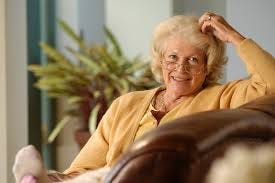
They are the women of the quadruple whammy, and they are doing great
If you are a woman, you have no kids, you have been single all your life, and you are in your 70s — well, mythologically speaking, you have four strikes against you. Men, people with kids, people who are married or have married, and young people are more often celebrated, respected, valued, and privileged. Some people will even call you names designed to evoke pity, such as elder orphans.
So what is life like for people in that quadruple whammy category — women who are in their mid-70s and have never married or had children? Do you think they are isolated and alone, poorly educated and just plain poor, unhealthy physically and mentally, needing more help than other women but giving less? That’s the stereotype.
Now, thanks to a study of more than 10,000 Australian women of all marital and parental statuses, I get to tell you about the reality. It is not a new study, but it is well worth revisiting.
The study compared five groups of women in their 70s:
§ Lifelong singles with no children
§ Married with children
§ Married with no children
§ Previously married with children
§ Previously married with no children
Here’s what the researchers found.
Education and Income
First, the lifelong single women were more highly educated than any other category of women. Nearly 40% of them had post-secondary education — at least twice as many as in any other group. They seemed to turn that education into income: They were more likely than the other women to say they could manage easily on their income.
Physical Health
On just about every measure of physical health, the lifelong single women did just the same, or even better, than the other women. Specifically, the lifelong single women:
§ Were least likely to be smokers
§ Were most likely to be non-drinkers
§ Had the healthiest body mass index
§ Had the fewest number of diagnoses of major illnesses
There were no differences among the various groups of women in general health, bodily pain, number of symptoms, doctor visits, surgical procedures in the previous three years, hospital admissions in the previous year, and falls requiring medical attention during the previous year. Only in physical functioning do the lifelong single women seem to score a bit worse than two of the other groups, previously married with no children and married with children.
Giving and Taking
The lifelong single women:
§ Were more likely to have their own private health insurance
§ Were more likely to provide volunteer services than any of the other groups of women
§ Were more likely to use formal services such as meal deliveries and home nursing
§ Were no more likely to be cared for by family members
Contrary to other studies, the single women in this study were less likely to provide care to other family members. However, it may be that this study counted care to all family members, including spouse and children, which of course lifelong single women with no children do not have. Studies that look separately at care given to parents, for example, show that single people do more than their share of that. The lifelong single women in this study were, however, less satisfied with the social support they received.
Mental Health and Social Activity
The lifelong single women:
§ Were active members of formal social groups
§ Had social networks that were larger than those of the married women with or without children
§ Were more optimistic
§ Were less stressed
The five groups of women did not differ in their overall mental health, social functioning, hardiness, or satisfaction with their neighborhoods.
Conclusions
Here are the authors’ conclusions:
“Overall, there is no evidence…to suggest that older never-married childless women are in poor physical or emotional health, or that they are high users of medical services…Thus, the view that these women constitute a social burden is not supported.”
I’d go a bit farther than that. I think they are doing quite well, and far better than our dour stereotypes would ever have predicted.
Reference:
Cwikel, J., Gramotnev, H., & Lee, C. (2006). Never-married childless women in Australia: Health and social circumstances in older age. Social Science & Medicine, 62, 1991–2001.
For Even More on People with No Kids and Lifelong Single People, Including Men
In the last few years, some terrific research and scholarship about people who have no children has been published. You can find some discussions of the recent work, as well as earlier contributions, here. For more about lifelong single people, click here. The research I described here only included women. To read about gender differences in living single, marrying, divorcing, remarrying, bereavement, living alone, and living apart together, click here. Finally, maybe this will also be of interest: Single, No Children: Who Is Your Family?
[Want to learn more? Take a look at this collection of articles on all sorts of topics relevant to single life. Watch my TEDX talk, “What no one ever told you about people who are single.” Check out my website. Disclosure: Links to books may include affiliate links. Finally, my “Single at Heart” blog that I have been writing for Psych Central since 2011 is ending in 2020; I am updating many of those posts and moving them to this blog on Medium.]