
Women Everywhere are Drowning in Sand
Women’s mental load & emotional labor are not female issues, but symptoms of deeper social inequities

“Drowning in sand,” is how a dear friend described to me her daily experience of being a working mother.
My friend is bright. Capable. Tenacious. But embedded in her roles as an advocate for her children, an administrative assistant that keeps our work site running, a manager of all the details at home, and a community activist (because the work needs to get done), is a heavy expectation that she will juggle all the logistical and emotional details to make it work.
Drowning in sand is a reference to the time management metaphor of filling one’s time (a cup) with priorities (big rocks) and then intermediate tasks (pebbles), before the details (sand) fill up one’s time.
Drowning in sand is also a visceral description of what managing invisible but essential details across all areas of our and our families’ lives feels like.
And this was before the pandemic.
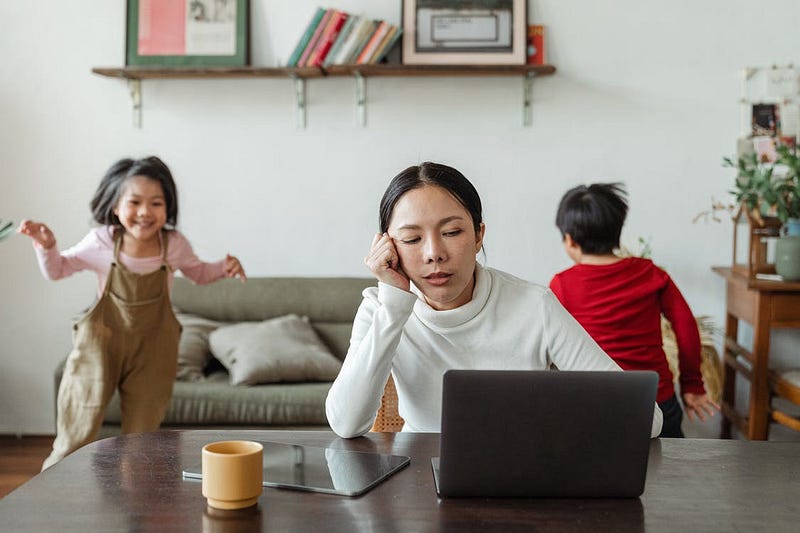
Now, moms who were already “working the second shift,” are working a third and even fourth-often simultaneously. Now, as school, work and home space and roles collapse, the entire world demands our attention through a proliferation of platforms, apps and texts, and simple tasks like food shopping require the forethought of small vacation without any of the joy, we are buckling under the weight of our daily lives.
As women working at home during a pandemic, our lives have become even more complex and relentless. We navigate Zoom calls for work while kids burst into our “office,” — if we are privileged enough to have a door to separate our space — and oftentimes our partners are complacently in the next room. We mull over bubbles/pods that are large enough for our children to interact with other children, and small enough that we are being responsible to our larger community — while trying to make sure no kids are left out.
We grapple with the terrible paradox of this labor: the quiet shouldering of all of these activities is both paramount and invisible. Rarely will someone in our family or larger community recognize the labor when we are silently and feverishly making it all go smoothly.
We create color-coded matrices for September that detail how we will impossibly juggle work responsibilities with child care and school responsibilities, and we outline plans and contingency plans. We calculate and recalculate the family budget and see how we can flex or work less time (even to the detriment of our later careers) to support our elementary kids who are virtually schooling, and still pay the mortgage.
We also try to eek out time and energy to fund-raise, organize meal trains and volunteer for our many neighbors that need assistance right now. We worry about our children’s emotional health, and the world’s future. And we answer the call from another mom friend who is at her bursting point and spend hours talking her off the metaphorical (or literal) bridge.
And on top of it all, we are bombarded by messages about how to leverage this time to learn a new language or deep clean our closets.
We give. We accommodate. We stretch. We absorb.

And all along, in the one quiet corner left of our mind, we grapple with the terrible paradox of this labor: the quiet shouldering of all of these activities is both paramount and invisible. Rarely will someone in our family or larger community recognize the labor when we are silently and feverishly making it all go smoothly, but someone will always comment on the fall out when a small part slides out of our capable hands.
We are silently granted the responsibility, but are not granted the time, energy, and basic human right of single-tasking to complete all of these urgent tasks.
“Emotional labor is not an issue of interpersonal conflict, it’s an issue of structural inequality.”
- Leah Cowen, writer, editor and contributor to Imkaan, a Black feminist organization dedicated to addressing violence against Black & minority women
And despite all that we do, we still somehow feel like we are failing. Despite all that we do, we will never be able to meet the impossible social expectations society has of us women.
Recently, I watched my older son try out for soccer while I sat in our car in the parking lot (due to new safety precautions), and simultaneously spoke with a loan officer on the phone to lock into record low refinance rates, and attempted to keep my middle son from climbing out the sunroof. I then scrambled out of the car after our youngest son who had decided to sneak outside and pick up all the cones used to mark the check-in line, and everyone smiled at my flustered, overloaded self as if to say, “Looks like a mom.”
And I pondered, what will be the cost if we stay course? What will be the damage to our collective mental and emotional wellbeing as not just mothers and working females, but as human beings within the coming year?

An unsettling metaphor comes to mind. Months back, I listened to a fascinating talk on my commute (this was back when my drive to work afforded me the 20 minutes to just listen to news and drive), about how the ocean has buffered climate change by absorbing more than 90% of the heat and carbon dioxide trapped in our atmosphere by greenhouse gases. The scientist elaborated that shortly, the ocean would no longer be able to absorb the heat without great consequence.
Our immense body of waters has reached its capacity.
Gripping the steering wheel, grief swamped my body not just for the desecration of our natural word, but because as a woman, I viscerally understand what it is to buffer problems around me despite great personal cost.
As women, for too long we have supported our collapsing, inequitable social support systems, underfunded schools, and our own households with our unpaid and invisible time, energy and talent.
And we are at our capacity.

As Deb Perelman of the New York Times rails against the impossible pressures on working mothers in a COVID economy:
“Why isn’t anyone talking about this? Why are we not hearing a primal scream so deafening that no plodding policy can be implemented without addressing the people buried by it?”
She concludes what I have observed across all of my mom groups and friendships: we are simply so bone-deep exhausted with actually managing our families’ lives and work, we do not have the energy to also educate the world about our invisible labor, such that change can happen.
What is mental load and emotional labor?
Let’s be clear. We are not just talking about doing more than our share of the cleaning, grocery shopping, and childcare, although according to numerous sources, including a recent review of a report put forth by the United Nations, most women do 2.6 times the amount of unpaid chores and childcare for their families compared to husbands/male partners even when working outside of the home.
Mental load is the additional managing and the coordinating of all the essential tasks and details of a household — and please recall, we often shoulder a disproportionate amount in our workplaces too. The quiet, seamless acts we engage in are like the connective tissue of our social organism: they bind, hold and make the larger systems work.
Mental load is the deeply energetic, “behind the scenes work,” that makes not just a family, but a company and a community run smoothly. Again, this work is in addition to all of our more explicit roles and responsibilities.
Central to mental load is the concept that we need to ask our partners to help, versus have them survey the situation, know the big picture behind what needs to happen and step in. Inherent in this idea is that we silently — and with no consensus, wage or glory — were made the chief domestic officers of the home.
When our husband or partner sputters that “we only needed to ask for help,” he is only in that moment affirming the silent role we carry as manager of all things. This concept is perhaps most brilliantly rendered by French comic artist, feminist and computer science engineer, Emma, who incidentally jump-started the conversation about mental load.
Emotional labor is intimately related to mental load. Women also engage in more than our share of emotional labor, which is the unpaid, invisible but essential work related to managing one’s own and others’ emotions for the goal of others’ comfort and success. As, writer Gemma Hartley reflects in the wake of her viral article Women Aren’t Nags — We’re Just Fed Up:
“There is a lot of pain in feeling invisible, and that is precisely how many women feel when they perform emotional labor.”
Again, integral to emotional labor (as with mental load) is:
- The social message that women are somehow better equipped to do this labor and thus should do it without complaining
- The current reality of the labor being invisible, not valued or compensated, and in addition to all the other work women do.
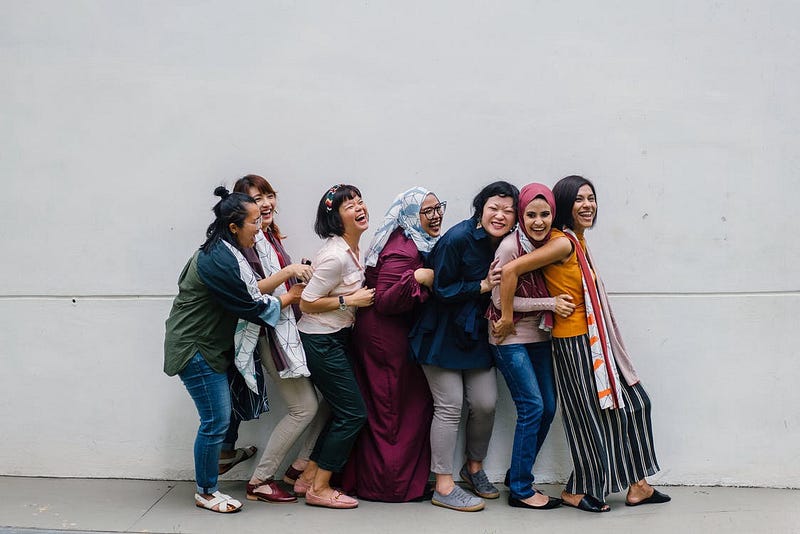
Experiences of mental load and emotional labor are uniquely personal. Race, gender identity, culture, socioeconomic status, and other life experiences intersect and interact. My experience of invisible labor is as a neurodiverse white female, in a hetero-normative, biracial, mixed-immigration status marriage, from a social-economic place of relative privilege, and as a mother of three biracial boys with ADHD and learning differences.
Please consider the below voices, and many others, as starting points to better understand the uniquely personal narratives behind how mental load, emotional labor, gender, race and racism can intersect:
- Leah Cowan illuminates the complex interaction of power, race and added emotional labor for women of color.
- Tsedale M. Melaku describes the additional mental and emotional load of being a lawyer and woman of color in elite spheres.
- Rania Siddique’s investigates the complexities of a “unique form of emotional labor” that women of color therapists experience.
- Rebecca Stevens A. describes the tremendous emotional and mental load of navigating people’s stereotypes, as a Black woman.
- Families of color describe schools reporting them to CPS due to missed Zoom lessons and supposed truancy last Spring.
While we must recognize privilege, and how race and gender identity intersect with emotional and mental load, no woman is entirely free of this extra labor. One simple example of this is how Californian state lawmaker Buffy Wicks recently traveled to and then voted on the Assembly floor with her swaddled, crying 1-month-old after her request to vote in proxy was denied.
As Leah Cowen articulates in her incisive Ted Talk, “Emotional labor is not an issue of interpersonal conflict, it’s an issue of structural inequality,” describing both inequities across gender and race. Absorb that for a moment.
It is far too compelling to pin blame on the flustered, apologetic, multitasking mom in front of us, instead of investing the thought and energy to understand the underlying reasons.

It is far too easy to shame moms for their mom rage, or caricaturize them as witches (or worse) instead of peeling back the layers to understand the social and familial pressure on them to manage their (and other’s) emotions, bodies, households, professional lives and communities, without ever breaking a sweat.
And the pandemic has doubled that pressure.
The work we feverishly do is invisible and important. It is both invaluable, and not valued at all.
We exist in the murky cognitive dissonance of our society. We wade through it daily.
What can you do about it?

Name it Acknowledge mental load and emotional labor exist. When we start to talk about a phenomenon we make it visible. Common language offers us the power to name, recognize, and build a shared consciousness around these issues of inequity so that we can start to address them.
Call it out. Talk about it. Bring it out of the shadows.
Don’t tell us to take a damn bubble bath Please don’t tell us to indulge in some self-care. No amount of bubbles is going to wash this problem away. Please also don’t tell us to take data on the issue, or offer talking points so that we can address the problem with our spouse in a way that does not offend them, disrupt their sense of manhood, or otherwise make them feel uncomfortable.
Mental load is not a women’s problem, but a rather a symptom of deeper inequities we must address as a society. For too long we have buffered and absorbed all the ways in which social systems are failing. For too long we have grappled with deeply gendered expectations, in which women face impossible standards. For too long, we have met the social expectations from a young age that we will juggle all the balls and do everyone’s bidding.
So, husbands, children, employers, and everyone who benefits from women’s invisible and essential extra labor: step up.
Let’s raise our children differently While we work at recognizing that this is a collective issue, and start to unravel the deep inequities that drive extra female mental load and emotional labor, let’s start to address this with our children.
Let’s teach all of our kids, regardless of gender identity:
- how to do basic chores
- how to plan for simple events and then honor the (often invisible) work behind the planning
- how to be self-aware and regulate one’s own emotions: empathy does not mean being responsible for managing other’s emotions
- the concept of mental load
- that a person can only do one thing at a time: “one mind, one task,” should be our mantra
The caveat? I bet you are already protesting this out loud: our kids will learn what we actually model for them as parents, versus what we want to explicitly teach.
So let’s do the work for both this generation and that of our children.

The pandemic has exposed deep inequities in our society. We can ignore what has been revealed and stay huddled in our homes, or take this as an opportunity to reckon frankly with these real issues, knowing we can do better.
Let’s do the latter.
Because instead of drowning in invisible sand, the women in our lives have the talent, grit and vision to climb mountains. And when they do, all of society benefits.