
Women: Are Women better than Men?

Introduction:
Traditionally, men have claimed an exalted status in the world because of their sex. Having created the myth of their superiority, they have enforced it by traditions and the way that they have structured society.
Recent research challenges the accepted view of many about the roles of hunters and gatherers, and I touch on this research later in this article. But first, I want to do a simple recap of our male-dominated world, and how women are often seen as less than men. The truth is vastly different.
For so much of our history men have not only claimed that they were superior to women, but they have gone further stating that women were meant to serve men and that they must do whatever men tell them to do.
The world has changed of course, but in many parts of the world, this kind of culture and thinking remains self-serving and unchanged.
There are obvious differences between men and women, and as a man who loves science, I have conducted my own real-life study to confirm that this is true, just as women that I have met have undertaken their own research along these lines.
The Male Bias
The male bias that permeates our societies is at times overwhelming.
Before the pill, women faced pregnancy and shame simply because they wanted to exercise the same sexual freedom that men naturally claimed for themselves.
It was OK for a man to have sexual dalliances and it was considered manly to do so, but a woman who demanded that same freedom was branded a whore, and socially shamed. But it was a two-sided coin, because those males who did not fit into this mould, were also shamed, and in some cases considered to be less than men for thinking differently.
It has often struck me as ironic that for every male conquest, there was a vanquished woman who was affected, often in some terrible way. It was okay to take advantage of women, but women should not act shamelessly and indulge their own passions. But if they had not, how could men ever have been successful in their amorous pursuits?
Sexual predation was natural, and inevitable as men structured society to please themselves and to keep women in their place. Barefoot and pregnant.
There is nothing new or unusual about any of this, it is just how the world was, and still is in many places.
I remember the story of a husband in the 1800s who would frequently check the house for dust on all kinds of furniture, including cupboards, wardrobes and the like, and then beat her if anything displeased him. It had nothing to do with dust or dirt, and it had everything to do with male dominance and power.
There was a time when a man could rape his wife, and that wife had no recourse in law to address the outrage done to her. In earlier days, men automatically took control and ownership of the property and wealth of their partners.
In more recent times, I worked with a woman whose husband demanded that everything in his home be kept in immaculate order, telling her where everything should be kept, and how it should be positioned just so, neat and tidy.
We all have heard stories of the Taliban and how they treat women. The world has changed, in some parts, but there are many parts of the world where this simply isn’t true.
How Men Treat Women
The problem essentially is how men have portrayed women and tried to assign them a lower status, and even tried to deprive them of the right to vote, claiming that women were not capable of making informed decisions.
But that was never enough for some men who tried not only to take away women’s rights but went further claiming that their unhappiness with their place in the world was a sign of mental imbalance.
Female Hysteria
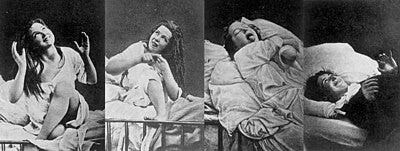
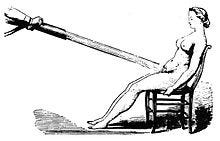
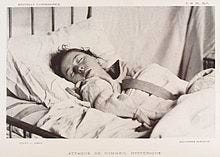
According to Wikipedia: “Female hysteria was once a common medical diagnosis for women, which was described as exhibiting a wide array of symptoms, including anxiety, shortness of breath, fainting, nervousness, sexual desire, insomnia, fluid retention, heaviness in the abdomen, irritability, loss of appetite for food or sex, (paradoxically) sexually forward behaviour, and a “tendency to cause trouble for others.” (1)
Women Writers
There are many examples of how women of talent struggled in the world. I am not going to try to give an exhaustive account of all of these, so I will simply restrict myself to a brief outline of women writers because we are writers and readers who treasure the written word. Women had to hide their true selves and pretend that they were men to be accepted as equals.
But this also shows how women had a natural competence that men did not understand, or want to accept.
- George Eliot (Mary Ann Evans): Wrote — “Middlemarch” and “Silas Marner”.
- Currer Bell (Charlotte Brontë): Wrote — “Jane Eyre”.
- Acton Bell (Anne Brontë): Wrote — “The Tenant of Wildfell Hall.”
- Ellis Bell (Emily Brontë): Wrote — “Wuthering Heights.”
- George Sand (Amantine Lucile Aurore Dupin): French novelist. Wrote- “Indiana” and “Consuelo.”
- Isak Dinesen (Karen Blixen): Danish novlist. Wrote — “Out of Africa.”
- James Tiptree Jr. (Alice B. Sheldon): Alice B. Wrote — Science Fiction.
- Andre Norton (Alice Mary Norton): Wrote Science Fiction.
- Robert Galbraith (J.K. Rowling): Wrote — Crime Novels under this name.
- George Sandys (Lucy Hutchins): Wrote — Travelogues and poetry in the 17th century.
Are Women able to do things Better than Men?
At the start of this article, I asked the question, of whether women are better than men. The truth is that we are all human beings, with different kinds of intelligence and abilities, able to do a wide range of things, and so women and men are both capable of great things. There are men who are more intelligent than some women, and there are women who are more intelligent than some men.
One of the truths of life that moves me is how many extraordinary women never had the chance to fulfil their enormous potential. Men often argue that the proof that men are superior lies in the fact that men occupy most positions of power in the world and that human development in all its aspects has been driven by men. They quietly ignored the fact that they refused to allow women to compete on an even basis, and did everything that they could to make sure that they could not participate in thinking and research, or challenge their social order.
There is no need to talk about men and women as being less or more than each other, they complement each other and add value to each other, and so all we need to do is acknowledge the richness of human diversity, and cherish each unique soul.
There are clearly things that men can do better than women, but there are also things that women can do better than men.
- Emotional Intelligence and Empathy: Current research demonstrates that women have higher levels of emotional intelligence and empathy. Women are able to navigate complex social situations, are great with interpersonal relationships, and are important in a socially interconnected world.
- Communication and Relationship Building: Women are active listeners, foster open dialogue, and build rapport. These skills are important in leadership roles, effective communication and relationship-building.
- Multitasking and Organization: Some argue that women can multitask although the evidence for this is not overwhelming.
- Conflict Resolution: Compromise and reconciliation are natural strategies employed by women. This creates common ground for resolving issues and helps create harmonious social environments in all aspects of life.
- Risk Management and Decision-Making: Women tend to be cautious in decision-making, which can lead to careful risk assessments and mitigation strategies.
- Adaptability and Resilience: Women can quickly adapt to change and adversity, and this is key to dealing with the uncertainties in the modern world.
- Collaborative Leadership: Women tend to emphasize collaborative and inclusive leadership styles.
Hunters and Gathers
University of Delaware anthropology professor Sarah Lacy, recently published articles in Scientific American and wrote two papers for the journal American Anthropologist after carrying out research with her colleague Cara Ocobock from the University of Notre Dame.
Their research was long-ranging and suggested that our understanding of hunters and gathers is incorrect. After reviewing archaeological evidence and literature, they found little evidence to support the male-created idea that men were hunters and that women were the gatherers.
They found that women were physically capable of hunting and that there was no evidence that women did not hunt. In the past, researchers assumed that men played this dominant role, but that is part of the male bias and is not supported by any definitive evidence.
How do we really know, beyond the assumption of men, who did what, and who made what? There is no evidence to support the view that there were sexual differences in their roles.
Men are generally better at things that require speed and power. Women are better at endurance, including running, and these abilities are complimentary as each adds to the ability of earlier humans to survive.
The hormone estrogen is more prominent in women and can increase fat metabolism, and this allows muscles to have a long-lasting energy source.
An examination of skeletal remains showed there is no difference in the trauma patterns between men and women, and that suggests that they were doing the same activities.
Anthropologists Richard B. Lee and Irven DeVore published “Man the Hunter,” a collection of scholarly papers presented at a symposium in 1966.
They assumed that all hunters were men, but they never provided any evidence to support this assumption. Gender bias by previous scholars is rampant throughout the literature, and cannot be dismissed as the views of ill-informed women who were largely ignored and devalued. Television cartoons, feature films, museum exhibits and textbooks constantly reinforced this idea.
It can be argued that for 3 million years, males and females have acted in both roles and that neither role was the exclusive domain of either sex. We may never know how our ancestors lived, but it is foolish to claim that women never played a larger role in those earlier times.
Conclusion:
Men and women bring unique qualities to the challenges of life, and each contributes in his or her own way. It is foolish to claim as some still do today, that women are less than men in some fundamental way and that because of that perceived difference, they should be treated differently.
Each one of us brings our own intelligence and abilities to this miracle of life, and we are equal in this struggle of life. Human potential, perhaps is unlimited, and it seems foolish to pretend that almost half of the world’s population is somehow less and that women don’t have an equal right to this wonder of life. At the same time, by undervaluing the role that women should be playing in society, we deprive society of the awesome potential that women have.
- Wikipedia — https://en.wikipedia.org/wiki/Female_hysteria
Copyright ©️ 2023 Philip Temple All Rights Reserved.
Finally, I would deeply appreciate any small contributions that you might be able to make, to help me on my writing journey.