
Women Apologise Too Much According to Research
Only say “sorry” when you actually need to
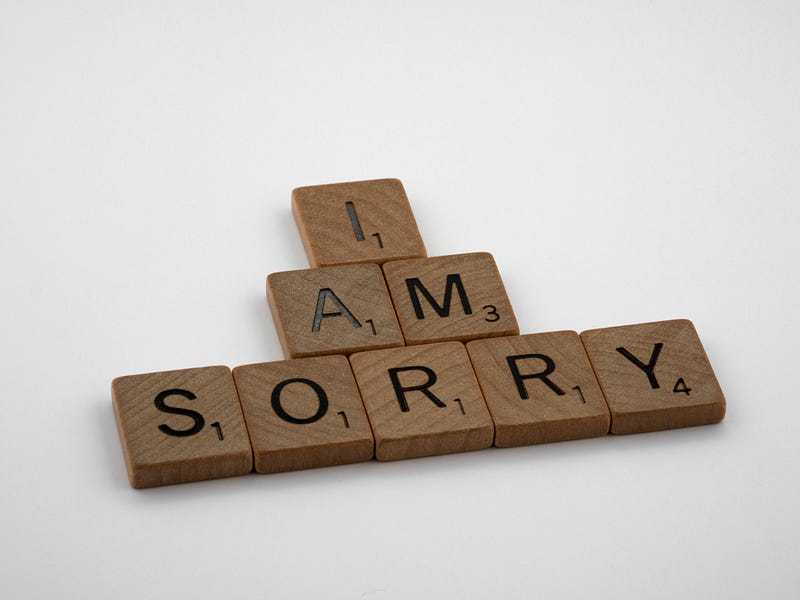
I was raised to be courteous of other people and to be aware of other people’s feelings. While that sentiment is nice, it actually taught me a terrible, primarily female habit: apologising too much.
I had this epiphany when I went to the movies to see A Simple Favor. In the film, Blake Lively’s Emily tells Anna Kendrick’s Stephanie to stop apologising because “it’s a f***** up female habit.” That one line struck me to my core. I do that too. I apologise for everything, even if it is something that is out of my control, such as another person’s mistake. I’ve honestly had instances where I’ve apologised when someone else has bumped into me because they weren’t looking.
After seeing this film, I also starting noticing other women over-apologising everywhere I went. For example, if a female friend declines an invitation out, she says sorry. My male friends, on the other hand, simply say they are unavailable without feeling the need to apologise. One of my female friends, in particular, apologises too much. Just this last weekend she bought an Elsa doll for my daughter’s birthday and, when she noticed that my daughter already had one, my friend apologised several times about it.
Moreover, I teach at an all-girls high school, so my workdays are filled with hearing apologies. It is not uncommon to hear a student say, “I’m sorry, miss, could you please explain it again?” My students say sorry before asking me to do my job.
The research
Digging a little deeper, I found that the film was correct and women actually do apologise more than men.
A study completed by Karina Schumann and Michael Ross showed that, although both men and women are both quick to apologise when they commit an offence, women have a lower threshold of what is considered offensive behaviour. In other words, women thought more instances deserved remorse than men, therefore they apologised more.
It may start from childhood when girls are often taught to be submissive and to conform, while boys are praised for being assertive individuals. Very often girls are considered ‘bossy’ if they are assertive. As a result, often women will apologise to show that they are submissive. You often hear women say, “I’m sorry but could you please…” to soften their request and avoid being perceived as bossy.
Sometimes the need to apologise might also come from being rejected by a caregiver. They are used to not having their needs met as children and don’t believe that they are worthy as adults.
Does it matter?
Apologising is a very important act because it can help rebuild relationships with those whom we have wronged. Showing remorse for our wrong-doings actually shows strength in character and humility. However, despite the good intentions of trying to be kind and courteous of others, my over-apologetic manner was doing more harm for me than good.
In the workplace, too many apologies could show a lack of professional judgement because you’re effectively taking responsibility for an outcome, whether or not it was even your fault. It minimises yourself, your presence and your contributions.
Furthermore, being overly apologetic is a sign of poor self-esteem. A study published in the European Journal of Social Psychology found that participants who apologised less often had a greater sense of self-worth and greater self-esteem. I personally suffer from very low self-esteem from years of being bullied at school, and I can see how my very apologetic nature prevents me from improving. I am a constant people-pleaser.
Finally, this habit weakens the impact of necessary apologies. If you are saying sorry simply because it took you a day to respond to a text message, why should your genuine apology for a real fault be taken seriously?
What I do instead
A Simple Favor was released in 2018, and ever since then, I have transformed my speech. I no longer apologise unless the situation really warrants one. Rather, I am changing my vocabulary. Here are some examples:
- when I’m at a funeral, instead of saying “I’m sorry for your loss”, a simple “my condolences” suffices.
- If I need to ask for help, instead of saying “I’m sorry, but could you please help me”, I now start with “excuse me.”
- I also try to remember the power of “thank you”. Instead of apologising when I’m late, I’ll say “thank you for waiting for me”.
When I find I am about to apologise, I stop to quickly assess the situation and decide how much an “I’m sorry” is warranted. I am more self-aware now.
I also have found comfort in saying no. As a people-pleaser, I used to find it difficult to say no to things, resulting in me becoming stressed. If something forced me to say no (such as clashing schedules), I would feel guilty about it and feel the need to apologise profusely. Over time, I’ve dropped that guilt and just decided that I need to say no more often. Now I am very comfortable saying no to things and don’t feel the need to apologise for it.
I think these days I am acting more assertive, whilst still maintaining kindness towards others.
Key takeaway
In A Simple Favor, Emily also says that women “don’t need to apologise for anything. Ever.” Obviously, I don’t think that is true because if you are at direct fault, an apology is necessary. It is character-building to admit fault and it restores relationships. However, there are many instances that do not require an apology.
So to anyone who has a similar habit, I challenge you to be aware of when you apologise. Ask yourself: Does this instance warrant an apology? Are there other words you could use instead? Where does your deep-rooted need to apologise come from?
Being more self-aware and developing confidence in your actions, wants and needs, will help you kick the habit.
Words have power. Reclaim the power of your words.