
Woman Surprised Linkedin Selfie Attracts Creeps and Not Business
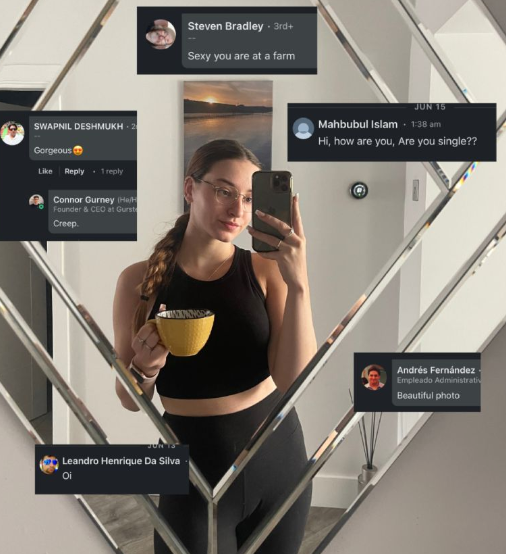
This is Danielle Theobald. She is one of a growing number of women on Linkedin bringing a new energy to the stuffy platform of professionals. What she has to say is powerful and has huge appeal. She doesn’t take any shit from anyone, especially men.
And Theobald has a point.
Linkedin is full of creepy men invading the social platform, sending unsolicited DM’s, and acting like horny wankers. As a generalization, it’s mostly Indian males. Before you jump down my throat and argue against this fact, India is Linkedin’s 2nd biggest market. Of course, the majority would be men from India.
It was also old white dudes making the usual complaints about how Linkedin isn’t Facebook or how the platform has slowly devolved into a beauty contest much the same way as Instagram. ‘This isn’t Facebook’ first entered the conversation almost a decade ago when the platform was hit by the first wave of new creators. Video creation was introduced and nobody gave a shit about the angry voices wanting to keep the site ‘professional’.
It’s the idea of ‘professionalism’ that has changed.
Here’s Brad, an old man desperate for the world to return to the 1950s:
“And for what it’s worth your attire in your post is not particularly business like. It would be different if you were a fitness trainer or the like. That disconnect will clearly bait the hook for alot of guys to Comment.”
Brad’s hole got deeper as he complained about skin on show.
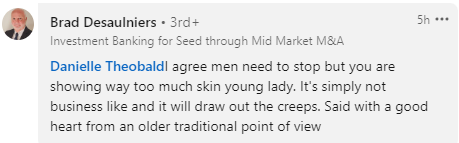
People are not going to work in their business suits anymore Braaaaaaaad. Fact.
In the UK, suits have been removed from the index that charts inflation. Apart from the cost, Covid changed the working environment where suits are no longer required for day-to-day business.
Dependent on your industry, it’s perfectly reasonable to post selfies in spandex. Activewear has taken the world by storm. The introduction of an expandable gusset (preventing camel-toe) was a game-changer. Now, more than ever, women are comfortable wearing this type of clothing to work. Succesful women too. Everyone from Kim Kardashian to Joyce the octagenarian who lives next door to me.
As (men and women) are often told, “who the fuck do you think you are to tell me how I should dress?”
Meanwhile, back on Linkedin World, women like Theobald are getting upset and lashing out at people telling her to be more professional. And she’s right to get angry…to a point.
This is where I appear to be just another old creep wanting the world to conform to my idea of professionalism.
Theobald’s posts aren’t about her brand or her marketing skills.
Is the picture above a clear demonstration of what she can bring to the table? Is Theobald the brand? And that’s where the disconnect occurs. If she was honest, she would tell you she knows exactly what she’s doing when posting a selfie. She’s promoting sex. It turns the algorithm on and sends her post skyrocketing. Now that’s great fucking marketing!
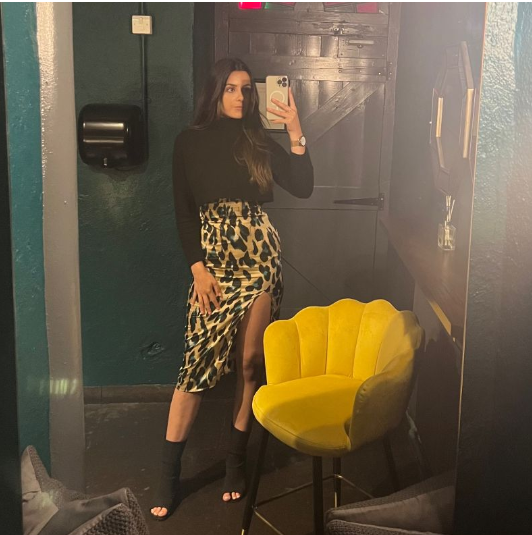
Here’s Cat Philp.
Cat IS the brand. She sells herself. She’s pretty good at what she does. There’s no disconnect between her image and the message she posts. And yes, it’s incredibly sexy and provocative. Power is a turn on and Philp oozes power. She attracts good and bad attention. Creeps and old men as well as fans and followers. This is her business attire.
Let me stress again, I have no problem with selfies or what women choose to wear. My problem lies with what they or anyone chooses to post with that image.
Roe vs Wade is a prime example. There are a thousand powerful images you can choose to use to illustrate this decision. Posting a glam selfie of you contemplating the decision is at best ill-advised, at worse, vacuous.
Linkedin is a professional platform. How you conduct your business is entirely up to you. How you dress is entirely your decision. Nobody has the right to tell you otherwise. But don’t start complaining and playing the victim when your post backfires and people choose to focus on your attire rather than your words.
The final word goes to the very wise old head of Debbie Friend. A woman accused of toxic feminity after she chose to comment on Theobald’s post. She had over 300 likes on her comment.
“Actually here’s a random idea. Maybe if women posted photos to match their wit and wisdom in the copy rather than selfies bearing no relation to the post then there would be less remarks on appearance.
Radical I know, but there are links to articles, funny gifs, newspaper headlines and a plethora of other types of content that can accompany a social media post to illustrate an idea or thought or frustration, so why do so many women choose instead to post a mug shot of themselves posing. Not doing anything, not actively engaged in sport or work or protest. Nope all we get is vacuous selfies followed by horror and dismay that people remark on appearance. It’s depressing. Women fought for so long for a seat at the boardroom table l, surely we are more than just our looks 😕 That’s not to say that it’s acceptable for people to make inappropriate comments and sexual references but LinkedIn feed has become a bland sea of the same selfies with little or no though put into the relevancy of the content. Let’s brighten up the feed with a bit of imagination.”
Theobald missed her point and called on her squad to bully Friend and take her down.
Now that’s professionalism.


