Summary
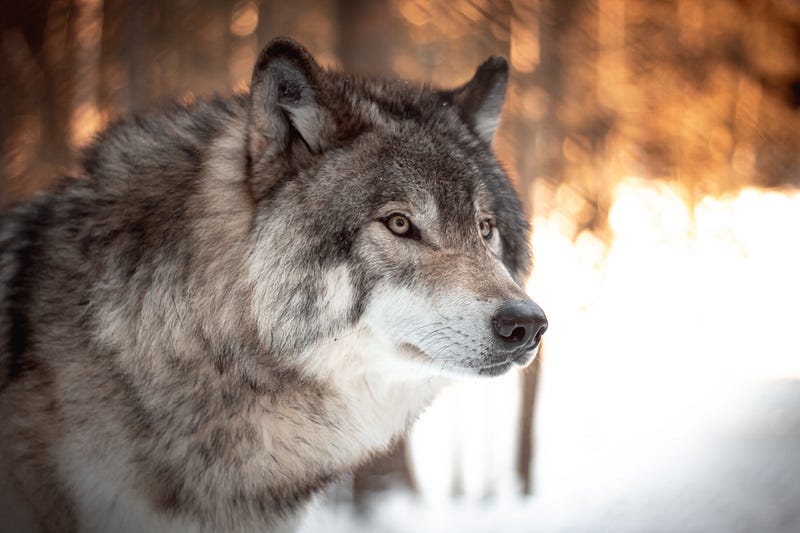
"Wolves" is a reflective poem exploring themes of freedom, wilderness, and human-animal kinship, accompanied by a serene photograph of a wolf and a recommendation for another related poem.
Abstract
The poem "Wolves" delves into the intricate relationship between humans and wolves, drawing parallels between their behaviors and instincts. The author expresses a deep yearning to connect with the wolves' heightened senses and their instinctive understanding of nature. Through vivid imagery, the poem portrays wolves as creatures emblematic of freedom and survival, roaming the land with a wildness that humans have largely forgotten. The poem also touches on the shared territorial instincts and the protective nature of both wolves and people. While acknowledging that wolves are not divine but rather similar to humans in their existence and struggles, the speaker finds solace in the idea of the remaining wild spaces embracing the wolves' untamed existence. The text concludes with a brief biography of the author, Lori Lamothe, highlighting her other works.
Opinions
- The author admires wolves for their acute senses, such as hearing a leaf fall from miles away and sensing changes like the approach of snow.
- Wolves are seen as symbols of an ancient, forgotten freedom that humans have lost touch with in modern life.
- The poem suggests that wolves and humans share similar social behaviors, including defending their territory and protecting their loved ones.
- There is a recognition that wolves are not supernatural beings but live and die like humans, yet the author is not interested in this direct comparison.
- The text conveys a sense of wonder and respect for the way wolves interact with their environment, emphasizing the importance of wild, open spaces for their existence.
- The inclusion of a related poem at the end suggests the author values the theme of nature and its connection to human emotions and experiences.