
Witold Pilecki– The Man Who Volunteered to go to Auschwitz
A brave hero infiltrates hell on earth to deliver intel from the inside
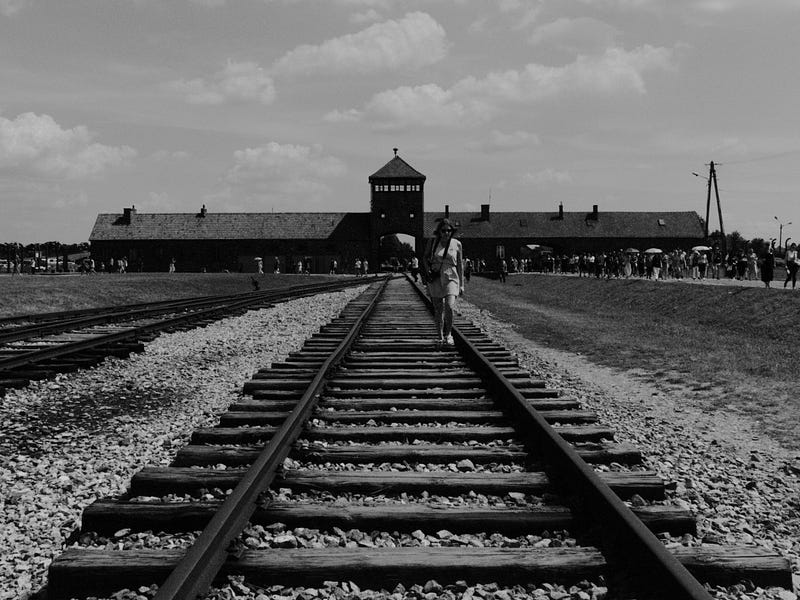
“They bet something, each of them put a banknote on a brick. Then they buried a prisoner in sand, head down, and carefully covered him. Looking at their watches, they counted how many minutes he would move his legs.” -Witold-
“Here we gave everything away into bags, to which respective numbers were tied. Here our hair of head and body were cut off, and we were slightly sprinkled by cold water. I got a blow in my jaw with a heavy rod. I spat out my two teeth. Bleeding began. From that moment we became mere numbers — I wore the number 4859.”
— Witold Pilecki —
That was the initial number forthat camp. A year later, the numbers would be over 15,000.
The first publication of Witold’s Report took place in 2000, 55 years after the war.
The plan
Witold Pilecki was a Polish cavalry officer, intelligence agent, and resistance leader. He served as a cavalry officer in the Polish Army in the Polish – Soviet War and World War II. Pilecki was also a co-founder of the Secret Polish Army resistance group and later a member of the Home Army.
Pilecki wanted to infiltrate the camp to get hands in information on the conditions and methods of execution so he could report the data back. Sept. 19, 1940, he arrived by willingly being captured.
Pilecki realized Auschwitz was not like anything the Resistance had comprehended.
He would soon spend two and a half years in that camp.
His intel was the first record of a Holocaust death camp to be obtained by the Allies. He escaped from the camp in April 1943.
Inside Auschwitz
While inside, Pilecki wrote detailed reports on the conditions inside. The gas chambers, the starvation, the abuse.
Released prisoners transmitted the first reports.
Some escapes were very dramatic, on June 20, 1942, a few prisoners dressed as SS left the camp through the front in daylight; they used a car to escape that belonged to the camp commander.
Other Information was transmitted via civilians.
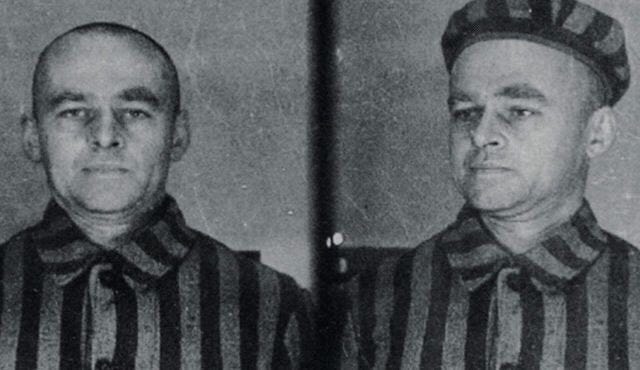
Here are some of the passages from Pilecki’s reports. Translated from Polish.
- “We were cut by sharp tools. Blows painfully cut into our bodies, but in our souls they found a field to be ploughed. All of us went through such a transformation.”
- “To be sure, tens of dead bodies denied that. We four dragged one, while going for the roll- call to the camp. Cold legs and hands, by which we held the dead bodies, bones clothed with livid skin. Now indifferent eyes looked out of livid-grey-violet faces with traces of beating. Some corpses, not yet cooled, their heads broken to pieces by a spade, were swinging in time with the march of the column, which had to keep pace.”
- “On our way to work in that commando, when it happened we were passing a warehouse, our sense of smell was struck by pork-butcher’s products. That sense, sharpened by hunger, was amazingly sensitive then. In our imagination, rows of suspended hams, smoked bacon, fillets, passed smartly. But — it’s not for us!”
- “Every day, while standing in the evening roll-call you could see, on the left wing of the blocks, next to those butchers, some wheel-barrows full of dead bodies of prisoners.”
- “They bet something, each of them put a banknote on a brick. Then they buried a prisoner in sand, head down, and carefully covered him. Looking at their watches, they counted how many minutes he would move his legs.”
- “Our camp was expanding continually. Not in the amount of prisoners — there were about 5–6 thousands of them almost all the time. But the serial number reached above 20 thousand — about fifteen thousand had been consumed by the crematorium.”
I have cited above, the entirety of his reports.
The escape
Pilecki and a fellow inmate escaped at night, They were working at a bread factory just outside the camp.
After the two SS guards were distracted, they stripped their stripes and had on civilian clothing underneath. They used a wrench to unlock the door and they ran; scattering tobacco behind them to distract the dogs.
They were shot at, but were able to make it to a boat dock where they use the same wrench to unhinge the boat and escape.
The outcome
On 25 May 1948 at 9.30 p.m. — upon the order of the Communist authorities, Witold Pilecki was killed by a shot in the back of the head. He died for the love of free Poland. The anniversary celebrations were held at the place of the execution of our national hero.