
Witnesses to Inhumanity
Bystander testimonies in the Chauvin murder trial
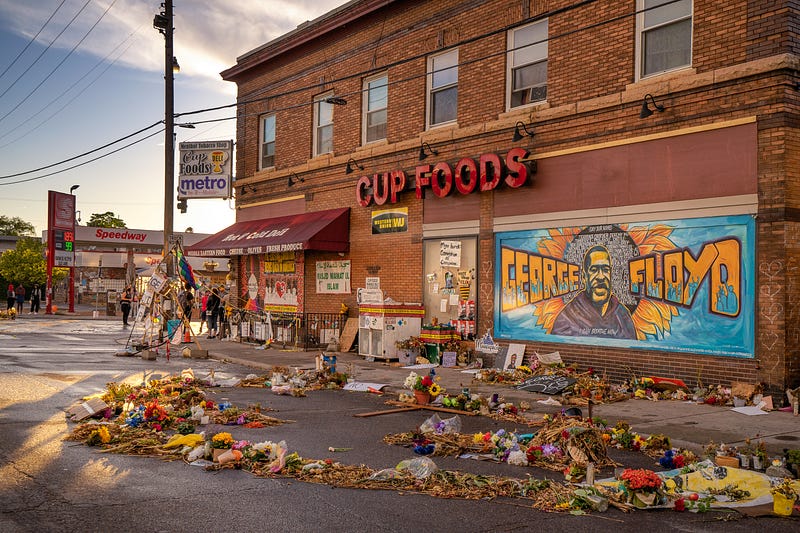
A child; three high school students; a 33-year old MMA fighter; a 61-year old man and a 27-year old off-duty firefighter all stood in a haunted cluster at the intersection of 38th Street and Chicago Avenue, in front of Cup Foods in Minneapolis, watching in livid horror as a man was murdered by a police officer in front of their very eyes. They were witnesses to what millions around the world in the coming days would only see through a video filmed on a phone by one of them.
As they took to the witness stand in the ongoing murder trial against former Minneapolis police officer Derek Chauvin , the witnesses told the court of the perfunctory circumstances which made them bystanders to a crime that day.
As they made their way to the local convenience store called Cup Foods, this group of people of different ages and generations — most of them complete strangers — became witnesses to George Floyd’s last moments.
At first, from different angles of the security footage presented by the prosecution, you can see how they first arrive at the scene.
Like mimes, you can see them waving their arms in disbelief and being aggressively pushed back onto the sidewalk and kept at bay by a police officer whenever they approach Floyd to help him. Helplessly, they take out their phones — some of them at times putting down their phones in frustration and then filming again. They never look the other way, or walk away, though it may certainly have been the easier thing to do.
It is the audio from their own videos clips that colours in the silence of the security footage.
“Get off of him!” they can be heard yelling, screaming — their voices filled with emotion, distraught. You can hear them demanding Chauvin to get his knee off George Floyd’s neck and to check Floyd’s pulse. At times they can be heard using expletives at Chauvin. At least four of the witnesses were minors at the time and their faces and full names have been protected in a trial that is being broadcast publicly.
They testified that they filmed the scene for evidence. Some testified that they called the “police on the police.” For the first time in her career, a 9-1-1 Emergency Dispatcher reported to her supervisor that what she was seeing on her security camera was not normal. A 23- year old working at the Speedway across the street walked outside and also started filming on her phone.
A component of the defence’s strategy for Chauvin has been to inexplicably argue that the crowd was “hostile,” and thus somehow created an unsafe environment for the armed cops. At times the defence attorney seems to suggest that Chauvin could not “administer aid” to Floyd because he was “distracted” by the crowd. During his questioning of the off-duty firefighter who was one of the witnesses at the scene, Chauvin’s attorney asked her if the the crowd was “upset or angry,” to which she responded: “I don’t know if you’ve seen anybody be killed, but it’s upsetting.” The firefighter was later reprimanded by the judge for other parts of her testimony and asked not to “argue with the court.”
During the trial, one can see that the witnesses are still traumatized. Even the eldest of them, a 61-year old man, broke down crying during his testimony. There is a sense of guilt, helplessness and trauma that is still apparent. Many of them could not testify without displaying forms of emotion.
We are often asked to rethink our roles as bystanders in society. How would we react to see inhumanity taking place in front of us? Watching these witnesses testify, explaining what brought them to the Cup Foods that day, what they did as they saw what was happening, and what they did afterwards is all important testimony to hear. It is a painful reminder that at any moment any one of us can become a witness to a crime — on the most mundane of days and in the most mundane of circumstances.
There is no silver lining in watching the trial, watching the videos taken from the witnesses that day, the security footage or the footage from the police officers’ body cameras.
If there is a silver lining that can be taken from the witness bystander testimonies, it is simply that a small group of people on May 25th 2020 decided not to stay silent. When they could not physically come near the scene to help George Floyd, they used whatever means were left: namely their voices and their phones.
Yet it was one of the youngest witnesses in the crowd who did the thing that, apart from saving George Floyd’s life, proved to be most elemental. A 17-year old girl decided to put her video on social media as evidence of what she had just seen. In his testimony against Chauvin, Minneapolis Police Chief stated that the “bystander video” was the first time that he saw what had actually happened to George Floyd.
And it was this same video that would bring the world to a standstill.