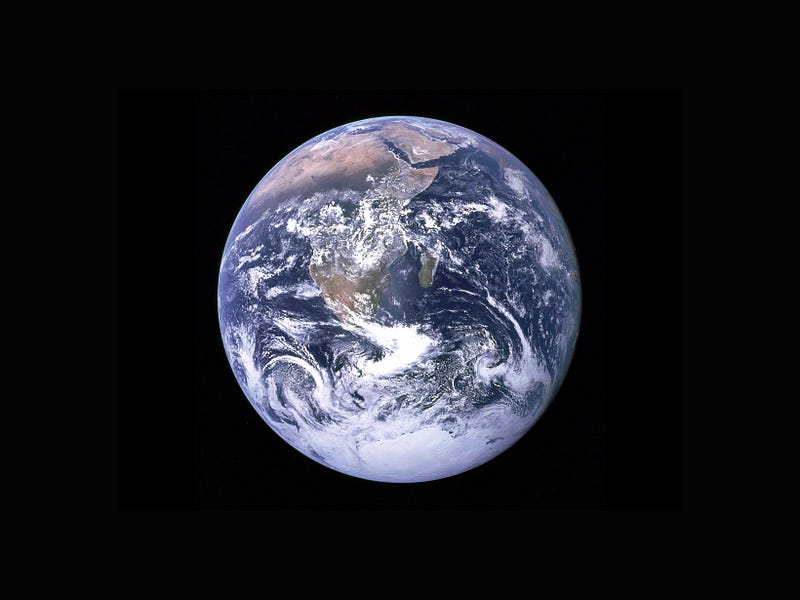
Wishing upon a star, for the world.
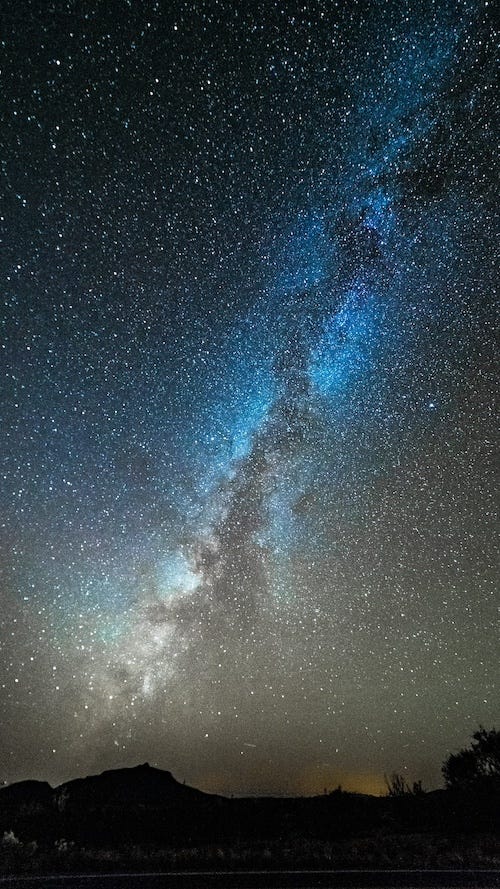
“A spec of dust. Or to be more precise, nothing.” I could hear my father’s voice as we stared at the night sky lit up with stars, surrounded by the darkness from a routine power outage. “That is what the earth is in the vastness and infinitude of the universe.” I tried absorbing this newfound knowledge with a mix of awe and bewilderment while he continued. “But it should not make us feel small. Humans in the universe are rare, perhaps even unique, the result of an amazing and unusual recipe of nature through evolution that are the DNAs that make us.”
Decades later, earth is still the only planet known to mankind that supports and houses life, intelligent or otherwise, even as we relentlessly keep looking for another one that remotely comes close. We are desperate, as it would seem, to find companions that look like us, communicate like us and think like us. And therein lies the disconnect.
It took eons for the universe to create the world that we today take for granted. It took billions of years since its inception for the earth to reach a habitable state for lifeforms like us. It took millions of years for humans to lay the foundations of the first civilizations, and thousands of years to evolve into a state where we can communicate with each other across the globe in the blink of an eye. And yet, we seem blatantly oblivious of the miracle that is human life and its preciousness in the universe.
No other species can claim the level and magnitude of decimation of one’s kind as humans have done over the course of human history. This decimation comes in many forms but stems predominantly from nothing but a thirst for power and domination, whether of an individual or a group or an ethnicity, race and religion. This desire for domination may very well be ingrained in human genes, dangerous as it may sound. For all the talk of the progression of human civilization from the middle ages to the 21st century, medieval barbarism is not a thing of the past. It lives within us and it does not take much for it to raise its ugly head. The conflicts raging across Africa and the middle-east and simmering in every corner of the world are not new, and their human tolls are not indicative of the aforementioned progress. The proof is in the blood and gore, the utter disregard for life, the relentless violation of human sanctity and the destruction of everything painstakingly created to nurture and sustain human life.

We are now at a point where the resulting human casualties are just numbers and statistics, no different from a video game except being played in real life. It may very well be a spectator sport harking back to the Roman era where people take sides, implicitly wishing for more deaths and bloodshed. As it turns out, one cannot remain a passive onlooker in this game for too long. The real life wargame has the power to draw everybody into its folds. The advances in innovation are tremendous but they serve genuine human causes and destructive forces in almost equal measures, massively enhancing the scale and impact of destruction. A large-scale cyber warfare facilitated by AI is no longer just an inspiration for a piece of dystopian science fiction, while biological and chemical wars are not even novel concepts.
This brings us to the question as to why we want to look for human-like life forms in another part of the universe when we have so little regard for fellow humans on earth. Never mind the fact that if such life forms did ever exist, they likely got wiped out because they were like us. A truly advanced civilization would cherish every human life and not treat them as instruments of war. It would not let its innovations feed the machineries of death and destruction. We have a long way to go, and hopefully we will get there before it is too late. Perhaps a similar civilization, depending on how far they are, will find us millions of years after we have ceased to exist, not because we brought it upon ourselves but because that is the circle of life in the infinite and timeless universe.