Wise Old Man of the Garden
A Parable
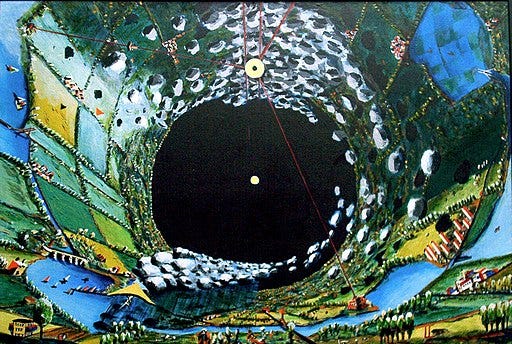
The space habitat of Junkipia, an O’Neill cylinder, rotated in ancient majesty on its thousandth birthday. The three peoples of the land, pious congregations long in conflict, held muted celebrations in their separate enclaves.
One old fellow by the name of Erthenlaust followed a narrow dirt path away from his people. He knew they were planning to once again reject his call for peace. He would meet two secret friends in a hidden garden to better prepare. These men were from the Mosque of Junkipia and the Temple of Junkipia. The three of them planned to make use of a remnant device called a Polaroid from the age of technology.
The People of the Church refused to believe Erthenlaust when he told them about a beautiful garden. He claimed it lay in the forbidden Neutral Quarter, where he had explored despite risking arrest, conviction, and dismemberment. Erthenlaust blamed his half-cocked half-secrecy for their attitude. Before his wife Bellandria died, he had told stories to his neighbors as if the garden was a metaphor instead of a real place. When he finally confessed his sin after her funeral, the whole lot of them decided grief had addled his brain.
A three-person selfie by the waterfall next to a lavish spray of hanging orchids and butterfly bushes would shred all skepticism. Please, God, let that Polaroid work. The Synod of the Patriarchs could condemn Erthenlaust to death only by admitting the truth of his heresy.
They had tried to silence his reverent descriptions of the paradise in the Neutral Quarter. In heretical defiance, he told them his heart went to the real Garden of Heaven whenever his body went to the tangible one. Nothing in the four-hundred-year-old Garden Prophesies should carry the weight of Biblical truth anyway. The Garden of Heaven should not be a place you must die to get to. A future-only paradise is a false one.
The Patriarchs were not amused by his assault on their theological authority. The people in the congregation nodded their heads at official pronouncements that one truth stands against a host of falsehoods. Their foolish neighbor had strayed onto one of the many crooked paths leading away from salvation.

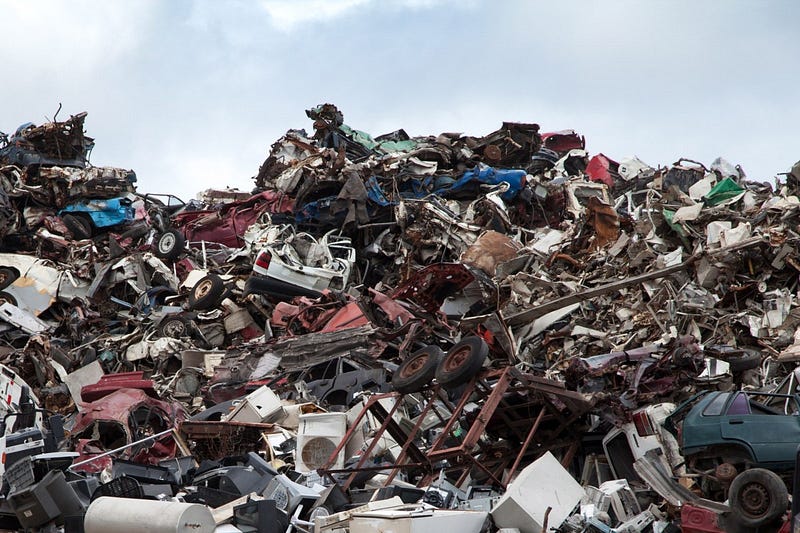
The old man walked on crumbling pavement past rusting girders of extinct towers and battered hulks of hovercraft and landers. Some of these wrecks may once have flown through space back when people still did such things. Weeds tickled his feet through his sandals. He reached a zone called the Hardscrabble Waste, where a sizable rat scurried out of his way.
Erthenlaust scratched his bearded cheek with the gnarled top of his staff before lowering himself through a crack in a rocky outcrop. His robe caught on a pointy root. It ripped the blue fabric between a gold crescent moon and a ringed orb. He swore. A moment later, he smiled at his receding flash of anger, thankful to be rid of it.
Without his weekly day of fasting and a diet featuring walnuts, blueberries, and melons, his aging body would have had trouble squeezing through the passage. He moved slowly for his eyes to adjust as the long descent led him toward an opening into a pitch-black vastness.
When you look ahead and darkness is all you see, faith and determination will pull you through.
— Drake
Years earlier, when he first explored the cavern, Erthenlaust had thrown a rock into the void and held his breath for long seconds before it clattered against unknown minerals and splashed into an invisible pool. While his mind reran the memory, his hands pressed against the side of a dark cliff, and his sandals slid across the gravel on the narrowest of ledges.
When he reached a hanging bridge, he gave the knotted vines of its railing a solid tug before committing his weight to it. One foot at a time on the oaken planks, he adjusted his balance to the swinging and bobbing of the shaky span. He imagined how he would tighten his hands on the rail if a plank gave way beneath him.
Erthenlaust’s thoughts drifted to the memory of his beloved Bellandria; God rest her soul. He recognized the danger of dredging up his most unhealthy and obsessive regrets but continued anyway in the hope he could make sense of some old pain in the catacombs of his soul.
Bellandria knew he often went to the Neutral Quarter and begged him to stay quiet about his trips. “If you have to go there, just don’t say anything, Erst. You told Martel the butcher about the garden as if it was a place you travel to just in your head. Remember the queer way he looked at you when you told him you met a man there from the People of the Temple and another one from the People of the Mosque?”
She warned him the Synod of the Patriarchs would get wind of his storytelling. Only clergy and deacons could meet with enemies to negotiate on appointed days at the Neutral Lodge. Even if his stories left out any mention of his forbidden friends, no person claiming to have seen the Garden of Heaven before death could remain a trusted elder — much less advance to a higher station of patriarchy.
So, at least while he was sober, he bit his tongue for the rest of her life. When she passed away, he proved her right. Reverend Jonzon spoke before the whole synod, reprimanding him for uplifting their enemies while making fantastic claims about an impossible garden. Heresy.

Erthenlaust reached the opposite wall of the chasm and began climbing a stairway through a tunnel in carbonaceous chondrite. He breathed loudly, and his pace slowed a little with every step.
Against his will, painful vignettes from the past took hold of him. He remembered Martel ridiculing him. “Maybe it was the Garden of Eden, not the Garden of Heaven you found, ha, ha, ha. Maybe you restored an old lander and it was really a time machine, ha, ha, ha.” Ever since they were kids, they had dreamed of restoring old electronics.
Another memory stabbed him with a pang of humiliation. Jendel, the baker, had teamed up with Jym, the apothecary, to carve wax into figurine candles of “hallucinated” garden friends on a “flower bed collection” of candlesticks. People all over town bought the damnable things.
In time, Erthenlaust’s sour feelings transformed into a mysteriously peaceful rush of understanding. His neighbors knew only the rust and garbage of everyday Junkipia. Their eyes took in nothing but a sad normality, their ears a drone of routine, and their noses a scent of decay. They hurt only themselves with their attitudes, not him.
Rounding the first sharp bend in the staircase, Erthenlaust saw the dim glow of reflected sunlight around the second bend far above. He picked up his pace. Cool moisture clung to his clammy skin, but he felt more spry and alive.
He thought of all the kindness people had shown to him at Bellandria’s funeral. He shuddered at the notion of her body resting so long beneath the ground. The flow of peace through his heart receded as he slipped into ruminations on past injustice.
A week after burying Bellandria, he had decided to sacrifice what little was left of his own life in homage to the truth. He confessed his trips to the Neutral Quarter and volunteered to accept punishment for this capital offense. He offered to bring the clergy and deacons to the garden if they could negotiate to meet the enemies there instead of at the Neutral Lodge.
Again, the congregation treated Erthenlaust with kindness. Over the following months, their kindness gave way to mild aggravation. Eventually, folks began to ignore the old fool. His pleas for somebody, anybody, to follow him at least to the border were met with wagging heads and dismissive waving of hands. By not following him, they protected him from prosecution as a leader of opposition to the Truth of Junkipia.
Erthenlaust pushed on from one turn to the next. He emerged from a cave into a brightly lit glade. Beyond it lay a garden full of singing birds, lush vegetation, and a tranquil waterfall. His soul levitated at the sound of his two old friends conversing and the sight of their figures through the leaves. The bald, black Muslim wore his usual buckskin pants and shirt. The hairy Jew wore a birch bark blouse and kilt.
“Izhmayel, Sambwell! It is I, your friend Erthenlaust. Greetings on this pleasant afternoon.” Their smiles shone like the sun.
Sambwell returned the greeting and held up an instrument. Izhmayel pointed to it with a grin and said, “Behold, the Polaroid.”

“Does it work?”
Sambwell pulled three photos from his bag. “Here’s me in front of the temple yesterday. This one’s my dog on my porch. My finger got in the way of this other one, but you can see a little bit of a cloud behind it.”
Izhmayel said, “We have a Polaroid just like this one in the museum behind the mosque, but they won’t let me touch it. For all I know, it might work too.”
Sambwell asked, “Do we stick with our plan? We take three selfies of the three of us together in front of the waterfall? Then we each take a photo back to our people and make our case for peace?”
They agreed and wasted no time. “Cheese!”
The camera clicked and whirred. A magical image slid into their waiting hands. A miracle!
They pressed their heads together again and pressed the button. “Cheese!”
Nothing happened.
They tried over and over. The Polaroid was dead.
Every setback is a pitstop en route to nirvana.
― Stewart Stafford
“So,” said Izhmayel, “only one of us can carry the photo, at least for today. I don’t think it should be me. Mulla Abduhl calls your peoples the left and right hands of Satan. He might rip the photo out of my hands, burn it, and convince my neighbors I’m a spy. I’m willing to risk it, but your odds might be better, Sambwell.”
Sambwell groaned and held his head in his hands. “The rabbis will banish me. There’s some small chance of reasoning with them, but the last time I defied them, they took me to court and confiscated my chicken coup. Restoring old technology anywhere but the museum is a crime. Some people get away with it, but since I got the police chief’s sister pregnant forty-seven years ago, I think his whole reason for not retiring is to finally take revenge on me someday. That photo could end up in an evidence locker for all eternity.”
Erthenlaust felt dizzy. “My chances are pretty slim too. It’s a heresy to find enemies in such a big and peaceful garden like the one in the prophecies. They call Jews a coven. They call Muslims Amalekites. They forget that the preacher who taught all this nonsense also prophesied Junkipia would leak its whole atmosphere on August 26th of 2626.”
Izhmayel raised an eyebrow. “What are Amalekites and how are we them?”
“They’re Iron Age bad guys from Amalek — on Earth of course. When us Christians justified the Great Cleansing of 2610 — what you call the Great Massacre — they had to find something in holy scripture where God ordered people to smite babies.”
Now go, attack the Amalekites and totally destroy all that belongs to them. Do not spare them; put to death men and women, children and infants, cattle and sheep, camels and donkeys.
— 1 Samuel 15:3 NIV
“Erthenlaust, it has to be you,” moaned Sambwell. “Only one of us can take the first step. You’re the least likely to get your life destroyed and the most likely to hold onto the selfie so one of us can try next.”
“Yes, Erthenlaust,” agreed Izhmayel. “You must be the one.”
So it was decided. Erthenlaust stowed the selfie in his leather pouch, clipped the pouch to his staff, and braced for extermination.
Izhmayel and Sambwell hugged him. Sambwell pulled a small black plastic thing from his bag. “Take this with you in the cave. It’s called a Bic. Go like this, and a flame pops up.”
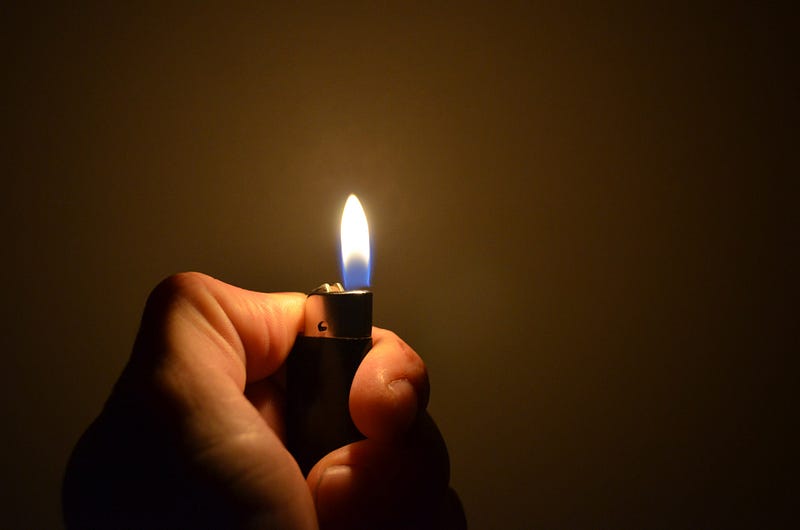
“Oh my! A pleasing gift. Thank you, my friend.”
On the journey home, Erthenlaust felt distracted. He slipped on a step and steadied himself by scraping the staff against the wall. He should have strapped it over his shoulder but held it forward instead as if some wild animal might attack him. When he finally stowed it to cross the hanging bridge, it caught on a rope and twisted him. Next, it slipped and dragged on the ledge against the cliff. Finally, both ends of the staff wedged in the narrow passage, and something snapped in the dark.
The worried traveler realized the clip had broken and the bag had fallen. He picked it up and discovered the photo had come out. He frantically groped about with both hands, worried it may have slipped into a crevasse or wafted into the void. He found the Bic and lit its flame.
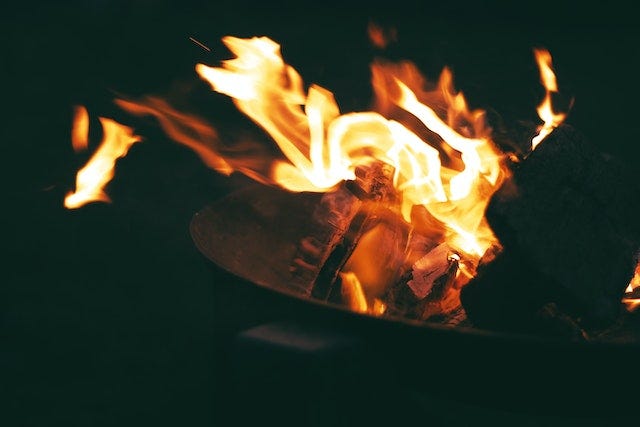
Something frighteningly erratic happened to reality. The flame suddenly roared much larger than seemed possible in front of Erthenlaust’s face. He squinted, tried to reorient, then realized in shock he had lit the photograph on fire. When he tried to put it out, it flew from his reach and turned itself quickly to ashes. He stood stunned with the small flame of the Bic beside his face.
In one moment, all hope was lost. The great dream of the three men of the garden had erupted into sudden entropy to punctuate a foolish plan with this odd exclamation of cosmic mockery. There was nothing left to do. No friend, no helper, no watchful angel would undo the loss. Reality would offer no reprieve for his failure.
The next moment brought Erthenlaust back to a measure of calm. His frame of heart fell into the customary tranquility he’d been cultivating. He stood quietly for a while, formulated a plan, then returned to his home.
In the following weeks, he journeyed daily to the garden. Izhmayel and Sambwell regretted the loss of their selfie but also felt relieved their friend would not face any consequence from the synod. Erthenlaust left his staff behind and instead brought a pole with two hanging buckets. In those buckets, he placed soil and bulbs and shoots and seeds from the garden.
Little by little, year by year, Erthenlaust planted a wonderful garden near a little spring just beyond the edge of town. The water in his neighborhood had been in such short supply that grass turned brown, vegetables shriveled, and flowers wilted. He built a new home next to the spring and surrounded himself with what beauty he could smuggle from the forbidden dale.
There are some defeats more triumphant than victories.
— Michel de Montaigne
With no sons or daughters and far from the group activities of his people, Erthenlaust spent much of his time in solitary contemplation. Eventually, he grew too frail to travel to the waterfall and meet his friends. Old neighbors occasionally stopped by and remarked with appreciation how nicely he had done his planting. The congregation checked regularly on his supply of food. Youngsters played in his yard and sometimes convinced him to tell a story or two. One little girl with big and curious eyes paid close attention.
The postman found Erthenlaust’s body between a row of dahlias and a wisteria bush in full bloom. The corpse held a sunflower in its hand. A smile remained on its face. The townsfolk spoke well of Erthenlaust and buried him next to Bellandria.

….. . …………………….. — The End — ………………………. . …..