
Wisdom from the Elders to Inspire Vernal Equinox Rituals
Today, I honor the return of spring and its invitation to balance
Four of my favorite days of the year are: the Summer Solstice, the Autumn Equinox, the Winter Solstice, and the Vernal Equinox.
Perhaps because they are moments of our earthly cycles that have been observed, honored, and celebrated in nearly every culture since ancient times. Perhaps because they are inarguable facts of science* that were observed by ancients as mystical and wondrous. Perhaps because I agree that they are mystical and wondrous — life here on this strange tilted globe is often difficult and painful, but it is also filled with invitations to pause in awe at the poetic narrative arcs of the universe, the births and the deaths and the rebirths. We can also pause in the remembrance that nothing is permanent, that all is in flux. This can feel frightening for our systems, all those uncertainties of all those yet untold futures — but in our pause, we can remember the certainty and the hope — of the return to seed and to light.
Since my daughter was little, I made up little celebrations, especially on the solstices, to honor the shortest and longest days of the year. We would dress in orange and eat orange foods and light candles (in winter) or go outside under the bright sun (in summer) and dance and sing along to songs about the sun.
This vernal equinox, I am looking to the wisdom of the elders to honor the return of spring and its invitation to balance.
*Brief scientific side note: The equinox — “equi” for “equal” and “nox” for “night” in Latin, is often assumed to mean that we experience equal days and nights no matter where we are. However, as Scientific American explains: “the sun is positioned directly over the equator so that the Earth is neither tilted toward or away from the sun.” Furthermore, “equinox is not the same as an equilux. [Equinox] is actually a moment when the sun is positioned directly over the equator — for many reasons, day is actually longer than night on these occasions….Thus, all is not quite equal on the equinox.”
No matter — it is a meaningful moment nonetheless.
These are the ways that I am honoring the vernal equinox this year:
Today, I will get dirty
“In the spring, at the end of the day, you should smell like dirt.”
— Margaret Atwood
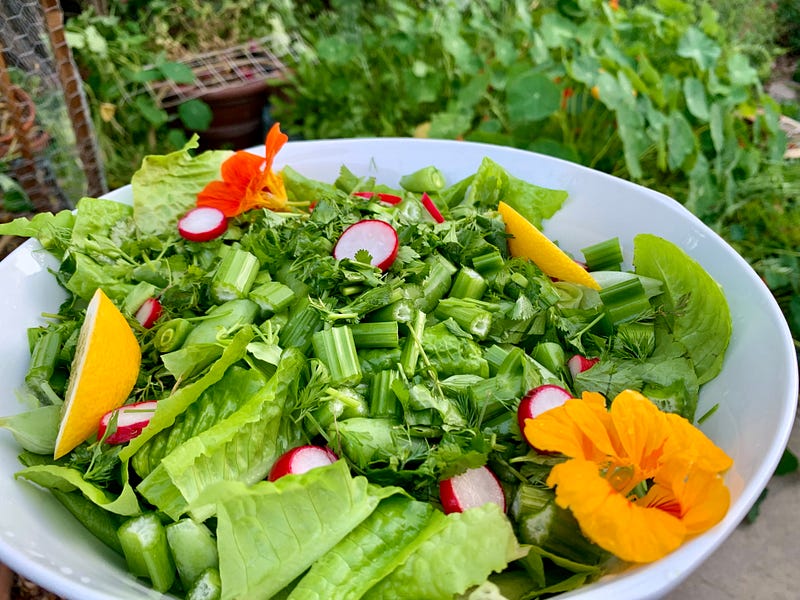
I will go outside and get my hands dirty. I will pull weeds and dig out the humus from my compost bins. I will harvest the lettuce and the kale and the celery and the cilantro and nasturtium flowers and lemons from my tree, and I will make a salad of my winter’s labor. I will eat tonight, with dirt under my nails, with my family. I will eat slowly in gratitude. I will say “thank you.”
Today, I will gather flowers and dance under the sun
Χειμὼν καὶ ἔαρ.
Winter [Kheimōn] made fun of Spring [Ear] and mocked her for the fact that as soon as she appears, nobody can keep still [hēsukhiā]; some people go off to the meadows [leimōn, pl.] or into the woods, others like to gather flowers [anthoi] and lilies [krinon, pl.] or perhaps to gaze upon a rose [rhodon] as they twirl it in the air or to twine it in their hair [komē]; while some board ships and even cross the sea to meet different kinds of people; no one worries any longer about the winds or the great downpours of rain from the sky. (More here).
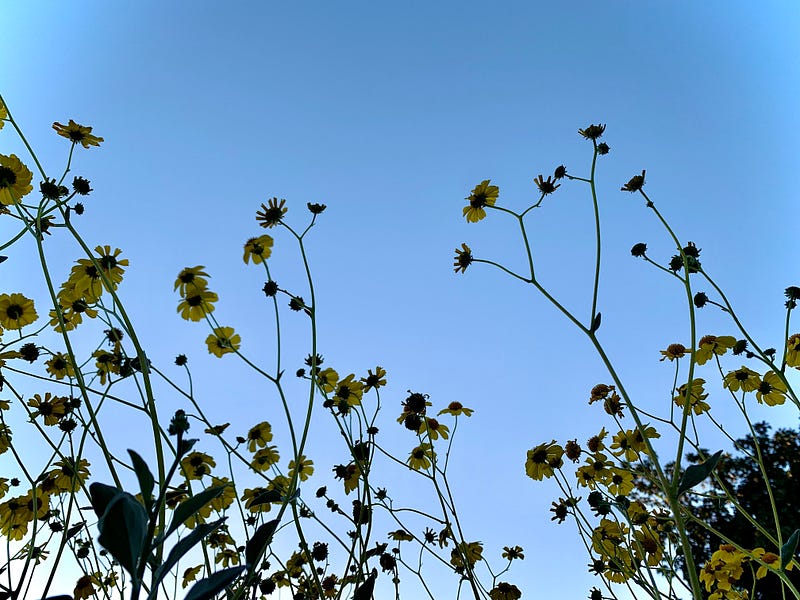
Today I will gather flowers and herbs. Right now, in my garden, the jasmine and nasturtium and purple and red wildflowers whose names I do not know are blooming brightly. The lavender and rosemary and rose geranium are full and fragrant.
I will pick them, and when I do, I will say “thank you” to the earth. I will put some in my hair and in my daughter’s hair and in my husband’s hair, and I will play songs of spring, and I will invite them to dance with me under the bright spring sun.
I will make a bouquet of these fragile flowers that may very well wilt by evening, but I will look at them every hour, and I pause to take in their scents.
Today I will listen for the poetry
Spring has come back again. The Earth is like a child that’s got poems by heart; so many poems, so many verses, patient toil winning her prizes at last.
I will walk through the day, listening for poetry. This past week, while on my walks, I gathered snip-its of possibilities:
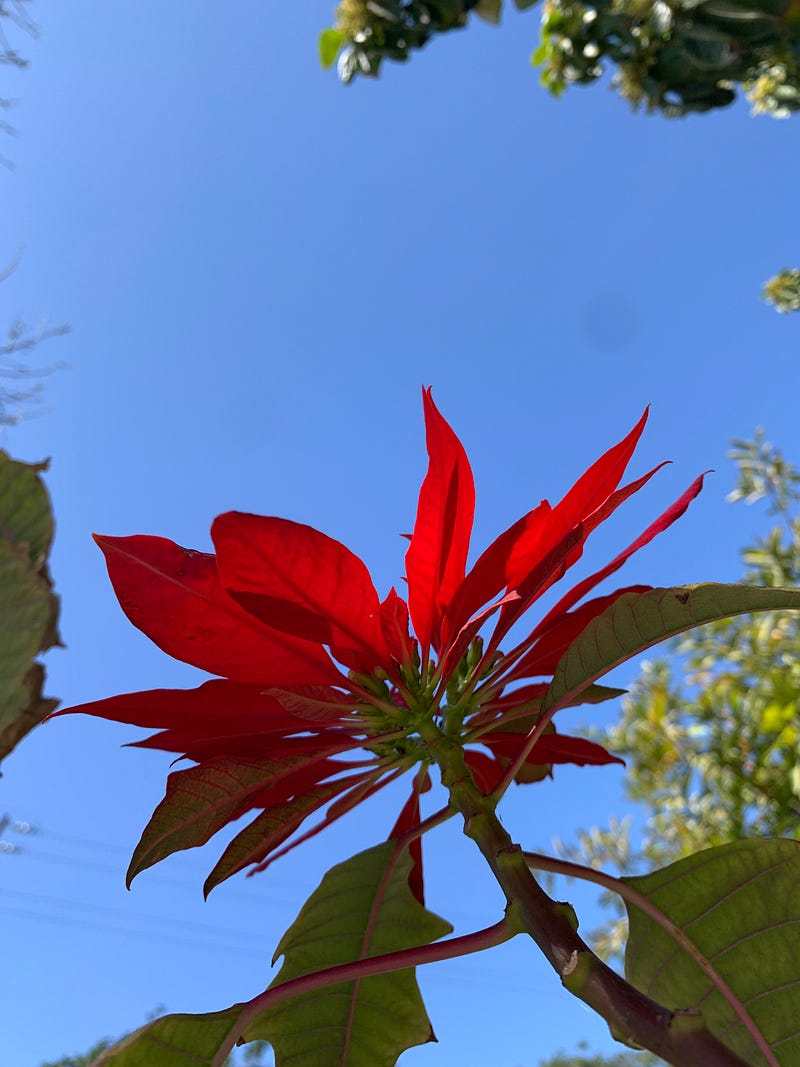
The red poinsettia of March, how incongruous its bloom seems to our cultural associations of Christmas and the winter solstice.
My student says she is grateful to just be alive, and quickly, the others agree — yes, just that is enough.
I have also seen the bold hibiscus and agapanthus, but I don’t know what to say about them yet.
I will ponder.
Today I will honor my needs
“Yes, I deserve a spring–I owe nobody nothing.”
We all deserve the spring. We all deserve color and light and beauty and fullness, moments of plenty and abundance, of wonder and possibility.
Today I will sit in gratitude for what is and what has been, and today I will also lean into the wild uncertainties of what the many tomorrows may bring.
Today I will honor the losses and the griefs as much as I will honor the unexpected beauties that emerged after.
Today I will revel in the balance of cycles, and I will allow myself to live in joy.
Here’s a playlist of songs that I am listening to this week:
E. Katherine Kottaras holds an M.A. in English and an M.S. in Kinesiology with a focus on Integrative Wellness, and she is a contemplative writer and holistic teacher, having worked at the middle, high school, and community college levels for over two decades. She is a yoga teacher, personal trainer, and health coach while also living with invisible illnesses and neurodivergence, and as such, she is passionate about mindfulness, bodily self-determination, and health equity. As the queer daughter of an immigrant, Katherine believes that holistic and inclusive approaches to expression, healing, and growth should be accessible to all.
Connect with Katherine on all the social medias: IG, YouTube, FB, LinkedIn, Twitter, or at katherinekottaras.com.
Check out Katherine’s new series, Yoga with Eleonora on YouTube, which helps kids of all ages calm their minds and bodies so they can respond to and communicate their feelings in healthy ways.
Read every story from Katherine (& thousands of other writers) by signing up for Medium. Your $5/month membership directly supports writers (ad free!).


