
Winter: A Time of Reverence: #3
The World is Such a Busy Place. Being Busy, We Can Lose Things that are Important to Us. Winter is a Time to Remember.

Having reverence of course includes God, in a spiritual sense. Another word for this might be worship, or living in thankfulness and gratitude. But in a broader sense, it also means to have a deep respect for someone or something. This is what winter is: a time to think, ponder, meditate. It’s a time to get our head screwed back on straight so we have more gusto the rest of the year.
Winter, beginning December 21, is a time of REVERENCE. Spring, beginning March 21, is a time of RENEWAL. Summer, beginning June 21, is a time of RESOLVE. Fall or Autumn, beginning September 21, is a time of REFLECTION. We’ll be looking at all of these seasons during 2021.
Reverence in Winter is a Time for Respect
We all have people in our lives who have impacted us in positive ways. They have given us a helping hand when we needed it. They have affirmed us with their words and lifted our souls and spirits. They may have helped physically in some way or brought us a meal if we were sick.
We owe them the respect for which they are due. They don’t have to be a ‘Superman,’ or a ‘Superwoman.’ They are just ordinary people to whom we may owe a word of thanks. We should take time out and say ‘thanks.’ Yes our reverence should begin with God, but does it have to end there?
We all need heroes in our lives, and they shouldn’t just be fictitious people like Superman or Batman. They are people who engage us, enlarge us, and lift us to ‘higher ground,’ giving us a new perspective of things.
Loving Others Like Jesus Loves Us
Jesus says, “Do this in remembrance of me.” And Jesus says this twice: “Love others as I have loved you” (John 13:34, 15:12).
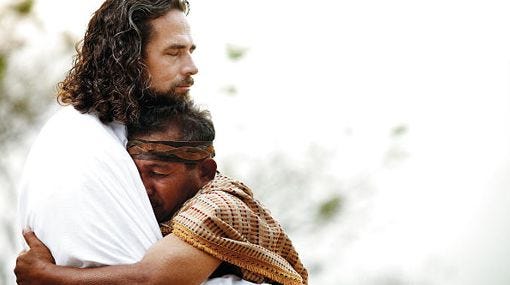
Now the question becomes, “How did Jesus love us?” We know he laid down his life for us because of his love for us — he endured inhuman crucifixion. He states this in John 10:17: “This is why my Father loves me because I lay down my life that I might take it up again.”
But something is very interesting about this verse. The word for ‘LIFE’ is not the word ‘bios,’ which would mean physical life or physical death. It is the word ‘psuche,’ which is the word for SOUL: soul-life, or emotional life. We know Jesus died for us, but this verse is telling more about how he loves us.
He said he ‘laid down his life for us,’ in the psuche, emotional sense. What this says to me is that Jesus gave up his criticism of us, and his judgment of us.
He says for us not to even think he will accuse us of wrong (John 5:45). He says in his first coming, he didn’t come to judge but to save people.
It can be said the way Jesus loves us is that he gives up his EXPECTANCIES with regard to how we will think, act, react and respond. He says he is our ‘friend,’ and he gives us the Holy Spirit to help us live as we should.
And when our expectancies are not met, this then falls over into the realm of forgiveness, which is something we talked about last time.
If Jesus gives up his expectancies, criticisms, and judgments about us, this is also what we should also do for others, and stop making them live life by our dictates.
Winter: Time for a Clear View and Perspective
We so often approach God from our perspective. Many people don’t even think of praying unless they are faced with something they can’t handle, and then they feel they better get some divine help.
Paul says, “Pray without ceasing” (I Thes 5:17). Paul didn’t mean this literally. He didn’t pray constantly and not one of us does either. He meant to keep an open heart, soul, and spirit to hear God: “Today if you will hear his voice.”
We are not meant to always approach God from our perspective. We shouldn’t always pray, “Lord, I want a better life, and I want it now” — and of course then we define what we mean by a better life.
So much of life depends on our perspective, and our perspective is meant to be joined to God’s perspective — if not constantly, at least part of the time. We shouldn’t always be coming from a horizontal view of life, and things and people we want to see changed to our perspective and satisfaction.
There are things we should contemplate in relating to God. (1) “This too shall pass.” No matter how good or bad, things in life change. (2) Life has no certainties. It’s speculative. We must respond to it as such. (3) Life is brief, and we are only on ‘temporary assignment’ here on earth. (4) Life has challenges (Jesus says ‘problems’). We must adapt to them. (5) God is love and he loves us unconditionally. We must live in this truth.
I’ve said this before: I sometimes pray for God to send me his problems and challenges. No, I’m not a masochist. But I trust him enough to prefer his problems than those that the world, the devil, or others might throw at me.
Besides, I love the statement by Mark Twain: “I’ve had many problems in my life — most of which never came to pass.” I’ve found since I started praying for God’s problems, I’ve actually had a lot fewer problems over-all.
Winter Can Break the Hold Idealism Has On Us
In some ways, we are all idealistic. We all have better plans for a better life and we want God to help these become reality for us. It begins in childhood but doesn’t stay there. It tends to follow us all through life.

We see life and the world as being here to serve us. We want to design our ‘heaven on earth,’ and have it conform to our expectations, as we just talked about. Our idealism adds fuel to this and complicates things.
We’d be better off exchanging our idealism for realism.
We all tend to get deflated by life in ways. We all encounter bumps in the road of life, and potholes that can cause some consternation. Some people even face severe detours and even dead-ends to where their idealism is trying to lead them. The song tells us that life is not ‘A Rose Garden.’
So we all come up with a few scars. We get wounded by people and also by circumstances. My daughter just experienced what she views as a tragedy — her cat was killed very inhumanely by another animal. It was nothing in the realm of her expectancy, and she’s been crying a lot of tears. Yet even she says, “This is so minor compared to what so many other poor people face.”
We Wrestle with Three Elements in Life
I have come to term these three elements in this way: (1) romance, (2) disillusionment, (3) choice.
ROMANCE comes first. Here we see all of the good and none of the bad. An old phrase comes to mind: “Love is blind.” This can be applied to a sexual relationship, a marriage, a business deal, starting a new job, anything at all.
Everything is a rose garden starting out. It is perfect, at least as far as we can see at the moment. Some dictionaries say romance is an ‘illusion,’ — it’s not ‘reality.’
An illusion is defined as “a false idea that appears to be real, but lacks any foundation in fact.’ This is where most of us start things off: building on a faulty foundation. It can be called ‘romance.’
DISILLUSIONMENT comes after romance. The honeymoon is over, whether marriage, business, sex, or whatever. Now we take time to step back and see things a little bit more clearly. Things are not as we had expected or hoped. We often don’t realize how much of a killer expectancy can be.
But like romance, disillusionment can also be looked at in a different way. It is usually viewed negatively, but it can also be seen positively. Used in the context of romance, disillusionment can be defined as: ‘being free from a false idea that appeared to be real.’
CHOICE then becomes the alternative we are left with. In law, I handled litigation and divorce and noticed that most people don’t make proper and good choices. They are not in control but are instead controlled — usually by the disillusionment they face after the romance dissolves. They are controlled by circumstances and experiences they face in life, instead of taking control of them by making proper choices.
We are only truly in control when we reach the ‘CHOICE’ stage of life.
Most folks just throw in the towel and quit when the romance stage of things don’t pan out as they thought it would or should. Most divorces occur in this stage of things.
Truth and good choices are usually a matter of three things: (1) utilizing our God-given temperament, and living in the human identity we are given, (2) inner character, which is living in obedience to the truth we know we have adopted and should be living by, (3) outer commitment to do what is right — we act on the outflow of our identity and our inner character.
Idealism can bring a crushing blow to many things in life, but if we instead choose to live in reality, and deal with it properly, we go a long way toward solving many of our life problems.