
Window to Heaven
II
Read: Part I
Not Meant for Human Eyes
The high up thin air of the Selwyns had almost finished Hardin. He hadn’t wanted to leave, but, except for that special time of early summer there was no food and little enough of it then with a few scattered caribou, some sheep, and the occasional ptarmigan, and the inevitable widely wandering grizzly.
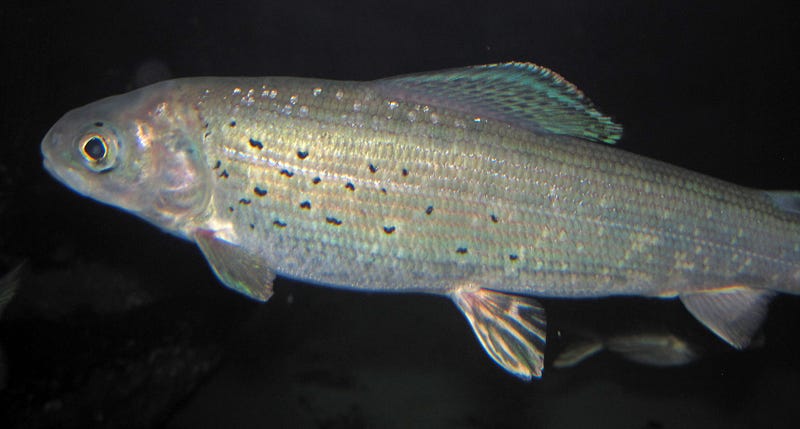
Many of the places where the streams pooled into sizeable potholes were empty. Why one stream held fish and the next didn’t was a thing he didn’t understand. Standing long above the clearest pools in the brightest part of the day, he almost never saw as much as a glimmer from a fish. The rocks and the shadows hid them, except in those moments of low light when they came out to hold in the current and work it for insects.
The dollies and the grayling up that high were rare and small, their coloring overt and spectacular only in hand and in the sunlight. The grayling, with its high dorsal fin, reminded him of a miniature sailfish. To see the colors, to feel them, probably had more to do with why he fished than the small amount of sustenance he gained from them. Handling them killed them. His very presence, his very existence, tainted the things he loved.
The murmur of the wind and the waters spoke an ancient, dead language of a people of long ago he could almost understand. The day he did find the first semblances of understanding would be the day he stayed, and that day would mark the imminent countdown to his death.
He had made the turn for the Mackenzie and life. Out of food nearly and weakening fast, he camped on an old moraine. The country was big, bigger than life. If he ever needed to find this place again, he’d have to mark it more memorably than noting it as another scar left by the retreating glaciers. Those were everywhere, almost in every bend of the Gravel River.
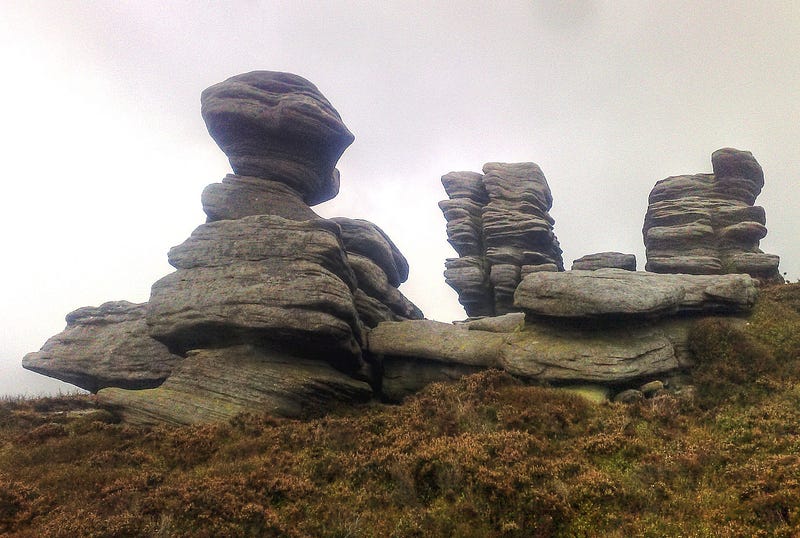
On top of the mountain to the north, on the opposite side of the river, a set piece scene — a weird assortment of rocks — appeared to him. In the wavering, uncertain purple and orange light of the midnight sun, they moved or seemed to move.
Rocks weren’t supposed to move, but he’d been a long time out. If what he saw could be explained as only the bending of light, as hot air met cold, he had no faith in the explanation. The faith he had in natural law had slipped away, when, he didn’t know, some time back.
It was almost as if they performed a play. One standing slab of a boulder had a high up hole which caught the dropping low-angled light, bending it into a defined sunbeam, a window to heaven, so to speak. He watched in fascination, this scene not meant for human eyes.
He slept that night a troubled sleep of weird strange dreams and woke the next morning in the strong light, weak, and hungry. The river hadn’t fed him, and he made the decision to go high into the country of the Dall sheep.
Climbing.
He would climb until the need for specialized gear and knowledge stopped him, look into little valleys no one else would want this year. Maybe that was his purpose in life, to look into those valleys. He’d accomplished nothing in the world of man that anyone would credit or applaud.
Late morning, he passed the carcass of a dead porcupine. Why was the porcupine up this high? If he didn’t find something soon, he’d be the porcupine, shriveling in the sun, and the dry, high air would preserve his remains for a long time. It was as if time suspended, and he looked into the future. Could a man regret what was to come, what he was destined for, a future he hadn’t lived?
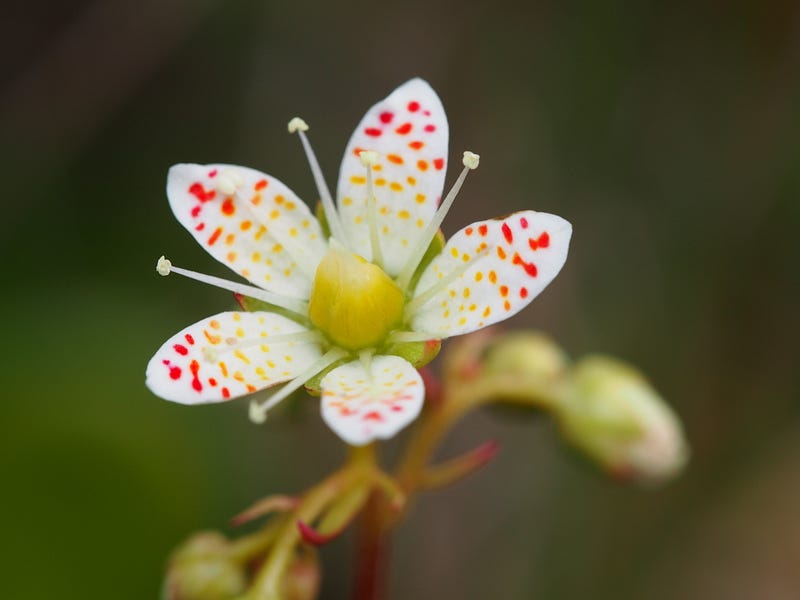
Mid-day he came across saxifrage growing out of the rocks. Saxifrage was Latin for rock breaker. A given patch of saxifrage growing in the almost non-existent soil in a crack between the rocks might have reoccurred each year for hundreds of years. A succulent, he almost never tasted them out of respect for their tenacity in surviving such an inhospitable environment. This time he stopped to eat, consuming stems, leaves, flowers, root stock, and all, almost as good as watercress, but not enough. The nourishment of the saxifrage wouldn’t replace the energy lost in the climb.
He looked back often. From this angle the set-piece scene of last night remained hidden. His tent, down next to the river, looked tiny, toy-like. He followed the path of a small clear stream higher, where it bubbled over the hard rock, one waterfall to the next. He didn’t need to pan. The pebbles in the bottom of the stream stood out, magnified in the clear water. No color here. It was possible to find gold in known mountains, but wherever you went, you went with the knowledge that someone shrewd had looked before for the same thing. That wasn’t so much true in these mountains.
An hour later he rounded a bend in the path and he found it, a silvery outcrop of something heavy, because of its purity, obviously a noble element. He flaked and chipped some of it off in his hand. He’d never held anything like it and had only the roughest guess what it might be. It wasn’t right for silver, too heavy. It wasn’t gold, too heavy still, and the wrong color. Platinum or something similar, possible? It didn’t matter. An old geologist told him once, “If it was heavier than gold, it was worth more than gold.”
He filled his pack with as much as he dared carry. On the way down he told himself it might not matter. If he didn’t find food soon, the mineral wealth made no difference. If he did live long enough to reach the outside world and announce his find, he could expect a short life. Discoverers of great strikes never benefited. They lacked both the business acumen and the necessary ruthlessness.
If he played it right, this strike would pay for many years of wandering to come. Or that’s what he thought. He had no idea of the magnitude of the find.
A few days after he found the outcrop of mineral, he did find a caribou on an island. He wasn’t ready to touch that moment on this day. On this day in the shape he was in, tearing himself apart over a woman he should have had the decency to avoid, he’d only profane it.